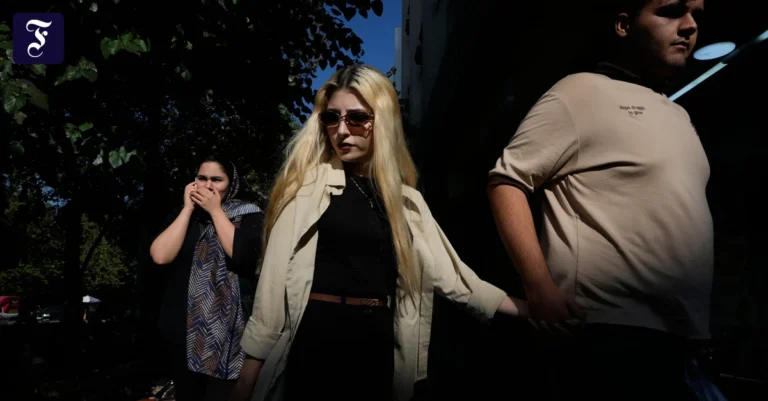
Bangladesh has slipped 55 places to 79th in the World Economic Forum’s (WEF) Global Gender Gap Index 2026, marking the steepest fall among the 145 economies assessed.
The decline comes a year after Bangladesh recorded the largest one-year jump in the index, rising 75 places to 24th in 2025 from 99th.
According to the index’s 20th edition, released yesterday, Bangladesh has closed 71.2% of its gender gap, down 6.2 percentage points from 77.5% last year. The decline was mainly driven by a 21.2-percentage-point deterioration in political empowerment.

Talking to The Business Standard, Fahmida Khatun, Distinguished Fellow at the Centre for Policy Dialogue (CPD), said women had maintained a stronger presence in Bangladesh’s political sphere for years, including as prime minister, speaker of parliament, and directly elected MPs.
“However, the data used in the 2026 index show that women’s political participation has declined from previous years. The share of women among directly elected MPs has fallen as has their representation among ministers,” she said. “This has weakened Bangladesh’s performance in political empowerment”.
Despite the decline, Bangladesh remains South Asia’s top performer, a position it has held since surpassing Sri Lanka in 2014.
Fahmida attributed the country’s stronger regional performance to progress across several indicators, including relatively better gender parity in primary and secondary education and declines in maternal and child mortality.
The WEF index measures gender gaps across four categories – Economic Participation and Opportunity, Educational Attainment, Health and Survival, and Political Empowerment – comprising 14 indicators.
Economic participation remains weakest
Economic Participation and Opportunity remains Bangladesh’s weakest area, with 41.9% of the gap closed in 2026, down from 45.7% last year.
The decline was driven mainly by lower parity in estimated earned income, labour-force participation and senior workforce leadership, which fell by 15, 5.7 and 1.3 percentage points, respectively.
Bangladesh ranked 12th globally in political empowerment, with 50.9% parity, down from third last year. Parliamentary parity fell to its lowest level over the measured period, at 2.4%.
However, Bangladesh has retained full parity in the head-of-state indicator since 2019. The report said 64 of the 145 economies had no female head of state during the period, while Bangladesh and Iceland achieved parity.
Health and Survival remained at 96% parity.
Educational attainment reached a record 96.1%, maintaining its positive 20-year trajectory, driven by gains in adult literacy and tertiary enrolment. Bangladesh retains parity in primary and secondary enrolment, while higher education remains its widest education gap, at 77.1%.
Bangladesh leads South Asia for 12th year
South Asia closed 64.5% of its overall gender gap in 2026, ranking seventh among eight regions. Its score fell 0.1 percentage points from last year.
The region has narrowed its gap by 4.8 percentage points since the index began but, at the current pace, is projected to reach full parity in 149 years.
Among South Asian countries, Nepal, Maldives, Pakistan and Sri Lanka improved their rankings, while Bhutan fell and India remained unchanged.
Bangladesh retained the regional lead for the 12th consecutive year. Maldives ranked 119th globally with 66.9% parity, followed by Nepal at 120th with 66.9%, Bhutan at 121st with 66.3%, Sri Lanka at 129th with 64.6% and India at 131st with 64.5%.
Pakistan remained the least gender-equal country in South Asia and third-lowest globally, closing 59.5% of its gender gap despite improving five places from 2025.
About The Author