Industry body says 88.51% duty on key raw material threatens local manufacturers, holds up consignments at Chattogram Port
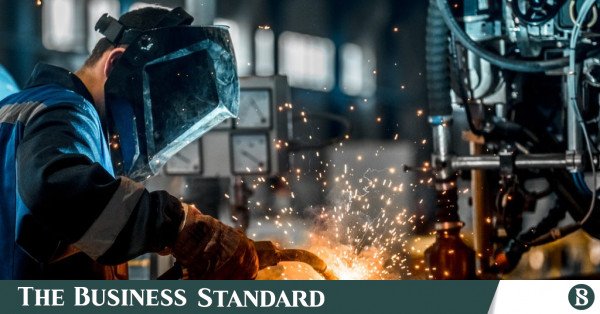
Representational image. Photo: Collected
“>

Representational image. Photo: Collected
Bangladesh’s welding electrode manufacturers have urged the National Board of Revenue (NBR) to restore a concessional duty facility on imported hot-rolled non-alloy steel wire rod, saying the current 88.51% duty assessment could make local production commercially unviable.
The Bangladesh Welding Electrodes Manufacturers Association (BWEMA) made the demand in a letter to the NBR chairman yesterday (21 September), following an NBR directive requiring wire rod imported by VAT-registered electrode and wire-drawing manufacturers to be assessed under HS Code 7213.91.10 without the existing concessional facility.
The association said the resulting duty burden would be 88.51%, compared with 52% on finished welding electrodes imported under HS Code 8311.30.00.

“This would not make it possible to import the raw material by paying the said 88.51% duty and thereafter manufacture and supply welding electrodes,” BWEMA General Secretary Md Shahjahan Kabir said in the letter.
According to the association, the higher duty would put domestic manufacturers at a disadvantage while making imports of finished welding electrodes more commercially attractive.
Consignments held at Ctg Port
Several consignments of wire rod imported by BWEMA member companies are currently stuck at Chattogram Port over the dispute surrounding HS classification and duty assessment, the association said.
The affected companies are incurring more than Tk1 lakh a day in additional costs, including port and shipping demurrage, it said.
BWEMA urged the NBR to allow provisional assessment and release of the consignments under Section 93 of the Customs Act, 2023, to prevent further losses.
Wire rod is the main raw material used to manufacture welding electrodes. The association said domestic production of the raw material has increased in recent years, reducing the sector’s dependence on imports.
The NBR had earlier provided a concessional facility under SRO No 151-Law/2026/06, issued on 8 June, and its amendment issued on 30 June.
Under the facility, imports under HS Code 7213.91.90 by electrode, wire-drawing and electric cable clip manufacturers were eligible for 0% regulatory duty and 0% supplementary duty, instead of 5% and 45%, respectively.
BWEMA said similar consignments had previously been assessed under concessional facilities provided through earlier SROs.
Industry seeks policy continuity
The association said the latest NBR directive has created uncertainty because the concessional facility remains applicable to HS Code 7213.91.90, while the new instruction requires wire rod to be classified under HS Code 7213.91.10.
BWEMA has requested the NBR to review and withdraw its 15 September directive and allow the consignments to be assessed under the existing concessional facility.
Alternatively, it urged the revenue board to include HS Code 7213.91.10 in Table-3 of the relevant SRO and extend the concessional facility to the code with retrospective effect.
The association warned that failure to resolve the issue could force local manufacturers to scale back or shut operations, threatening jobs and increasing dependence on imported finished welding electrodes.
BWEMA said maintaining the concessional facility would help protect domestic investment and employment while supporting local manufacturing.
About The Author