Economically, how are you doing — and how are the people you study doing?
Personally, I am comfortable. But I work on the conditions of ordinary people, and those already behind are having to live through a daily struggle.
The lower-middle and middle classes have seen their purchasing power erode badly. Since the Russia-Ukraine war began in February 2022, if you average even 10% inflation over five years, that is close to half the purchasing power gone, and wages have not kept pace.

BBS data consistently shows wage growth below the inflation rate, so fixed and low-income earners lose ground every year — and it shows in what they can spend on schooling, healthcare and nutrition.
Last year, the then-finance adviser said the economy had moved from the edge of a cliff to the ICU and then to a high-dependency unit, and promised it would reach the general ward by this January. Has it? Or is it back in the ICU?
It depends on which indicator you look at. Foreign exchange reserves have improved somewhat, import capacity is a little better, and the exchange rate has stabilised.
But inflation, which is what touches daily life, remains high. Investment and employment have not picked up; private-sector credit growth, once a little above 6%, has fallen further. So the ecosystem is not yet functioning in a way that gives people relief.
A new government has come in after the February election with a strong manifesto, and we must give them time to implement their promises. But on investment, jobs, inflation and the business environment, we are not yet seeing visible change.
I read your civic platform’s pre-budget presentation, ‘Early Signals, Litmus Test and Citizens’. Honestly it frightened me — challenges everywhere, nothing inspiring. Did I read it wrong?
No, you read it correctly, and the message between the lines is right. The big jolt — the shock that lifts investment — we are not seeing yet.
To improve the investment climate you need good governance and institutional capacity, and that is precisely the litmus test. The government has had only a little over three months; for early signals it is perhaps still early — within a year we will know.
The coming budget will tell us a lot: whether spending is done with good governance, with institutional capacity, with value for money. Some will say the economy is at the edge of a cliff, others that it is at a bend; but in several places it is genuinely at risk.
The constitution promises a welfare state and the five basic needs. With social safety nets set to expand, what are the major challenges to that vision?
The philosophy of a budget is redistribution — taxing higher incomes more and spending where the disadvantaged benefit most, to narrow inequality. Those rights are in our constitution; we cannot deliver them all at once, but we must move towards them.
India has a Right to Food Act; we once had an employment guarantee scheme. The biggest obstacle is financing. Our revenue-to-GDP ratio is below 8% — roughly half the South Asian average and among the lowest of low-income countries. Without revenue you cannot spend, and we fix spending first, then revenue, and borrow the gap.
That is also leading us towards a serious debt-servicing risk. Last year, Tk1.22 lakh crore went just to interest on loans, rising to around Tk1.40 lakh crore — now the single largest item of recurrent expenditure.
Escaping that means shifting from our two-thirds reliance on indirect taxes towards direct taxes, and there the political economy bites: over Tk1 lakh crore in exemptions, with evasion rife. We must widen the base rather than squeeze honest taxpayers, and technology must do far more of the work.
The new budget projects revenue growth of about 42%, while recent collection growth has fallen below 7%. Is that possible without Aladdin’s lamp?
You have used the right phrase. Normally nominal growth is GDP growth plus inflation — say five plus nine — and with real effort you might reach 20% to 22%. But 42% would require a revolutionary change.
One source is making sure the tax people already pay actually reaches the government’s books; the second is widening the base — and someone rightly said we should say “tax base” rather than “net”, which frightens people.
What we must not do is simply raise rates on those already caught, because businesses and individuals need a surplus to invest; you have to keep the incentive intact while raising revenue. Too often, low collection is met with low spending — the same old pattern — and the jump we need becomes very unlikely. We also need a social movement around paying tax as a civic duty.
On social safety nets — are they a trampoline people can bounce off, or a spider’s web that traps them?
The aim must be a boost — through health and education — not a trap. Recall William Beveridge’s 1942 report, which named five giant evils: want, disease, ignorance, squalor and idleness. Each is visible here.
Poverty has risen over the last two or three years; children are dying of measles while we trade blame; our education system is criticised for producing the unemployed; low incomes mean unhealthy living that feeds back into ill health; and unemployment is acute. Even Britain’s welfare state came under attack — remember ‘Thatcher the milk snatcher’, and how weakened the NHS now is.
There is no social consensus on how to slay these giants, but we still have room: widen the base, cut corruption, and build institutional capacity. Our annual development programme spent only 36% in nine months, then crammed the rest into the last quarter — that is not value for money.
The 2024 Nobel laureates argued institutions decide whether a country prospers. Ours are said to be diseased — ‘winner takes all’. What is the way out?
That is a very good point. The fallen government’s lasting footprint was weakening every institution — the bureaucracy, elected business bodies, all of them. To escape, we must strengthen democracy and parliament and let institutions work independently.
That requires political wisdom and the recognition that good politics is also good economics — a free press, the right to information, a culture of accountability. The mindset of ‘enlightened self-interest’ matters: letting institutions work freely is ultimately good for me too.
What we must not do is simply raise rates on those already caught [in the tax net], because businesses and individuals need a surplus to invest; you have to keep the incentive intact while raising revenue. Too often, low collection is met with low spending — the same old pattern — and the jump we need becomes very unlikely. We also need a social movement around paying tax as a civic duty.
We are products of our institutions, yet institutions are built by people who then become their victims and destroyers. So political wisdom, tolerance of dissent, and a whole-of-society approach — government, opposition and citizens together, with plurality as a strength — are central.
Fitch has downgraded Bangladesh’s outlook from stable to negative. What is the impact?
It is not good, and it reflects real conditions — the stalled sixth and seventh IMF tranches, a weak revenue-to-GDP ratio, and what they call a reluctance to reform. These ratings affect the terms on which we borrow abroad: the interest rate, the grace period, the repayment period.
The IMF has also moved us from low risk to moderately risky on debt sustainability. None of this is directly the budget, but it is intimately tied to whether the budget can be implemented well — to how competently we manage the macro-economy.
How is the banking sector?
It is like a cancer — blood cancer — that has spread through the whole economy, inherited by this government. The cost of capital is so high that investment will not come, and high capital costs combine with inflation in a vicious cycle. Some initiatives are under way, a few controversial — refinancing and rescheduling schemes that draw mixed opinions.
My advice has been to first separate wilful from non-wilful defaulters before acting, so that those who siphoned money abroad, or who now think “it’s our turn”, cannot exploit the opening. We also need the central bank to be genuinely independent, not an appendage of the finance ministry — and that appendix has not yet been removed.
A good banking sector with an independent central bank pays off politically in the end; short-term manoeuvring, as we saw two or three years ago, does the opposite.
With banks, the main source of credit, can the economy run without a functioning capital market?
No. Borrowing short and lending long does not work. The stock market — I hesitate to say “revive”, because it was never truly alive — needs to be built into a strong equity market, and we will see whether that succeeds.
Everything together is one ecosystem, a long chain, and a chain is only as strong as its weakest ring. If any one party neglects its responsibility, the whole exercise can break at that point. Coordination is essential; every institution, including the political ones, must perform.
My last example: public procurement, where an interim-era reform set bids within 10% of the estimate. With that floor removed, firms now quote Tk1 crore for a Tk5 crore job, and the procurement authority warns of a new syndicate.
The person bidding Tk1 crore on a Tk5 crore job knows he cannot service it — the plan is to push it later, through “additional components”, to Tk10 crore. That is exactly where political economy enters.
The procurement officials are right that it is not feasible, but the bidder thinks: win the job first, the rest will follow. If we break that expectation, two things happen — he forfeits his security when he cannot deliver, and others stop under-bidding once they know they cannot inflate the price later.
So this comes down to institutional capacity and firm political resolve that no corruption will be allowed. I am a little worried that he assumes he can inflate it afterwards — he has learned from the past. If he has learned from the past and still gets it wrong this time, then as a citizen I will be very happy.
Finally, how long until the fragile economy is robust again? The finance minister says about two years.
I would say the same — roughly two years to turn it around, after which we may have the strength to move to higher growth. But those who have fallen below the poverty line cannot wait two years; the marginal cannot wait, and we must keep our eyes on them.
In those two years we must rebuild and strengthen our institutions and free them from politics. The banking sector will take time, and so will building a real equity market. We inherited this economy; bringing it back to working order will take time — and we must be given that time.
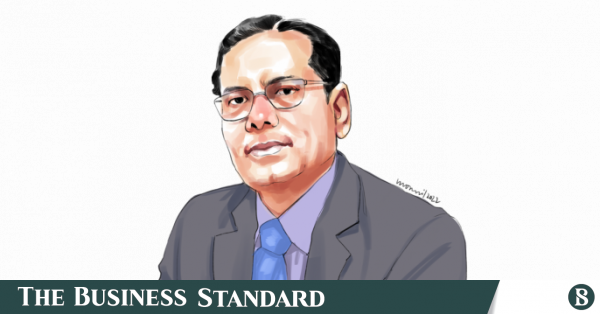
About The Author