He stresses role of communities in supporting girls beyond home
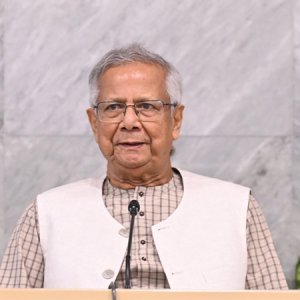
BRAC Executive Director Asif Saleh. Photo: Collected
“>

BRAC Executive Director Asif Saleh. Photo: Collected
Social barriers to women’s participation remain the biggest challenge over the past one and a half years, BRAC Executive Director Asif Saleh said.
He made the remarks while speaking at a reunion of the Adolescent Development Programme (ADP) alumni in Savar today (27 April).
BRAC organised the reunion of former ADP members after a long break at its CDM Centre, where alumni shared their experiences and highlighted the programme’s long-term impact.

Asif Saleh said prevailing social attitudes continue to restrict girls’ participation in activities and opportunities outside the home.
“However, we have seen that if communities are engaged, these barriers can be significantly reduced. When local leaders bring their daughters forward, others are also encouraged,” he said, adding that building trust and human connection is key to addressing the problem.
BRAC’s Director of Education, Skills Development and Migration Programme Safi Rahman Khan said the ADP has not been discontinued but has evolved over time.
While it continued as a standalone programme until the COVID-19 period, its activities were later integrated into different departments, he said.
He said under the “SELF” programme, initiatives such as “Swopnosarathi” and “Girls Brigade” are working to prevent child marriage, engaging more than 60,000 members across around 2,400 villages in 31 districts.
Safi Rahman added that the “STAR” programme under skills development has evolved from ADP, helping adolescents connect with employment opportunities.
“The BRAC Youth Platform is also providing training on leadership, values and community initiatives,” he said.
At the school level, “Creative Clubs” and “Future Clubs” are being developed to enhance social and emotional learning, he added.
Safi Rahman said sports and cultural activities are being used to build confidence, leadership and creativity, aiming to develop a skilled and inclusive generation.
In the 1990s, BRAC observed that rural adolescent girls were facing exclusion due to age and gender. In response, the ADP initiative was launched to provide a safe environment, education opportunities and life skills training.
From the late 1990s to early 2000s, thousands of girls were empowered through adolescent centres and the APON (Adolescent Peer Organised Network) course.
A 2007 study found the programme increased awareness among girls about child marriage and dowry while also strengthening their confidence. Many of those girls are now playing roles in their families and society.
However, challenges remain. A 2026 report by the Bangladesh Bureau of Statistics shows the rate of child marriage has risen to 41.06% in the country. It also found that 71% of secondary-level school dropouts are linked to child marriage.
Against this backdrop, BRAC is focusing on sports and cultural activities as tools for building confidence and leadership among adolescents. Through the “Swopnosarathi” project, the organisation is working on child marriage prevention, social protection and skills development.
About The Author