The BNP leader says police, RAB and other forces were used to suppress dissent during the previous government.
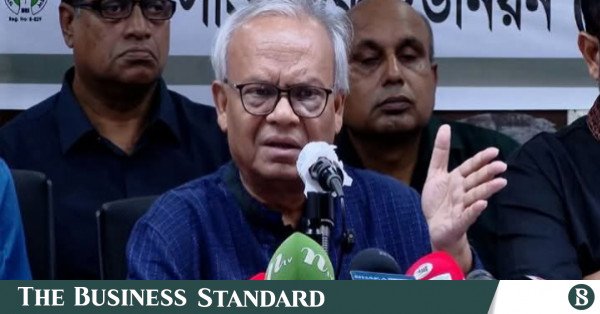
BNP Acting Secretary General Ruhul Kabir Rizvi addressing a session at the National Press Club on Thursday (24 September).
“>

BNP Acting Secretary General Ruhul Kabir Rizvi addressing a session at the National Press Club on Thursday (24 September).
The previous Sheikh Hasina government reshaped law enforcement agencies and used them to sustain its authoritarian rule and suppress dissent, BNP Acting Secretary General Ruhul Kabir Rizvi has alleged.
“People loyal to the government were appointed to police, RAB and other law enforcement agencies, and they were used brutally to suppress opposing views,” Rizvi said while speaking as the chief guest at a discussion and prayer programme at the National Press Club today (24 September).
The event was organised by the Bangladesh Federal Union of Journalists (BFUJ) to mark the second death anniversary of its late president Ruhul Amin Gazi.

Rizvi said no sector of the country was free from what he described as the previous government’s “attack” in the name of fascism.
“From university campuses and sports grounds to roads and streets, attempts were made to bring everything under control,” he said.
Recalling the political situation during the previous government, Rizvi said that although democratic spaces had gradually narrowed, places such as the National Press Club still provided some room for political expression.
“But eventually, attempts were made to interfere there as well,” he said, adding that he was once arrested from the National Press Club after a large number of police were deployed there.
Rizvi said history had shown that fascist or authoritarian regimes might survive for a period, but their fall was ultimately inevitable.
Remembering journalist leader Ruhul Amin Gazi, Rizvi described him as a fearless freedom fighter and uncompromising journalist who did not compromise with what he called fascism despite facing repression, pressure, lawsuits and remand.
“Even after enduring persecution, he stood tall and fought for democracy and freedom of expression,” Rizvi said.
Recalling his personal relationship with Gazi, Rizvi said the journalist leader’s death before the political change on 5 August had deeply affected him.
He said Gazi, who believed in the values of the Liberation War and independence, would remain a role model for future generations through his life and struggle.
Dhaka Union of Journalists (DUJ) President Mohammad Shahidul Islam chaired the programme, while its General Secretary Khurshid Alam moderated it.
About The Author