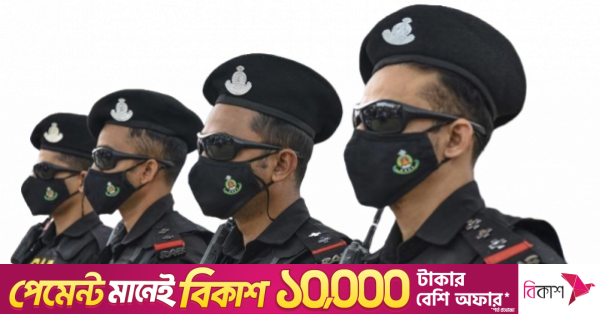
The Rapid Action Battalion (RAB) is set to be dissolved and replaced by a specialised Bangladesh Police unit named the Special Response Battalion (SRB), according to a draft law prepared by the government.
A draft titled the Special Response Battalion (SRB) Act, 2026 has been prepared, proposing the structure, responsibilities, powers, administration and accountability mechanisms of the new unit.
The draft law was published yesterday (6 August) on the Ministry of Home Affairs website for public feedback.

Under the draft, the SRB will function as a specialised unit of Bangladesh Police, with its headquarters in Dhaka.
The government may establish additional units elsewhere in the country as required. The force will be headed by a director general with the rank of additional inspector general of police (Additional IGP).
The proposed law assigns the SRB responsibility for preventing and investigating terrorism, militancy, organised crime, narcotics offences, illegal arms, explosives and other serious crimes.
It will also be authorised to investigate and conduct special operations in cases assigned by the courts, the government or the inspector general of police.
Unlike the existing structure, the new unit may recruit personnel not only from the police but also from other forces on deputation under applicable laws. The minimum deputation period has been proposed at two years.
The draft authorises SRB members to carry firearms and exercise powers of search, seizure and arrest in accordance with the law and relevant rules.
The unit will also have its own detention facilities, evidence storage and interrogation rooms. Where the proposed law is silent, the provisions of the Code of Criminal Procedure will apply.
Separate disciplinary and conduct rules have also been proposed for SRB personnel, including provisions for punitive action in cases of negligence, misconduct or unlawful activities.
The draft states that once enacted, the new force will replace the RAB and assume responsibility for combating serious crimes and conducting special operations.
According to Ministry of Home Affairs sources, the draft will be finalised after obtaining opinions from relevant ministries and divisions before being placed before the Cabinet. If approved, it will then be introduced in parliament.
One of the draft law’s key additions is the establishment of a Complaint Redress Committee, aimed at strengthening accountability in light of allegations previously raised against the RAB.
The committee will be chaired by an additional director general of the SRB and include representatives from the Ministry of Home Affairs and Police Headquarters, the director (Legal and Media), and a government-nominated member with at least 10 years of experience in human rights, law or judicial administration.
The committee will be empowered to investigate complaints from citizens, form inquiry teams where necessary, and recommend action to the relevant authorities if preliminary evidence supports a complaint.
It will also be able to examine allegations of unlawful influence, harassment, irregularities, promotion and posting-related grievances, disciplinary issues and other misconduct within the force.
The draft further provides that if an SRB member absconds after committing a disciplinary or criminal offence, the battalion commander may request the officer-in-charge of the relevant police station to arrest the individual.
Such a written request will be treated as equivalent to a warrant issued by a magistrate, requiring the police to arrest the absconding member and hand them over to the concerned battalion.
About The Author