Migration to Chattogram is rising due to climate change, river erosion and the search for better livelihoods, making access to housing, jobs, education, healthcare and other civic services a major challenge, experts said.
However, migration should not be viewed only as a problem, they said, as doing so could overlook its potential to contribute to the city’s economy.
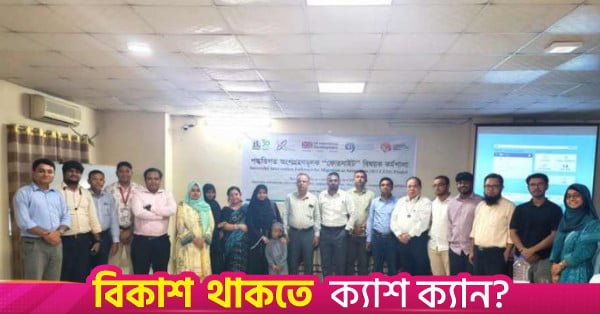
The speakers made the remarks at a participatory methodological ‘foresight’ workshop organised by the Refugee and Migratory Movements Research Unit (RMMRU) under the Successful Intervention Pathways for Migration as Adaptation (SUCCESS) project at Hotel Saikat’s Halda Hall in Chattogram today (24 August).

The workshop was supported by the International Development Research Centre (IDRC) and the Foreign, Commonwealth and Development Office (FCDO).
Experts said planned urbanisation, skills development and employment opportunities, alongside civic services and social protection, could help migrants become a major source of economic activity and productivity in Chattogram.
Sanjoy Biswas, associate professor of law at Premier University and a migration researcher, said viewing migration solely as a problem would make it difficult to address the broader challenge.
“If we view migration only as a problem, we will fail to address the main issue. Instead, our focus should be on how to create an inclusive society by ensuring a liveable environment and all kinds of civic facilities for those arriving in the city, while making use of their skills and potential,” he said.
He said focusing only on the number of people arriving in Chattogram creates a perception that migrants are putting pressure on the city.
“Our approach should be to consider how Chattogram, as a megacity, can include migrants and use their potential to move towards a better future,” he said.
Sanchay said around 4.1 million people moved from rural and coastal areas to cities in 2019 due to various climate change-related factors.
“Therefore, we want to view this migration as an opportunity rather than only as a crisis,” he said.
He said a large number of people are moving to Chattogram from river erosion-prone and coastal areas.
At the same time, members of ethnic minority communities from the Chittagong Hill Tracts are also moving to the city in search of better opportunities in education, healthcare, livelihoods and employment.
About The Author