Prime Minister’s Adviser and spokesperson at the Prime Minister’s Office, Mahdi Amin, outlined the government’s achievements and future plans. He said a 180-day priority action plan has already been adopted to implement the election manifesto.
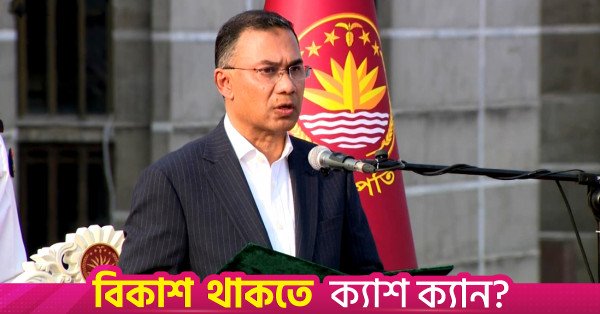
Tarique Rahman takes oath as the prime minister of Bangladesh on 17 February 2026. Photo: Courtesy
“>

Tarique Rahman takes oath as the prime minister of Bangladesh on 17 February 2026. Photo: Courtesy
The government has completed two months in office, unveiling a list of 60 major initiatives taken during this period to advance state reform, public welfare, and inclusive development.
In a statement sent to the media today (18 April), Prime Minister’s Adviser and spokesperson at the Prime Minister’s Office, Mahdi Amin, outlined the government’s achievements and future plans. He said a 180-day priority action plan has already been adopted to implement the election manifesto.
The statement detailed a wide range of measures across sectors:

Agriculture and social protection
Under a pilot to empower women, 37,567 families have received “Family Cards” providing Tk2,500 in monthly cash assistance. A “Farmer’s Card” programme covering 22,000 farmers in 10 districts has also been introduced, while loans of up to Tk10,000 for nearly 1.2 million small and marginal farmers have been waived with interest.
Parliament and legal reform
In a first for parliamentary practice, 133 ordinances were settled in the first session. Sixteen of these, including those related to enforced disappearances and human rights, will be reviewed further and tabled as bills.
Energy, environment and infrastructure
Excavation of 20,000km of rivers and canals has begun in 54 districts. Fuel prices have been kept stable through increased subsidies despite global pressures. Rooftop solar has added 35MW to the national grid, with a target of 10,000MW by 2030. A pilot “Fuel Card” system has also been launched.
Religious and social services
Monthly stipends have been introduced for 4,908 imams, muezzins, and clergy of other faiths. The government has also taken steps to modernise the zakat system and plans to introduce a “Probashi Card” for expatriates. Hajj costs have been reduced by Tk12,000 per ticket, alongside the introduction of a Nusuk Hajj card.
Employment and industry
A five-year plan has been adopted to fill 468,220 vacant government posts. Initiatives are underway to reopen closed sugar, silk, and jute mills, and to build innovation ecosystems linking universities with economic zones and hi-tech parks.
Economy and investment
The government has set a target of building a trillion-dollar economy by 2034 and raising GDP growth to 8% by 2030. Restrictions on repatriating foreign investment up to Tk1 billion have been eased, and payment of workers’ wages and bonuses ahead of Eid was ensured.
Labour market and migration
Malaysia’s labour market has been reopened, while new bilateral agreements have been signed with eight countries, including seven in Europe. Technical training curricula have been upgraded nationwide.
Technology and healthcare
Steps are underway to introduce PayPal and other payment gateways. The government has announced recruitment of 100,000 healthcare workers, 80% of them women, and plans to roll out e-health cards.
Education and sports
Re-admission fees have been scrapped and scholarships doubled. Students seeking higher education abroad can now access bank guarantees of up to Tk1 million without collateral. Sports have been made compulsory from grade four, and recruitment of sports teachers at the upazila level is planned.
Governance and austerity
The prime minister has opted to use her private residence instead of a state residence and is covering travel expenses personally, the statement said. Protocol measures have been reduced, and ministers and MPs have declined duty-free cars and government plots.
Public health and law enforcement
A national cleanliness drive has been launched to combat dengue, while vaccination campaigns for measles have resumed. Measures have been taken against extortion and to promote a more citizen-friendly police force.
Transport and urban services
Electric buses and women-only “pink bus” services have been introduced in Dhaka. Laws have been amended to impose stricter penalties on river encroachment.
Media and connectivity
The government pledged to ensure freedom of speech and media. Free internet services are being introduced at major airports, on trains, and in thousands of educational institutions.
Diplomacy and justice
Efforts are underway to strengthen economic diplomacy, improve relations with neighbouring countries, and recover laundered money through legal cooperation with 10 countries.
In the statement, Mahdi Amin said the government, under Prime Minister Tarique Rahman, is working to restore public trust through transparency and accountability.
“Implementing the election manifesto remains our top priority as we strive to build a prosperous Bangladesh,” he added.
About The Author