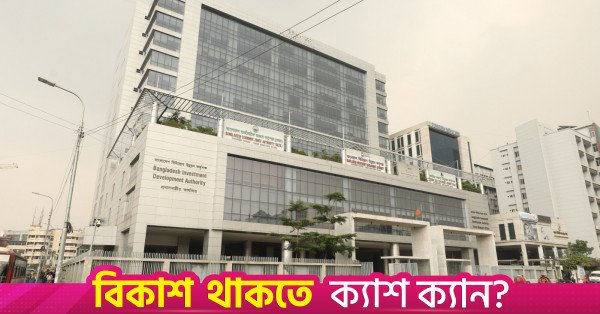
The 750-bed facility in Dhaka’s Shahbagh was inaugurated in September 2022 to provide advanced treatment to patients who otherwise travel abroad. However, it could not become fully operational due to shortages of doctors and support staff and the absence of a clear management structure.
The government plans to relaunch Bangladesh Medical University’s (BMU) Tk1,500 crore Super Specialised Hospital under a non-profit corporate model, nearly four years after its inauguration.
The 750-bed facility in Dhaka’s Shahbagh was inaugurated in September 2022 to provide advanced treatment to patients who otherwise travel abroad. However, it could not become fully operational due to shortages of doctors and support staff and the absence of a clear management structure.
Under the new plan, the hospital will not be handed over to any private entity. Instead, it will operate as a separate company under the Companies Act, with BMU holding 90% of the shares and the government 10%.

State Minister for Health Dr MA Muhit told TBS that the hospital would remain under BMU ownership despite the new corporate structure.
Infograph: TBS
“>

Infograph: TBS
The government borrowed money to build the facility and is still repaying the loan, he said.
A senior hospital official, requesting anonymity, told TBS that the facility would be run by a board of directors comprising experts in corporate management, law, accounting and other fields, along with government representatives.
The board will make major decisions, while a recruitment committee under it will oversee appointments.
The corporate structure is also intended to speed up procurement. Government hospitals currently have to follow Public Procurement Rules, and procurement files can take six to eight months, even up to two years in some cases, to clear, the official said.
Under the new system, the hospital would be able to make urgent purchases and replace faulty equipment more quickly.
The proposal is currently with the Ministry of Health. Once procedures are completed, the ministry is expected to issue a no-objection certificate, after which the hospital will apply for registration with the Registrar of Joint Stock Companies and Firms.
The authorities are targeting September or October to make the hospital operational.
Corporate, but not-for-profit
“We want to let it operate independently under the new structure,” said State Minister Muhit.
The Bangladesh Medical University (Second Amendment) Bill, 2026, passed on 13 July, gave the university legal authority to form companies, invest in them, hold shares and participate in their management.
The state minister said the government wants to develop the facility to a standard comparable with leading corporate hospitals in Bangladesh and those in Singapore, Thailand and India.
“We want it to be a corporate hospital, not-for-profit,” he said. “We will charge fees so that we can offer good salaries and remuneration to doctors, nurses and employees and maintain high standards of facilities.”
Any surplus will be reinvested in improving services, infrastructure and human resources rather than distributed as profit. Treatment charges will remain at an affordable level, he said.
A hospital official said fees have not yet been finalised but are expected to be somewhat higher than BMU’s existing charges while remaining affordable.
Separate management, new recruitment
The hospital will function as a unit “completely separate” from BMU’s regular administrative structure.
The BMU vice-chancellor is expected to serve as chairman, while a pro-vice-chancellor is likely to be appointed managing director. An experienced professional from outside BMU will also be recruited as chief executive officer.
Doctors, nurses and other employees will be recruited separately, and all staff will work on contractual terms. The authorities are also considering appointing doctors on a non-practising basis so they cannot maintain private practices outside the hospital.
“We are considering the non-practising option so that they can receive good remuneration from here,” Muhit said.
Reducing overseas treatment
The government’s main objective is to reduce patients’ dependence on hospitals in India, Thailand and Singapore by offering advanced treatment domestically.
“We want to ensure that the section of society that currently goes to Bangkok or Singapore for treatment can receive the same services within Bangladesh’s health system,” Muhit said.
Health economist Prof Dr Syed Abdul Hamid said the project’s biggest weakness was the failure to plan for human resources from the beginning.
Although the government spent Tk1,500 crore on the building and modern equipment, specialised doctors, nurses and technologists were not recruited and trained in time, he said.
“For such a hospital project, the organogram should be finalised, posts created, recruitment completed and training arranged from the day construction begins,” Hamid said.
He said the corporate model was a realistic option because retaining specialised doctors under the government pay structure is difficult.
However, he urged the government to ensure access for poorer patients and proposed a National Health Fund to subsidise or provide free treatment to low-income patients.
The hospital houses five specialised centres: Cardio and Cerebrovascular, Hepatobiliary and Liver Transplant, Mother and Child Health Care, Kidney Disease, and Accident and Emergency.
It has 14 operating theatres, a 100-bed ICU, a 100-bed emergency unit, six VVIP cabins, 22 VIP cabins and 25 deluxe cabins.
About The Author