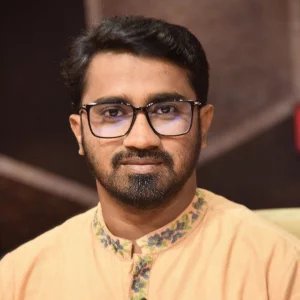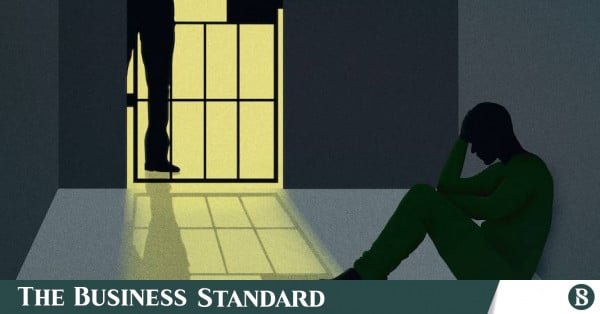
A victim of enforced disappearance has described before the International Crimes Tribunal the brutal and inhumane treatment inflicted on detainees at the Task Force for Interrogation (TFI) cell during the Awami League government.
Dr Ashik-Ul-Akbar, who was allegedly held incommunicado at the TFI cell, told the tribunal that detainees were given only three minutes to use the toilet, urinate and bathe. Anyone who took longer was severely beaten, he said.
Ashik testified as a prosecution witness in the crimes-against-humanity case over enforced disappearances at the TFI cell against former prime minister Sheikh Hasina and 16 others, including current and former military officers. He gave his deposition before International Crimes Tribunal-1 today (13 August), after which defence lawyers cross-examined him.

In his testimony, Ashik said, in 2016, he was a third-year student at Rangpur Prime Medical College and a member of Islami Chhatra Shibir. He regularly took part in rallies and meetings against the then Hasina government and said he had attended the Shapla Chattar gathering in 2013 at the call of Hefazat-e-Islam.
Describing his abduction, he said that at around 3:30am on May 23, 2016, while staying at his maternal uncle’s home in Tongi, Gazipur, he heard someone banging loudly on the door.
“When the door was opened, I saw 10 to 12 men in plainclothes. They asked for my name. As soon as I gave my name, they put a thin black cloth over my head and took me out of the house while beating me. I saw a black microbus,” he told the tribunal.
He said he was put inside the vehicle, his eyes were tightly blindfolded and a cap was placed over his head. Two men sat on either side of him, held him tightly by the waist and repeatedly beat him from behind.
He was then taken to a secluded, cloth-enclosed place, where his hands were handcuffed and his clothes were removed. He was given an old lungi to wear.
He said detainees were given three meals a day. During meals, one hand would be uncuffed and the blindfold raised slightly. Someone would stand behind them holding a stick.
“We had to eat whatever food they gave us. If anyone refused to eat, they would beat them severely. Out of fear, we had to quickly eat whatever was given,” he said.
Three minutes for toilet and bathing
Describing the conditions inside the detention facility, Dr Ashik said detainees were given only three minutes to defecate, urinate and bathe.
“If it took more than three minutes, they would beat us severely. After finishing within three minutes, we had to remain standing with our backs turned and our eyes blindfolded and knock on the door. They would open the door, check the blindfold and then handcuff us again before taking us back to where we were kept,” he said.
He said he was taken for interrogation on one occasion.
“After taking me into the interrogation room, they beat me severely and ordered me to confess that I was involved with a militant organisation. When I denied it, they beat me again,” he said.
He said his handcuffs were removed and a towel was tied around his hands. A hook was attached to the towel and he was suspended using a machine.
“As I was hanging, the skin under both my armpits began to tear because of my weight. Someone standing nearby whispered, ‘Sir, he is very fat. He will die, sir,'” he testified.
He said he was then lowered and again ordered to confess to being a member of a militant organisation.
“When I refused, they said they had many more ways to torture me. When I still refused, they administered electric shocks to both my earlobes,” he said.
He told the tribunal that he felt he was dying during the electric shocks and experienced severe pain and fear.
“Then I told them I would confess to whatever they wanted me to confess,” he said.
Alleged staged RAB media briefing
Dr Ashik said that after 60 days, he and three other detainees were taken to the RAB-1 media centre, where their handcuffs and blindfolds were removed.
He said officers brought out various weapons, nuts and bolts and different books from a bag and arranged them on a table before ordering the four detainees to stand behind it. They were then photographed.
“While we were in jail, we saw exactly those photographs published in various newspapers,” he said.
He said they were subsequently handcuffed and blindfolded again and left on the veranda of the RAB-1 office.
At around 10pm that night, they were taken to Tongi police station, where the officer-in-charge reportedly refused to accept a case after hearing his name.
The officer, according to Dr Ashik, made a phone call and said, “Sir, we couldn’t find Ashik-Ul-Akbar, the son of a freedom fighter. Look, RAB kept him for two months and has now brought him here to file a case.”
He said the OC later accepted the case after receiving another phone call.
On 21 July, 2016, three cases were filed at Tongi police station against the four men over the same incident, he said.
Two months in disappearance, 13 months in jail
Dr Ashik said he remained disappeared for two months and spent another 13 months in jail before being released on bail following a High Court order.
“The incident delayed my medical studies by three years. I obtained my MBBS degree in 2023,” he said.
He said he had also provided details of his experience to the Commission of Inquiry on Enforced Disappearances.
He sought the maximum punishment for former prime minister Sheikh Hasina, her security adviser Tarique Ahmed Siddique, the then home minister and the RAB personnel allegedly involved in his torture.
17 accused in TFI cell case
The case concerns alleged enforced disappearances at the RAB’s TFI cell during the Awami League government. Former prime minister Sheikh Hasina and 16 others are facing trial.
Ten of the accused are currently detained at the Dhaka Cantonment sub-jail. They include former RAB additional director generals Brig Gen Md Jahangir Alam, Brig Gen Tofail Mustafa Sarwar, Brig Gen Md Kamrul Hasan and Brig Gen Md Mahabub Alam; former RAB additional DG Col KM Azad, Col Abdullah Al-Momen and Col Anwar Latif Khan; and former directors of RAB’s intelligence wing Col Md Mashiur Rahman Jewel, Lt Col Saiful Islam Sumon and Lt Col Md Sarwar Bin Kashem.
Seven other accused are absconding. They are former prime minister Sheikh Hasina; her former adviser Maj Gen (retd) Tarique Ahmed Siddique; former home minister Asaduzzaman Khan Kamal; former RAB director generals Benazir Ahmed, M Khurshid Hossain and Md Harun-or-Rashid; and former RAB intelligence wing director Lt Col (retd) Muhammad Khairul Islam.
Charges were framed against the accused on 23 December, 2025, following which the trial began.
About The Author