Highlights:
- Dhaka sees no risk in joining the Mecca Defence Pact
- Bangladesh says talks with Saudi Arabia and Türkiye are ongoing
- No formal invitation has yet been extended to Bangladesh
- Kobir says UN peacekeeping experience supports Bangladesh’s role
- India says the pact has security implications for it
- PM Tarique Rahman’s Saudi visit likely to be finalised soon
Describing the “Mecca Pact” as a unique pact, State Minister for Foreign Affairs Humaiun Kobir today (30 August) said Bangladesh sees no risk in the pact, saying the country will continue to maintain balanced relations with different international partners.
“What is the point of worrying about dying before you even live? I mean, if we start worrying about risks before even initiating the process, that becomes a problem,” he told reporters at the Ministry of Foreign Affairs when a journalist drew his attention to the likely advantages and the potential risks associated with the pact.

The state minister said this is a “unique pact” that has been initiated, and these are new opportunities.
Entering into one specific sphere within today’s volatile or crisis-driven international political climate does not mean a particular country cannot contribute to other alliances or fields, Kobir said. “It does not restrict your scope. Not necessarily. You have to approach,” he said.
The state minister said a country like Bangladesh must approach foreign policy and security cooperation in a “very integrated and flexible” manner, aligned with the dynamics of the current international political system.
Based on this, he said, there is no risk involved here. “We will balance our international relations. Bangladesh stands for global peace and stability, and wherever peace and stability are the primary goals, Bangladesh will always be present,” Kobir said.
Asked about Bangladesh’s position on the pact, he said the country’s long experience in UN peacekeeping provides a strong basis for contributing to peace and stability in the Muslim world.
“Bangladesh is a huge contributor to international peacekeeping under the United Nations framework. Maintaining peace is not a new concept for Bangladesh; we have extensive experience and expertise in this area, and we are recognised globally for it. We do this all around the world, so why should we not do it for our Muslim brotherhood here? Especially when it involves Muslim nations, particularly the Kingdom of Saudi Arabia, which is the Custodian of the Two Holy Mosques,” Kobir said.
Approaching this with a positive spirit to step forward and assist with some of the challenges in the Muslim world is not a bad thing at all, he said.
“Therefore, we view it positively. Discussions on these matters have progressed constructively, and let’s see how things develop as we engage further. We view this very positively,” he said.
Asked whether Bangladesh has discussed the issue with Saudi Arabia and Turkey on the sidelines of an OIC meeting and whether a formal invitation has been extended, Kobir said discussions are ongoing. “Yes, talks took place. Conversations were held, positively, very positively.”
When a formal invitation is extended, Kobir said they will certainly inform the media. “We are currently holding discussions on this matter, and those discussions are progressing positively with all bilateral partners,” he said.
“As I mentioned, Bangladesh’s expertise and experience are actively sought after. We are not new to this field, nor are we novices in peace operations. We are experts, contributing one of the largest contingents to the UN peacekeeping system,” Kobir said.
“Thus, we stand at the forefront of international ground security. We contribute because our participation brings distinct value – not because there are no other options, but because stakeholders recognize that Bangladesh genuinely adds value due to its rich experience and expertise,” he added.
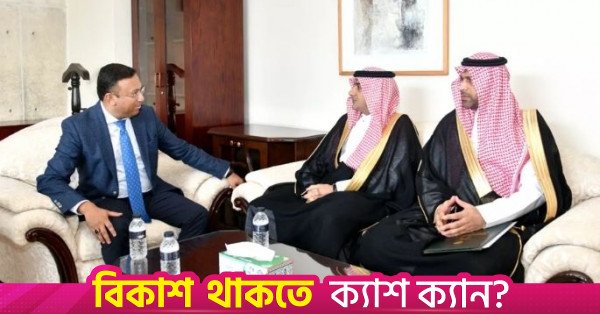
Earlier, Saudi Ambassador to Bangladesh Abdullah Zafer bin Abiyah called on the State Minister for Foreign Affairs and both sides expressed satisfaction over the steady progress of cooperation between Bangladesh and Saudi Arabia across various sectors.
The state minister emphasised the importance of sustained high-level exchanges and regular engagement between the two countries to maintain the current momentum and further elevate bilateral relations for mutual benefit, said the Ministry of Foreign Affairs.
Bangladesh reiterated that it will continue to pursue its “Bangladesh First” policy to promote friendly bilateral relations with other countries, including our neighbours, on the basis of sovereign equality, national dignity, non-interference in each other’s internal affairs and mutual benefit.
Internal matter of muslim family
Addressing Parliament on Thursday (27 August), Foreign Minister Khalilur Rahman appeared to push back against concerns expressed over the prospect of Bangladesh joining the pact. He described the agreement as an internal matter among Muslim-majority countries and said there was no reason for other countries to be concerned.
“This is an internal matter of our family, the Muslim family. Therefore, there is no scope for others to be concerned about it,” he told Parliament. Dr Khalilur said Bangladesh would positively consider joining the Mecca Joint Defence Agreement if its existing members extended an invitation.
India on Friday said the “Mecca Pact” has security implications for India, noting that it is closely following developments that have implications for its national security.
“We continue to follow all developments that have a bearing on India’s security and take all necessary steps to safeguard it,” Spokesperson at the Indian Ministry of External Affairs Randhir Jaiswal told reporters in New Delhi.
Foreign Minister Khalilur said Bangladesh’s possible participation in the arrangement is not an issue at this stage, as the matter will depend primarily on the intention of the countries currently involved in the pact.
“If they express an intention to invite Bangladesh to join this pact, we will certainly have to consider the matter,” he said. Khalilur said that it will be premature to discuss the advantages and disadvantages of Bangladesh joining the arrangement before any such invitation is made. “We will certainly keep all these matters under consideration,” he said.
Leader of the Opposition in parliament and Bangladesh Jamaat-e-Islami Ameer Shafiqur Rahman said joining the Pact is an entirely sovereign and internal matter for Bangladesh. “If Bangladesh takes any decision considering the needs and interests of the country and its people, there is no reason for anyone else to feel disturbed or distressed by it,” he said.
On 24 August, State Minister Kobir said Bangladesh views the “Mecca Defence Pact” involving Saudi Arabia, Pakistan and Türkiye positively, noting that it would not be unusual for Bangladesh to participate in such an initiative among Islamic nations.
“We have expressed interest in the Mecca Defence Pact. So, if something happens in the Middle East, like a security pact among Islamic nations, it isn’t unusual to participate. Let’s see. It’s being viewed positively,” he told reporters at the Ministry of Foreign Affairs in response to a question.
The newly appointed State Minister said Bangladesh is now a country of recognition, with stakeholders in the Middle East and around the world showing interest in engaging with Dhaka. “They are inviting the leadership of Bangladesh, particularly Prime Minister Tarique Rahman, to come and participate,” he said, adding that Mecca has always held a special place for Bangladesh and its people.
“Mecca is in the heart of Bangladesh and in the hearts of the people,” Kobir said.
The state minister said Bangladesh’s foreign policy has entered a new phase, with the government focusing on strengthening bilateral and multilateral relations while enhancing the country’s global visibility and influence.
Speaking to reporters at the Ministry of Foreign Affairs on his first working day as state minister, Kobir said the new responsibility is a continuation of the work he was doing as the Prime Minister’s Adviser on Foreign Affairs.
“It is not the first day of work as such. Work is about continuity,” he said, adding that the new assignment requires the government to “hit the ball… ground running.” He said a strategic framework for Bangladesh’s foreign policy has been established over the past six months and that the government would now begin rolling out engagements based on that foundation.
Security at a premium
Earlier this month, Saudi Arabia, Turkey and Pakistan signed a defence agreement under which an attack on one country would be treated as an attack on all three, officials said, solidifying cooperation among the three regional powers amid growing security concerns, according to the Associated Press.
The agreement was signed in the Saudi holy city of Mecca by Saudi Crown Prince Mohammed bin Salman, Turkish President Recep Tayyip Erdogan and Pakistani Prime Minister Shehbaz Sharif, according to statements issued by the three countries.
The “Mecca Joint Defence Agreement” brings together three Sunni Muslim-majority states: oil-rich Saudi Arabia, nuclear-armed Pakistan and Türkiye, which has NATO’s second-largest army and a rapidly growing defence industry. The pact is intended to enhance cooperation and deterrence amid increased regional uncertainty and security threats linked to the war in Iran.
“The agreement is intended to strengthen collective deterrence against any act of aggression, and stipulates that any armed attack against any one of the three states shall be regarded as an attack against them all,” the statements said. It also provides for “the enhancement of all aspects of defence cooperation among the three States,” they said.
A Saudi visit beckons
Prime Minister Tarique Rahman’s visit to Riyadh, at the invitation of Saudi Crown Prince and Prime Minister Mohammed bin Salman, is likely to be finalised soon after the summer. Mohammed bin Salman has invited the Prime Minister to visit Saudi Arabia to discuss ways to strengthen bilateral relations and exchange views on regional and international issues. Saudi Ambassador to Bangladesh Dr Abdullah Zafer H bin Abiyah handed over the invitation letter to Tarique Rahman during a recent meeting with him at the Prime Minister’s Office in the Secretariat.
In the letter, the Saudi Crown Prince expressed his country’s keenness to further strengthen bilateral relations with Bangladesh in areas of mutual interest, with a view to fulfilling the aspirations of the two countries and their brotherly peoples.
He said Saudi Arabia was pleased to invite the Bangladesh Prime Minister to visit the Kingdom to discuss ways to enhance bilateral ties and consult on regional and international issues.
About The Author