Thrive1000 develops digital tools for maternal nutrition.
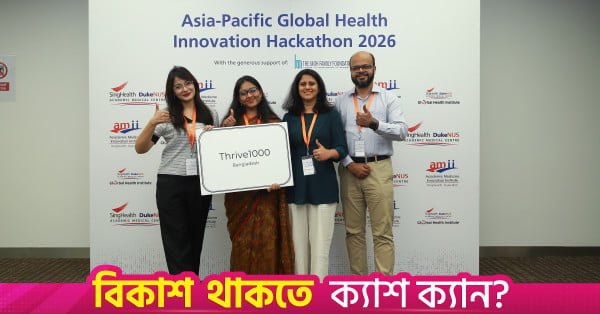
A Bangladeshi team ‘Thrive1000’ secured a prize at the second Asia-Pacific Global Health Innovation Hackathon in Singapore. Photo: Courtesy
“>

A Bangladeshi team ‘Thrive1000’ secured a prize at the second Asia-Pacific Global Health Innovation Hackathon in Singapore. Photo: Courtesy
A Bangladeshi team has secured a prize at the second Asia-Pacific Global Health Innovation Hackathon in Singapore with a proposed digital platform designed to strengthen prenatal nutrition support for pregnant women.
Team Thrive1000 was one of three winning teams from Bangladesh, Indonesia and Thailand at the two-day event held from 18 to 19 September. The hackathon brought together 13 teams from across Asia to develop solutions to maternal and child nutrition challenges.
Thrive1000’s proposed platform will connect pregnant women in low- and middle-income countries with healthcare professionals for prenatal nutrition guidance.

The platform is planned in both English and Bangla and will feature in-app nutrition screening and a chatbot. It will also help expectant mothers take supplements correctly, track their babies’ growth during pregnancy and receive reminders for antenatal appointments and follow-up care.
The two other winning teams were FeedWise from Indonesia and MaMaMate from Thailand.
FeedWise developed a digital decision-support tool to help Indonesian community health volunteers provide personalised counselling on infant and young child feeding.
MaMaMate is developing an artificial intelligence-powered nutrition companion for village health volunteers in rural Thailand. The tool will tailor feeding guidance based on a child’s age, weight, growth and allergies, while also supporting breastfeeding mothers and directing them to nearby clinics when needed.
The three winning teams have earned places in the Asia-Pacific Global Health Innovation Hackathon Incubation Programme, where they will further develop their concepts into fundable, real-world solutions.
The programme will provide resources for building and piloting the projects in the teams’ own communities, along with specialised mentorship in maternal and child health, implementation science, innovation and partnership-building.
The event was jointly hosted by the Academic Medicine Innovation Institute, the SingHealth Duke-NUS Global Health Institute and SingHealth’s International Collaboration Office.
Prof Lim Soon Thye, Deputy Group Chief Executive Officer for Research, Education & Innovation at SingHealth, said the hackathon aimed to promote practical innovations that could improve maternal and child health in real-world settings.
Organisers said this year’s theme reflects a wider nutrition crisis in Asia, where undernutrition, anaemia and rising childhood obesity are occurring simultaneously.
According to figures cited by the organisers, Asia accounted for nearly 40% of the world’s hungry population in 2024, while nearly one in three women aged 15–49 in Asia and South Asia suffer from anaemia.
Acute malnutrition affects 8.9% of children in the region, while more than 35 million children under five are overweight.
About The Author