The study also finds 97% of children who were eligible for vaccination but had not received a single dose tested positive for measles.
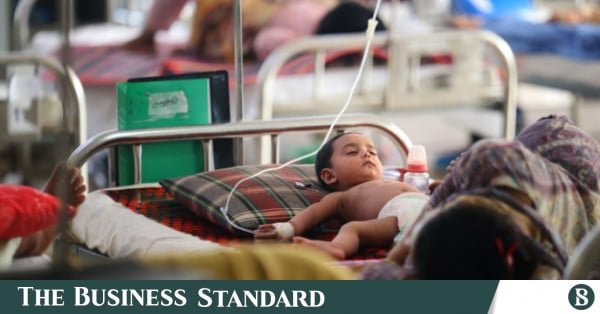
Children receive treatment during Bangladesh’s measles outbreak. Photo: Mehedi Hasan/TBS
“>

Children receive treatment during Bangladesh’s measles outbreak. Photo: Mehedi Hasan/TBS
Highlights
- 82% of children who died lacked exclusive breastfeeding
- 97% of unvaccinated eligible children tested positive for measles
- B3 strain, vaccination gaps and maternal immunity deficits drove outbreak
- Malnutrition affected 65% of infected children
- Children aged six to nine months faced highest risks
- Measles-related deaths reached 922, including suspected cases
A joint study by the Bangladesh Shishu Hospital and Institute and the International Centre for Diarrhoeal Disease Research, Bangladesh (icddr,b) has found that 82% of children who died from measles had not been exclusively breastfed during their first six months of life.
The study also found that 97% of children who had reached the eligible age for measles vaccination but had not received a single dose tested positive for the disease.
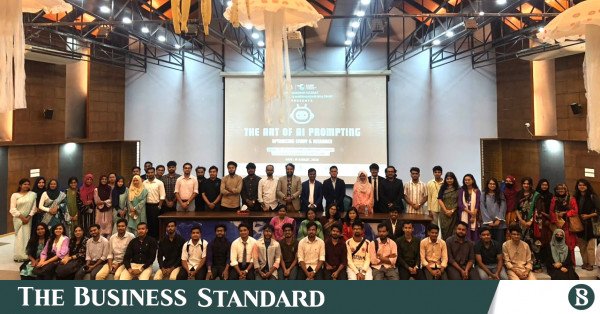
The findings were presented today (19 August) at a workshop titled “Measles Transmission and Genetic Surveillance” and a research grant award ceremony at the Bangladesh Shishu Hospital and Institute in Sher-e-Bangla Nagar.

The event was chaired by Prof Dr AKM Azizul Haque, chairman of the Bangladesh Shishu Hospital and Institute.
The hospital-based study was conducted on 354 children receiving treatment for measles at the Bangladesh Shishu Hospital and Institute.
The study findings were jointly presented by Prof Dr Mirza Md Ziaul Islam, director of the Bangladesh Shishu Hospital and Institute, and Dr Mustafizur Rahman, head scientist of the Virology Department at icddr,b.
The study found that the 2026 measles outbreak was not caused by a new variant of the virus. Instead, the spread of the highly contagious B3 strain, gaps in vaccination coverage and inadequate transfer of maternal antibodies through breastfeeding were identified as key factors.
Children aged six to nine months, particularly those suffering from malnutrition, faced the highest risk of infection and death, as maternal immunity declines rapidly before nine months of age while many children have yet to receive routine measles vaccination.
The study found that 65% of infected children suffered from some form of malnutrition. Of them, 12% were severely malnourished and 53% had moderate malnutrition.
Researchers also found that 38% of children infected with measles had not been exclusively breastfed during their first six months. Among the children who died, the proportion rose to 82%.
Vaccination gap
The researchers divided 341 children into four groups based on age and vaccination status.
Among 146 children younger than nine months who were not yet eligible for routine measles vaccination, 142, or 97.3%, tested positive for measles.
Among 126 children who were old enough to receive the vaccine but had not received any dose, 122, or 97%, tested positive.
The study also found that 44 of 48 children who had received one dose of the vaccine, or 92%, tested positive, while 16 of 21 children who had received the recommended two doses, or 76%, tested positive.
Researchers, however, cautioned against interpreting the 76% figure as the infection rate among all fully vaccinated children.
All participants in the study had already been admitted to the hospital as suspected measles patients. Therefore, the figure applies only to the 21 fully vaccinated children included in this hospital-based study.
The researchers said further investigation was needed to determine why 16 children developed measles despite receiving two vaccine doses.
Possible factors include an inadequate immune response following vaccination, declining antibody protection over time, malnutrition and other health conditions. However, determining which factors contributed to the infections was beyond the scope of the current study.
Outbreak may take 2–3 months to control
Health State Minister Dr MA Muhit said the measles outbreak could take another two to three months to come under full control, even if vaccination efforts were accelerated.
“There is no scope for giving unrealistic assurances. Even if vaccination coverage is increased to 100%, it will take another two to three months to fully control the measles outbreak,” he said.
He said efforts were underway to reduce child deaths through treatment and increased field-level surveillance during this period.
“Measles cannot be controlled or deaths prevented by ICUs or ventilators. Timely and effective vaccination is the only way to prevent the spread and deaths from a highly contagious disease like measles,” the minister said.
He attributed the current outbreak to gaps in immunity resulting from delays and policy failures in the 2024 vaccination campaign.
“Thousands of ventilators or ICU beds cannot stop this surge in deaths. Prevention and vaccination are the only solutions,” he said.
Meanwhile, four more children died from measles-like symptoms in the 24 hours until 8am today (19 August), taking Bangladesh’s combined tally of confirmed and suspected measles-related deaths to 922.
About The Author