The association said thefts are also driving up replacement costs and causing revenue losses and service disruptions for customers.
Photo: Collected
“>

Photo: Collected
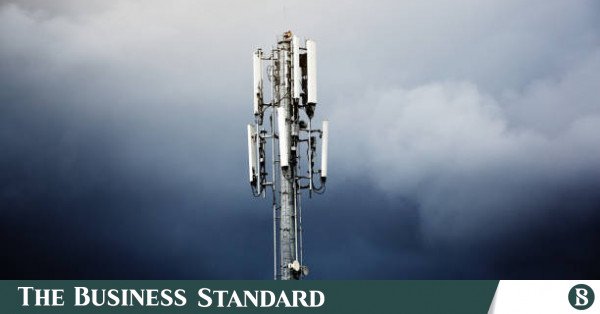
Theft of batteries, power cables and critical network equipment from mobile phone towers has emerged as a growing threat to Bangladesh’s telecom operators, disrupting services, raising unplanned costs and leaving consumers without connectivity.
Over the past 20 months, mobile operators reported the theft of around 16,000 metres of power cables, more than 2,000 batteries, and over 500 remote radio units (RRUs). BTS cards and other critical equipment have also been repeatedly stolen.
The Association of Mobile Telecom Operators of Bangladesh (Amtob) has sought urgent intervention from the Bangladesh Telecommunication Regulatory Commission (BTRC), saying theft and vandalism targeting telecom infrastructure have increased significantly.

Infographics: TBS
“>

Infographics: TBS
In a letter to the BTRC chairman on 16 September, Amtob said incidents had intensified over the past eight months in and around Dhaka, including Badda, Mohammadpur, Lalbagh, Narayanganj, Narsingdi, Savar and Gazipur.
The association said the impact extends beyond the value of stolen equipment as operators face unexpected costs for specialised replacement parts, while outages cause revenue losses and inconvenience to customers.
A senior executive of a mobile operator told TBS that the company had installed CCTV cameras to deter theft, but thieves had started stealing the cameras as well.
“Over the last couple of years, theft cases involving power cables, batteries and other equipment from mobile network infrastructure have increased manifold, adversely affecting both customers and operators,” said Amtob Secretary General Lt Col (retd) Mohammad Zulfikar.
The immediate consequence of tower theft is often loss of connectivity. Stolen backup batteries can cause towers to go offline during power outages, while removing active equipment such as RRUs and BTS cards can immediately disrupt calls, internet access and other digital services.
Amtob warned that such outages can leave thousands of users unable to make emergency calls, conduct business or access essential digital services.
“Most of this equipment cannot be readily sourced from the local market, which significantly delays replacement and repair and restoration of network operations,” Zulfikar said.
Critical equipment increasingly targeted
Grameenphone reported 75 stolen BTS cards during January-August this year, up from six in the same period last year. Robi Axiata reported 48, compared with 10, while Banglalink reported 29, up from nine.
Power cable theft also remained significant. Grameenphone reported 507 metres stolen during the period, Robi 417 metres, Banglalink 291 metres and Teletalk 6,749 metres.
The four operators together reported 7,964 metres of power cable, 194 RRUs, 170 BTS cards and 756 batteries stolen during January-August 2026, according to Amtob.
Mohammed Shahed Alam, chief corporate affairs officer and company secretary of Robi Axiata, said theft, once more common outside Dhaka, had increasingly spread to the capital over the past 20 months.
Grameenphone has also reported a significant rise in theft of critical network equipment.
“We have been experiencing a significant increase in the theft of critical network equipment, including batteries, radio and transmission equipment, across the country,” said Tanveer Mohammad, chief corporate affairs officer of Grameenphone.
“These incidents cause substantial financial losses and, more importantly, disrupt network services, affecting customers’ connectivity and overall experience.”
Over the 20-month period cited by Amtob, Teletalk accounted for around 14,000 metres of the roughly 16,000 metres of stolen power cables and about 1,245 of the more than 2,000 stolen batteries.
Teletalk operates around 3,490 of its own towers and has a smaller network footprint than the major private operators.
Industry insiders attributed the higher theft at Teletalk sites partly to weaker physical protection and inadequate security measures.
TBS’s attempts to obtain comments from Teletalk authorities were unsuccessful.
Theft now hits active network equipment
Taimur Rahman, chief corporate and regulatory affairs officer of Banglalink, said the company had seen a sharp increase in both the number and severity of theft incidents over the past 20 months.
“In the past, thieves mainly targeted power cables or backup batteries. Today, perpetrators have become far more aggressive, stripping away critical active network equipment such as RRUs, SFP modules and BTS cards and taking virtually any available part of the telecom setup they can reach,” he said.
The equipment generally has little practical value outside telecom networks, but its theft can cause substantial disruption.
“A single theft stops essential communication for entire neighbourhoods and keeps the site down for hours while specialised parts are transported, installed and reconfigured,” Taimur said.
Amtob said operators face substantial unplanned expenditure when specialised BTS cards, RRUs, batteries and heavy-duty cables have to be replaced. Repeated outages can also affect customer trust and service quality.
Operators seek stronger law enforcement
Operators said they regularly report thefts to police, share CCTV footage and assist investigations.
Taimur stressed that law enforcement agencies need to go beyond individual thieves and dismantle the entire syndicate, including the buyers who trade in stolen network parts.
Amtob said operators had engaged with local law enforcement agencies, but “no significant improvement” had been observed so far.
The association called for coordinated intervention to identify perpetrators and deter organised criminal activity targeting telecom infrastructure.
Copies of its letter were sent to the senior secretary of the Ministry of Home Affairs, the inspector general of police and the Dhaka Metropolitan Police commissioner.
About The Author