The study found climate change, deforestation and resource extraction are threatening Indigenous livelihoods, ecosystems and traditional knowledge systems in the Chattogram Hill Tracts.
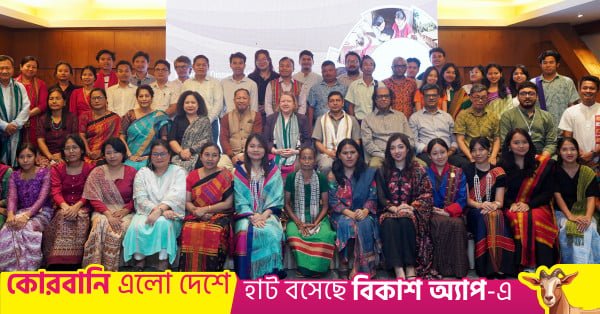
Group photo of the research result dissemination event. Photo: Courtesy
“>

Group photo of the research result dissemination event. Photo: Courtesy
Climate change, environmental degradation and human activities such as deforestation, monoculture plantations and resource extraction are placing increasing pressure on indigenous communities in the Chattogram Hill Tracts (CHT), according to findings from a Unesco-supported youth-led research initiative.
The findings were presented during the Research Dissemination Session on Indigenous Youth and Climate Change held in Chattogram, marking the conclusion of the Youth As Researchers (YAR): Indigenous Youth and Climate Change initiative, reads a release issued today (25 May).
The initiative was organised by Unesco in partnership with Maleya Foundation and Zabarang Kalyan Samity.

According to the research, indigenous communities in the CHT remain highly vulnerable because their livelihoods, cultural practices and daily lives are closely tied to natural ecosystems.
The study also found that traditional ecological knowledge continues to play a vital role in helping communities adapt to changing environmental conditions, although these knowledge systems themselves are increasingly under threat.
Researchers highlighted broader social impacts as well, including the disproportionate effects of climate change on Indigenous women due to limited access to resources and decision-making opportunities.
The dissemination event brought together policymakers, academics, development partners, Indigenous leaders, civil society representatives and youth researchers to discuss climate impacts, local adaptation practices and the role of traditional knowledge systems.
Among those attending were Chattogram Divisional Commissioner Dr Md Ziauddin, Unesco Representative to Bangladesh Dr Susan Vize and Chakma Circle Chief Barrister Raja Devasish Roy.
The initiative involved five Indigenous youth research teams from the Chakma, Marma, Mro, Tripura and Tanchangya communities.
Each team conducted field-based research on climate-related challenges affecting their respective communities.
The Chakma team studied youth-led climate adaptation strategies in Rangamati, while the Marma team documented traditional survival practices and emerging adaptation challenges.
The Mro team examined how climate change is affecting natural resources used to make the traditional musical instrument “Plung”, highlighting risks to cultural preservation.
The Tripura team focused on climate impacts on marginalised Indigenous women and their coping strategies, while the Tanchangya team investigated water scarcity linked to stone extraction and the expansion of rubber and shegun plantations.
According to Unesco, the findings collectively demonstrate how climate change is reshaping Indigenous livelihoods, ecosystems and cultural practices across the CHT.
The YAR initiative is part of a global Unesco framework adapted in Bangladesh to strengthen Indigenous youth leadership through research, climate advocacy and community engagement.
The programme began in February 2025 following a national consultation on Indigenous language use and preservation organised by Unesco, Maleya Foundation and Zabarang Kalyan Samity.
As part of the initiative, 25 Indigenous youth researchers received training on research methodologies, ethics, data collection and community-based research before conducting fieldwork over several months.
Their work produced research papers and policy briefs focused on climate impacts and local adaptation strategies.
Unesco said efforts are now underway to sustain and expand the initiative through continued engagement and knowledge exchange to strengthen the role of indigenous youth in climate governance and policymaking.
About The Author