Transparency International Bangladesh (TIB) has revealed that a total of Tk12,633 crore in bribes were transacted across various public and semi-public service sectors in the country during one year of the interim government led by Dr Muhammad Yunus.
The transactions took place between November 2024 and October 2025.
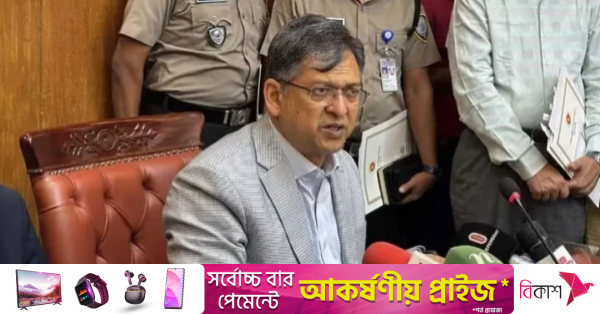
The findings emerged from a survey analysing the state of corruption in the service sector under the interim government, the results of which were presented at a press conference at TIB’s Dhanmondi office in the capital today (25 June) under the title ‘Corruption in the Service Sector: National Household Survey 2025’.

TIB said 1,149 areas were selected from rural and urban zones across eight divisions using a two-stage random sampling method based on the Bangladesh Bureau of Statistics (BBS) framework.
The survey analysed data from 18 specific service sectors. A similar survey was also conducted by the organisation in 2023.
The findings show that, as in 2023, passport service users remained the most affected, with 76.6% reporting bribery and corruption, followed by 63.5% of those using BRTA services. Law enforcement, agriculture, land, and judicial services ranked next, with comparatively higher average bribe amounts per household in these sectors.
Overall, however, the average bribe per household has declined slightly. The survey puts the figure at Tk5,124 per household over the past year – roughly 10% less than in 2023.
Some 81.5% of surveyed households believe obtaining services without paying bribes remains difficult. Corruption in law enforcement and the judiciary in particular was cited as a major barrier to access to justice. Participants also noted that corruption in agriculture, local government, land, education, health, passport, and BRTA services has either persisted or worsened.
Despite being victims of corruption, 61.3% of households did not file any complaint, with the majority citing the belief that systemic corruption makes complaints futile. Nearly half of all households also said they had no idea where or how to report corruption.
The survey found that while 29.5% of households were aware of the Anti-Corruption Commission (ACC) and just 1.4% knew of the Government Redress System (GRS), complaint rates remained extremely low. Participants reported that in many cases, complaints were either not accepted or went without any effective follow-up.
Respondents identified impunity, lack of awareness, and the rewarding – rather than punishing – of corrupt individuals as the primary drivers of corruption.
A rural-urban divide was also observed. Some 66% of rural households reported paying bribes, compared to 58.5% in urban areas. However, urban households paid higher amounts on average.
The report also noted that lower-income households were forced to pay a disproportionately higher share of their income in bribes.
TIB’s report further highlighted that women, indigenous communities, and persons with disabilities face even greater difficulties in accessing services. While digital services have been introduced across several sectors, they have not reduced corruption to the expected degree, with many users still dependent on touts and intermediaries – keeping the door open for bribery and graft.
The report underscores the urgent need for transparency, accountability, and effective grievance redress mechanisms within the public service delivery system.
About The Author