The Private Economic Zones Association of Bangladesh (Pezab) has proposed initially setting up a Tk5,000 crore fund and gradually increasing it to Tk10,000 crore
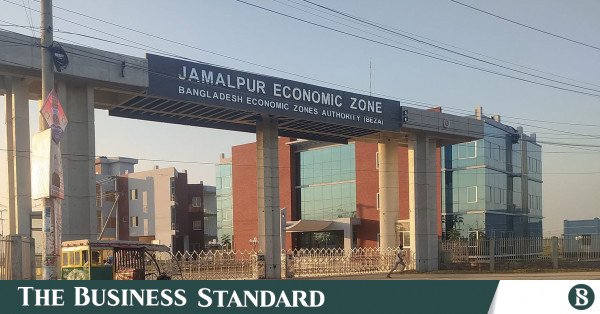
Jamalpur Economic Zone. Photo: Facebook
“>

Jamalpur Economic Zone. Photo: Facebook
Highlights:
- Private zone developers seek Tk10,000 crore low-cost government-backed fund
- Pezab proposes 4.5% loans over 15 years, including grace period
- High-interest commercial loans are delaying economic zone development
- Fund would finance land, utilities and essential industrial infrastructure
- Bangladesh has 23 approved private economic zones; eight operate commercially
- Pezab wants priority for projects nearing investment and production
Private economic zone developers have sought a Tk10,000 crore government-backed low-cost fund to finance land development and essential infrastructure needed to make the designated industrial sites investment-ready.
The Private Economic Zones Association of Bangladesh (Pezab) has proposed initially setting up a Tk5,000 crore fund and gradually increasing it to Tk10,000 crore.

The association wants developers to receive loans at 4.5% interest for 15 years, including a four-year grace period. Under the proposal, developers would contribute 30% of project costs as equity, while loans would cover the remaining 70%.
Pezab made the proposal in a letter sent to Finance Minister Amir Khosru Mahmud Chowdhury on 24 August, saying its members are struggling to implement private economic zone, export processing zone and hi-tech park projects because of high-interest, short-term commercial bank loans.
ASM Mainuddin Monem, president of Pezab, said many domestic and foreign companies have expressed interest in setting up factories in private economic zones. However, delays in developing the zones are discouraging those investments.
“Investment in private economic zones cannot be implemented with high-interest, short-term bank loans,” he said, adding that the demand for low-cost financing was raised following a decision at the association’s latest annual general meeting.
Under Pezab’s proposal, the fund could be created through government allocations, Bangladesh Bank’s own resources and low-cost financing from development partners.
Commercial banks would receive refinancing from the proposed fund at 1% interest and lend to private economic zone developers at 4.5%.
The loans would cover land and site development, roads and connectivity, drainage, water supply, sewerage and water treatment infrastructure. They could also finance sewage treatment plants, common effluent treatment plants, electricity and gas networks, renewable energy, fire safety, waste management, logistics, multimodal connectivity, ICT, security and other essential infrastructure.
Bangladesh has around 23 approved private economic zones, of which eight have received final certificates and are in commercial production.
Several large industrial groups, including City Group, have invested substantial amounts in private economic zones and are now facing financing constraints, according to Pezab.
The association said the proposed fund should not be used for speculative land holdings, share purchases, unrelated businesses or repayment of existing general loans. Loan defaulters would also be barred from accessing the facility.
Projects receiving loans would have to comply with environmental, social, labour, occupational health, fire safety and climate resilience requirements.
Pezab proposed giving priority to projects where significant private equity has already been invested, industrial units or foreign investors have been secured, and completing the remaining infrastructure could quickly generate production, exports and employment.
Monem said private developers face a structural financing disadvantage compared with government-developed economic zones, EPZs and hi-tech parks.
Government projects benefit from public investment, budget allocations, state infrastructure and concessional financing, while private developers largely depend on their own equity and commercial loans.
Economic zone development requires large upfront investment and long construction periods, while cash flow begins gradually after factories start operations, he said.
As a result, high-interest, short-term borrowing increases the cost of industrial land, delays infrastructure development and weakens the zones’ ability to attract domestic and foreign investors.
“Although significant private capital has already been invested in many zones, the remaining infrastructure cannot be completed due to the lack of commercially viable financing,” Monem said.
About The Author