Toward the end of the American Revolution, the new nation was already showing signs of the division that would eventually lead to civil war. Plantation colonies in the South were home to some 660,000 enslaved people, while there were roughly 40,000 people enslaved in the North. Change was unfolding. New ideals led to the end of slavery in some Northern states. In Vermont, slavery was abolished upon the state’s founding in 1777, although those already enslaved there remained bound until they reached early adulthood. In 1780, Pennsylvania state lawmakers passed “An Act for the Gradual Abolition of Slavery,” which prohibited the importation of enslaved people into the state and deemed free all children born there, even those with enslaved mothers, though they remained obliged to labor as indentured servants until age 28.
Enslaved people did not watch these transformations unfold from the sidelines. They instead committed themselves to winning freedom, seizing the new opportunities that arose with a war steeped in principles of liberty and equality. Many spoke out, writing petitions and pamphlets that turned natural rights principles into formal calls for slavery’s end. Others fled from their bondage, taking advantage of war-driven dislocation and chaos.
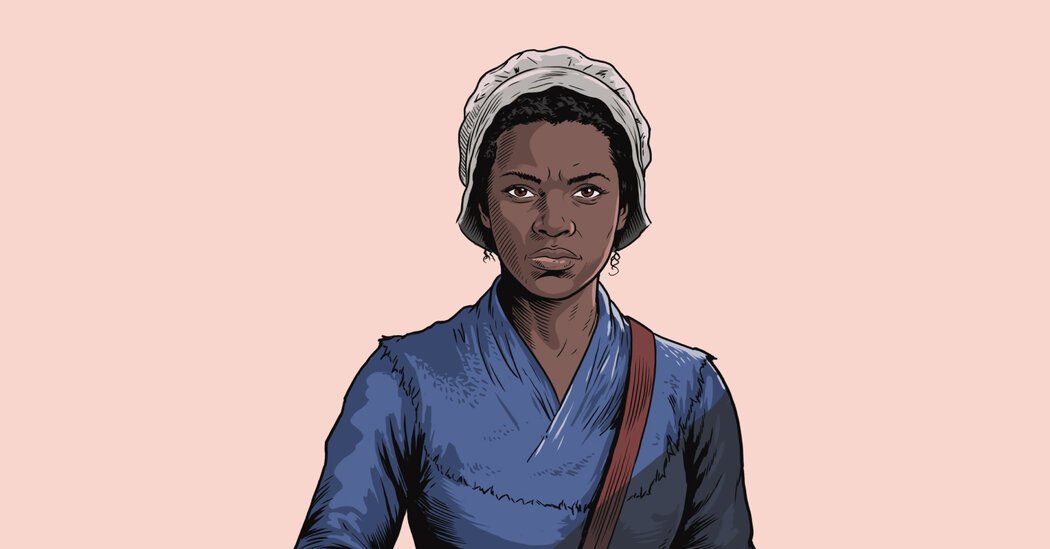
Elizabeth Freeman, one of Massachusetts’s 5,000 enslaved people, was among those who decided to take her chance at freedom. She was born enslaved in New York around 1744 and was later inherited by a woman, Hannah, after her father’s death in 1758. Hannah, the wife of John Ashley, lived in Sheffield, and eventually summoned Freeman there. As Hannah had done years before, Freeman was leaving New York and the only home she had known. Hannah had most likely brought with her to Sheffield a fully outfitted trousseau, household items and tokens of remembrance. Freeman, though she was considered someone’s property, also carried with her keepsakes — two gowns gifted by her parents — reminders of the loved ones from whom she would be forever separated.
Hannah’s husband, John Ashley, was a wealthy landowner, a merchant and a proprietor of a general store, sawmill, livestock and more. He was also a lawmaker, an officer in the colonial militia and among the local men drawn into politics as tensions escalated between colonists and the Crown, Parliament and the army.
Publications like The Massachusetts Spy brought them news of events taking place days away in Boston, including the 1770 Boston Massacre, the memory of which lingered. When Samuel Adams and others published a pamphlet of grievances in 1772, Ashley and other men in Sheffield embraced the cause. The next year they wrote the Sheffield Declaration and published it in The Spy, proclaiming: “Resolved, that mankind in a state of nature are equal, free and independent of each other, and have a right to the undisturbed enjoyment of their lives, their liberty and property.”
John Ashley’s high-minded principles didn’t translate to the day-to-day experiences of the enslaved members of his household. While Freeman thought of Mr. Ashley as someone she could, when necessary, reason with, his wife was not. The household’s female head had a temper and could be cruel. One afternoon late in the 1770s, at the height of the war, Freeman and her young daughter Lizzie were at work in the Ashleys’ kitchen. Mrs. Ashley entered and noticed that Lizzie had made herself a wheaten cake from the scrapings of the bowl in which the Ashley family’s batch had been prepared. In the kitchen, Mrs. Ashley raged, branded Lizzie a thief and moved to hit the girl with a large iron shovel that was red-hot from the oven. Hannah lifted the shovel above Lizzie’s head, readying to strike the girl, when Freeman intervened. Her arm absorbed the blow, sparing Lizzie, but cutting Freeman to the bone, a wound that would ail her for years to come.
Freeman waited for her opportunity to break the bonds that tied her and her daughter to the Ashley household. By summer 1781, the states had ratified the Articles of Confederation, heralding the new federal government but making no provisions to abolish slavery. Freeman and other residents of Sheffield took to the public square for a celebration that included a reading of the Declaration of Independence. She would have heard its most famous passage: “We hold these truths to be self-evident, that all men are created equal, that they are endowed by their Creator with certain unalienable Rights, that among these are Life, Liberty and the pursuit of Happiness.”
The next day, she went to the law office of Theodore Sedgwick. Freedom was on her mind.
Sedgwick, who was a delegate to the Continental Congress and a member of the Massachusetts State Legislature, agreed to take on Freeman’s case. He filed suit on her behalf — naming her in documents as “Bett,” the diminutive by which she was sometimes referred. Also party to the case was a man known as “Brom,” held enslaved in John Ashley’s household. Sedgwick’s approach was a writ of replevin, which demanded that property improperly held by the Ashleys — Freeman and Brom — be returned to the rightful owners, in this case the enslaved people themselves. The court gave Ashley a chance to voluntarily free Freeman and Brom, and when he declined to do so, all parties were ordered to meet for a trial.
In August 1781, a couple of months before the end of the war, Sedgwick and his co-counsel, a law professor named Tapping Reeve, appeared in the Great Barrington Inferior Court of Common Pleas, a small wooden building where a jury would decide the destinies of Freeman and Brom. The future of slavery in Massachusetts was about to go on trial.
As was typical of law practice at the time, the attorneys arguing Brom and Bett v. J. Ashley Esq. did so on behalf of their clients who were not present in court. Sedgwick and Reeves made the case that the new Massachusetts State Constitution, adopted just a year earlier, posed a question of far-reaching consequence: Was holding people enslaved consistent with the State Constitution’s promise that “All men are born free and equal, and have certain natural, essential, and unalienable rights; among which may be reckoned the right of enjoying and defending their lives and liberties … that of seeing and obtaining their safety and happiness”? In the new self-governed Commonwealth of Massachusetts, could any person be held as property by another?
Sedgwick pressed the view that slavery in the state was extinguished with the adoption of the new state constitution. The jury listened to the argument and agreed: Freeman and Brom were free.
The verdict marked the start of a new chapter, in their lives, and also for Massachusetts. The case would come to stand for the principle that slavery was contrary to the ideal of liberty — a view that would be echoed for generations to come by Americans in antislavery and abolitionist movements. But because the case was decided in a local court, it did not generally free others enslaved in Massachusetts or elsewhere.
Freeman and Brom had set a change in motion; a man named Quock Walker, held enslaved in Barre, less than 100 miles east of Sheffield, would carry it forward. He brought a subsequent case in the state’s highest court that would ultimately see the abolition of slavery in Massachusetts through to its end.
In a first, a second and finally a third case, lawyers for Walker argued that the Constitution guaranteed his freedom. William Cushing, chief justice of the Supreme Judicial Court of Massachusetts, presided in the last of those proceedings and instructed the jury on the relevant law: Colonial Massachusetts had once countenanced holding “Africans in perpetual servitude,” treated “as we do our horses and cattle,” things had changed since the Revolution. “A different idea has taken place with the people of America, more favorable to the natural rights of mankind.” He invoked universal rights including “that natural, innate desire of Liberty, with which Heaven (without regard to color, complexion or shape of noses [or] features) has inspired all the human race.” The Massachusetts Constitution was “totally repugnant to the idea of being born slaves.” Ultimately, during the court’s April 1783 term, a jury rendered a verdict consistent with Cushing’s reasoning: Walker was not and could not be, by the terms of the State Constitution, a slave.
By the time of the 1790 United States census, not one Massachusetts resident reported holding a slave. Freeman had exposed the faulty terms of America’s fundamental contradiction: enslaving people in a nation founded to ensure liberty and equality. Her case did not resolve that contradiction, but it did reveal it to be such. When courts in Massachusetts deemed slavery contrary to law, they lent important legitimacy to the claims that enslaved people would make countless times — in courts, in legislatures and with their words and their deeds — over the next 75 years.
Going forward, efforts to abolish slavery in the new United States often were driven by the initiative and insistence of enslaved people themselves. They seized the promise of liberty, bringing freedom suits, petitioning legislatures and escaping to free soil when they saw an opening. Some states, like Pennsylvania and Massachusetts and later New York and New Jersey, put enslavement on the road to extinction early on. But many others did not. In Virginia, slavery remained firmly rooted in law and culture for decades to come. Still, by the 1830s, Elizabeth Freeman’s challenge to slavery as an anathema to liberty was a potent idea. Theodore Sedgwick Jr., the son of Freeman’s lawyer, introduced her story in a speech in 1831, to a new, radical abolitionist movement that understood Freeman and others like her to have been the foundation of their efforts.
In 1865, more than eight decades after Elizabeth Freeman defeated slavery in Massachusetts, the practice was finally abolished throughout the United States, though only after a civil war that cleaved the young nation and cost more than 600,000 lives. As Freeman had done in her time, enslaved people of the 1860s forced the hand of authorities: They ran away from Southern plantations, they joined Union forces as laborers and later as soldiers, they brought their insistence upon freedom to the Lincoln administration’s door, swelling the numbers at refugee camps in Washington and Virginia.
A result was the ratification of the 13th Amendment to the U.S. Constitution: “Neither slavery nor involuntary servitude, except as a punishment for crime whereof the party shall have been duly convicted, shall exist within the United States, or any place subject to their jurisdiction.” The amendment, though tragically late in coming, resolved the nation’s founding contradiction and would surely have met with approval from Revolutionary-era freedom seekers like Freeman. And still, as Reconstruction’s grand though also short-lived effort to establish an interracial democracy was wantonly undone, the contradiction’s legacy lived on.
Elizabeth Freeman’s story did not end with her freedom suit. She remained in Sheffield and maintained close ties to the Sedgwick family, working for wages in their home and, later in life, recounting her story to Catharine Sedgwick, the daughter of the lawyer Theodore Sedgwick and the writer of an 1853 article titled “Slavery in Massachusetts.” Freeman had accomplished more than protecting her daughter from Hannah Ashley’s blow and, with perseverance, succeeded in getting herself and Lizzie out from under the Ashleys’ dominion. In her own words, recorded in a last will and testament, Freeman recounted what freedom meant. She had accumulated real estate and personal goods, enough to bequeath a legacy: a coat, three caps, a pair of blue stockings, earrings and the precious robes gifted by her own parents were passed down to Freeman’s daughter and grandchildren. Liberty in its highest form, for Elizabeth Freeman, was ensuring that her dearest ones would always be safe, well provisioned and well loved.
About The Author