Centre for Policy Dialogue Executive Director Dr Fahmida Khatun has called for tariff rationalisation to be the most urgent reform priority this year, stressing that Bangladesh must prepare for a post-LDC graduation reality by strengthening domestic revenue mobilisation without over-reliance on import duties.
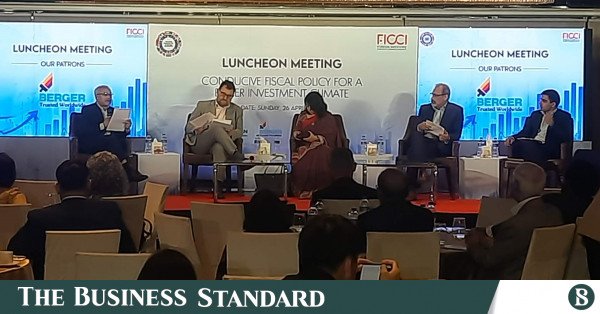
Her remarks came at a high-level luncheon organised by the Foreign Investors’ Chamber of Commerce & Industry (FICCI) on “Conducive Fiscal Policy for a Better Investment Climate” at the Renaissance Dhaka Gulshan Hotel today (26 April).
“One important point, my suggestion would be that tariff rationalisation should be the first and most important reform to be undertaken this year,” she said, noting that Bangladesh is set to graduate from LDC status in November.

“We will increasingly have to depend on domestic resource mobilisation, but not at the cost of higher import duties and indirect tariffs, as existing privileges and flexibilities will no longer be available,” she added.
She emphasised that tariff rationalisation is essential to modernise the tax system, alongside long-overdue VAT reform.
“The VAT system remains overly complex despite years of discussion,” she said, adding that simplifying VAT by reducing slabs and broadening compliance could offset revenue losses from tariff cuts and ultimately enhance collection.
Citing India’s experience, Fahmida noted that GST rationalisation there significantly boosted revenue through simplified rates and fewer slabs. “We should also move towards a simplified and effective VAT structure,” she added.
Beyond tax structure, Fahmida highlighted deeper structural weaknesses in revenue management, particularly persistent shortfalls in tax collection targets by the National Board of Revenue (NBR).
“This has been a recurring pattern for more than a decade. Every year, ambitious targets are set, but they remain unfulfilled,” she said, attributing the issue partly to political considerations overriding realistic projections.
She argued that Bangladesh’s budgeting approach, where expenditure targets are set first and revenue is arranged later, needs fundamental reform.
“The macro-fiscal framework should be the priority. We need to align our ambitions with realistic resource availability,” she said.
Fahmida also raised concerns over widespread tax exemptions and incentives, which she said are draining public resources without adequate accountability. While acknowledging the need for incentives to support new industries, she pointed out the absence of sunset clauses. “Once exemptions are introduced, they tend to continue indefinitely. There should be clear time limits, as practiced globally,” she said.
She further called for greater transparency in tax expenditures, urging authorities to publish data on revenue foregone due to incentives and special regulatory orders (SROs).
“This would help policymakers understand trade-offs and improve predictability in fiscal planning,” she added.
On fiscal governance, she stressed the importance of mid-year budget reviews to ensure accountability and course correction.
“A midterm review presented in parliament would enhance both transparency and predictability,” she noted, adding that investors value consistency and institutional efficiency more than incentives alone.
Fahmida also underscored the need to link incentives with performance, suggesting a shift towards production-based incentives similar to those seen in India. At the same time, she called for institutional reforms within the NBR, including automation, improved human resource capacity, and separation of tax policy from administration.
Jean Pesme, division director of the World Bank for Bangladesh and Bhutan said, “Let me begin by echoing two key points that have already been raised. First, the separation between tax policy and tax administration is absolutely mission-critical. While there may have been reasons for not advancing this reform earlier, it is something that now needs to happen. This separation is essential for improving governance within the tax system, as well as for advancing digitalisation.”
“The second major challenge is to establish a clear tax reform plan and begin implementation without policy reversals. We have already discussed the key elements such a plan could include. However, what is most important at this stage is that the overall direction is crystal clear, and that implementation supports this direction to demonstrate credibility,” he added.
He further said, “From an investor’s perspective, the key question is whether policy announcements will actually be implemented. If I were an investor today, I would be asking: is this credible, and will it be delivered? Therefore, it may be more effective to start with less ambitious reforms, but ensure they are properly executed.”
“What matters now is implementation. We hope to see this reflected in the upcoming budget discussions—where a clear policy direction creates space for public initiatives that effectively leverage private sector participation. Ultimately, trust will grow when citizens and investors see that reforms are not just announced, but are actually being implemented,” he said.
The event brought together policymakers, economists, development partners, business leaders, and members of the diplomatic community to discuss Bangladesh’s fiscal outlook. The session featured Dr M Masrur Reaz, chairman of Policy Exchange Bangladesh, as the keynote speaker. He noted that tax policy and administration remain key concerns for investors, citing high corporate tax rates, complex compliance processes, fragmented administration, and policy unpredictability as major challenges.
The panel discussion was moderated by Shams Zaman, board member of FICCI and country managing partner at PwC Panelists included Jean Pesme of the World Bank, Chandan Sapkota of the Asian Development Bank, Fahmida Khatun, and Abul Kasem Khan of Business Initiative Leading Development (BUILD). Panelists broadly agreed that ensuring policy stability, simplifying the tax system, strengthening institutions, and improving coordination among regulatory bodies will be critical to attracting and sustaining foreign investment in the coming years.
About The Author