The increase comes despite Bangladesh’s efforts to reduce the testing fee, adding to costs migrant workers already bear for visas, medical tests, training and other procedures
Photo: Reuters
“>

Photo: Reuters
Highlights:
- Saudi Arabia raises mandatory Taqamul test fee from $50 to $85
- Workers bear rising migration costs despite stagnant low-skilled wages
- Over 27% of tested workers have failed the Taqamul test
- Migration costs can reach Tk3.5 lakh before additional fees
- Industry groups question testing cleaners and general labourers for skills
- Bangladesh sent over 294,000 workers to Saudi Arabia this year
The cost of migrating to Saudi Arabia, the largest destination for Bangladeshi workers, has risen further after the fee for the mandatory Skill Verification Programme (SVP), widely known as Taqamul, was increased to $85 from $50 in early September.

The increase comes despite Bangladesh’s efforts to reduce the testing fee, adding to costs migrant workers already bear for visas, medical tests, training and other procedures.
While employers were initially expected to pay the SVP fee, workers are now paying it themselves, according to sector insiders.
Infograph: TBS
“>

Infograph: TBS
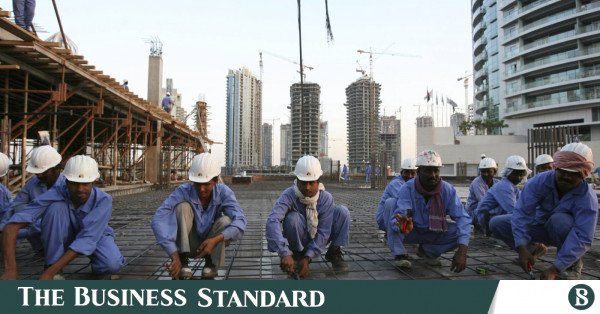
The additional cost is particularly significant for cleaners, load-unloaders and other low-skilled workers, who account for nearly 80% of Bangladesh’s Saudi-bound employment, according to the Bureau of Manpower, Employment and Training (BMET).
On the matter, State Minister for Expatriates’ Welfare and Overseas Employment Nurul Haque Nur told TBS, “Since the Saudi side is conducting the examination, we have limited scope to intervene in the matter.”
“Saudi Arabia has always given special consideration to Bangladesh, and a large number of Bangladeshi workers go there. So, if the fee has been increased to some extent based on their requirements, we should look at the matter accordingly, particularly because Saudi Arabia is providing significant employment opportunities for our workers,” he added.
TBS contacted the Saudi Embassy in Dhaka and emailed it on 16 September seeking its response on the fee increase, as instructed by the embassy. However, it had not responded by the time the report was filed.
Around 447,572 aspiring migrant workers had taken the SVP test as of 16 September, since its introduction in mid-2023, paying more than Tk273 crore to the Taqamul authority. Of them, 122,909, or more than 27%, failed the test. Workers who fail and retake it must pay the fee again.
The rising costs are particularly concerning as wages for many low-skilled Bangladeshi workers in Saudi Arabia have remained unchanged for the past three years despite the mandatory SVP, labour recruiters said.
Recruiting agencies estimate that additional charges introduced in recent months, including Taqamul, have added Tk11,064-Tk14,470 to an individual worker’s costs, on top of migration expenses that can already reach Tk3.5-5 lakh.
The financial burden continues after arrival.
According to sector insiders, workers can also face Iqama-related expenses of around 9,700-11,000 Saudi riyals, although such employment-related costs are generally supposed to be borne by employers. An Iqama is a residence permit issued to foreign nationals, serving as both a work permit and identification card.
Workers unable to meet the expenses risk falling into undocumented status.
While Taqamul was introduced to ensure workers have the skills required by the Saudi labour market, industry representatives question whether mandatory certification is justified for jobs such as cleaning and loading and unloading.
Yesterday, several former leaders of the Bangladesh Association of International Recruiting Agencies (Baira) submitted a four-point memorandum to the expatriates’ ministry.
Their demands include withdrawing the mandatory skill test for workers in the cleaner and general labour categories.
They also called for the immediate cancellation of the recent Tk2,000 increase in the Wage Earners’ Welfare Board fee per worker. On 20 September, the ministry raised the fee from Tk3,500 to Tk5,500, further increasing the cost of migration.
Fee rose despite Bangladesh seeking a reduction
On 24 November last year, former expatriates’ welfare secretary Neyamat Ullah Bhuiyan held a meeting with officials of Taqamul Holding in Riyadh.
He told them the $50 test fee and $50 retake fee were an additional burden on financially constrained Bangladeshi workers and requested a reduction or waiver.
Senior Taqamul official Adel Al-Furaidi said the proposal would be considered but stressed that the certificate was mandatory. About a year later, the fee rose 70% to $85.
Muhammad Abdul Quader, proprietor of Quader Associates, said the fee could rise further.
“Now they have increased the rate to $85 from $50. The way it goes, they would increase it gradually to $100 and then more,” he said.
He said a Saudi employer had also questioned why Bangladesh remained silent over a test that was increasing workers’ migration costs. “It is totally unnecessary to verify unskilled workers through a certification process,” Quader said.
Meanwhile, TTC sources claimed that of the previous $50 fee, $13 went to the BMET and $37 to Saudi Arabia. When asked about the current breakdown of the $85 fee, officials were unable to clarify.
Low-paid workers paying more
The extra testing cost has not translated into higher wages, according to recruiting agencies. Low-skilled workers such as cleaners and construction workers generally earn Tk25,000-Tk30,000 a month, while semi-skilled workers earn around Tk40,000.
Jahangir Alam, who is seeking a hospital cleaner’s job in Saudi Arabia, paid $85 for the mandatory test in early September but failed. Six other workers taking the test through the same agency also failed. He passed on his second attempt after paying the same fee again.
“I am going abroad for a salary of 800 Saudi riyals (over Tk26,000). I have had to borrow money and take out loans to cover my migration costs of Tk3.5 lakh,” he told TBS.
Baira former joint secretary-general Fakhrul Islam also questioned the need for a computer-based test for cleaners, general labourers and helpers. “Many of them do not have specific technical skills. Yet they have to sit for a computer-based test,” he said.
“If the skill test resulted in higher wages, there would be some justification. But their salaries have not increased. Cleaners and general workers earn 800-1,000 riyals, while semi-skilled workers get around 1,200-1,300 riyals. So what benefit are they getting?”
Shakirul Islam, chairman of the grassroots migrant-rights organization Ovibashi Karmi Unnayan Program (Okup), said, “Skill verification has turned into a lucrative business. On paper, authorities claim that skilled workers are going abroad. In reality, I have spoken to many loading and unloading workers who migrated without any skill upgrades.”
“As migration costs continue to rise, it only deepens the exploitation of our workers,” he added.
Bangladesh sent 533,885 workers abroad until 15 September this year, with 294,093, or more than 55%, going to Saudi Arabia.
Saudi Arabia currently hosts more than 32 lakh Bangladeshis, according to an unofficial estimate. It is also Bangladesh’s largest source of remittances, with inflows from the country rising to $5.84 billion in FY2025-26 from $4.26 billion in the previous fiscal year.
Training costs add to the burden
To help workers prepare for the Taqamul examination, selected government technical training centres offer a three-day preparatory course for Tk2,000.
By comparison, three-month technical courses in electrical, automobile and computer technology at government TTCs cost around Tk748, according to sector insiders.
Asked why workers are charged the preparatory course when technical courses at government TTCs cost less than half that amount, BMET Additional Director General (Training) Md Sharifuzzaman told TBS, “The fee for each course is determined based on its necessity. I am new here, so I will look into whether there are any abnormalities.”
Saudi Arabia initially introduced the SVP in Bangladesh for skilled trades such as plumbing, electrical work, welding, refrigeration and automobile electrical work. The programme was later expanded to 73 occupations, including cleaning and loading-unloading jobs.
In mid-2025, the Saudi Embassy in Dhaka stopped issuing visas to cleaners and load-unloaders without SVP certificates.
Taqamul is not the only additional cost for Saudi-bound workers. Saudi Arabia launched a separate visa-processing system in mid-2023, requiring Bangladeshi workers to visit the Tasheer centre at Jamuna Future Park for biometric procedures.
Tasheer, formerly known as Tasheel or VFS Tasheel, is the official global visa service centre appointed by the Saudi Ministry of Foreign Affairs. Industry insiders said fingerprinting costs around Tk694, while a premium service costs about Tk2,100.
About The Author