Bangladesh’s demographic window of opportunity is expected to peak around 2045, while the country is projected to transition from an ageing to an aged society within just 24 years, creating significant economic, social and healthcare challenges, according to a new World Bank report.
The report warns that Bangladesh has a limited period to capitalise on its growing working-age population by creating productive jobs, improving skills and increasing labour force participation, while building financial and healthcare support systems for its rapidly ageing population.
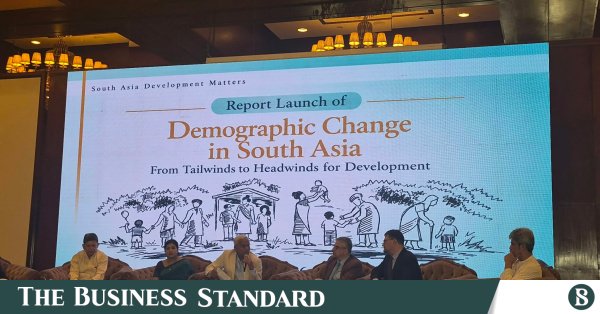
Titled Demographic Change in South Asia: From Tailwinds to Headwinds for Development, the report was launched at the Pan Pacific Sonargaon Hotel in Dhaka today (3 November).

Presenting the keynote address, Franziska Lieselotte Ohnsorge, World Bank chief economist for Asia, said Bangladesh’s working-age population share was still increasing and was expected to peak around 2045, approximately a decade later than the South Asian average.
This extended demographic window offers an opportunity to accelerate economic growth through higher employment, improved skills and greater labour market participation.
However, the transition to an ageing society is expected to begin in 2027, when people aged 65 and above will account for 7% of the population. By 2051, their share is projected to reach 14%, marking the country’s transition to an aged society.
The pace is considerably faster than in developed economies. The same transition took 72 years in the United States and 126 years in France, underscoring the challenge Bangladesh faces in preparing its economy and institutions.
Demographic dividend gradually declining
Changes in Bangladesh’s age structure contributed approximately 0.4 percentage points annually to per capita GDP growth between 2000 and 2024, the report says.
However, this contribution is projected to decline to 0.2 percentage points annually between 2025 and 2044 before turning negative from 2045.
The report also warns that Bangladesh will reach key ageing milestones at substantially lower income levels than countries that have already undergone similar demographic transitions. Its per capita income is expected to remain well below the average for emerging market and developing economies.
This raises concerns about the country’s capacity to finance social protection and healthcare services for an increasingly older population.
Old-age financial security remains weak
Financial security among older people remains precarious, with limited pension coverage, inadequate social protection and high healthcare costs.
According to illustrative figures from 2018 cited in the report, only 3% of adults in Bangladesh reported saving specifically for old age. Although social pensions cover around half of the older population, the benefits remain insufficient to ensure adequate financial security.
Healthcare expenses further threaten household savings. Out-of-pocket payments account for around 79% of total health expenditure in Bangladesh, among the highest shares in the countries examined.
The government’s limited revenue base also constrains its ability to expand financial support. Bangladesh’s tax revenue is approximately half the average for emerging market and developing economies, leaving limited fiscal space for increased old-age support.
Informal employment threatens demographic dividend
Structural weaknesses in the labour market could prevent Bangladesh from fully benefiting from its demographic window.
Although employment among the working-age population is higher than the South Asian average, it remains below the average for other emerging market and developing economies. The gap is particularly pronounced among women and in non-agricultural sectors.
Around 84% of employment in Bangladesh is informal, limiting workers’ access to job security, social protection and retirement benefits.
The report also identifies weaknesses in education and skills development as major barriers to productive employment. Around 51% of 10-year-old children cannot read and understand a simple text, a condition known as learning poverty.
Without improvements in education and skills, a significant share of the future workforce may struggle to secure productive jobs and build financial security.
Healthcare challenges and the silver economy
Population ageing is expected to create new opportunities in healthcare, elderly care and other services catering to older consumers, commonly known as the silver economy.
However, the gap between life expectancy and healthy life expectancy in Bangladesh remains around 10 years, meaning many people spend a substantial part of their later lives dealing with illness and health limitations.
Labour force participation also falls sharply among older people, dropping to around 1% among those aged 65 and above, largely due to health-related limitations.
The report stresses the need to improve healthcare, prevent non-communicable diseases and expand elderly care services to help people remain healthy and economically active for longer.
Urgent policy action needed
The World Bank recommends pursuing two policy priorities simultaneously: maximising the remaining demographic dividend and preparing institutions for an ageing society.
Bangladesh needs to generate more productive jobs, increase women’s participation in the labour market, improve education and skills, strengthen healthcare and harness emerging technologies, including artificial intelligence.
At the same time, it must develop stronger pension and social protection systems, promote healthy ageing, extend productive working lives and improve long-term care services.
The report also highlights the importance of early childhood nutrition and development, labour mobility, effective social protection and stronger fiscal capacity to mobilise public and private financing.
With its demographic window expected to peak around 2045 and the transition to an aged society projected to be completed by 2051, Bangladesh has a narrowing opportunity to turn its favourable population structure into sustainable economic growth while preparing for the needs of an older population.
About The Author