Buet clearance is required before registration applications can be submitted.
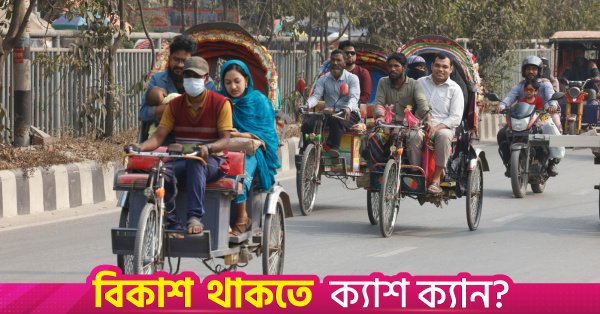
Battery-run rickshaws on a Dhaka street. File photo: Syed Zakir Hossain/TBS
“>

Battery-run rickshaws on a Dhaka street. File photo: Syed Zakir Hossain/TBS
The Dhaka South City Corporation (DSCC) has begun the registration process for battery-powered rickshaws in its jurisdiction, starting the distribution of application forms today (3 November) as part of a phased move to bring the vehicles under a regulatory framework.
The corporation has clarified, however, that collecting an application form does not authorise a rickshaw to operate on the roads.
Applicants must first build their vehicles in accordance with prescribed guidelines and obtain clearance from the Bangladesh University of Engineering and Technology (Buet) before submitting their registration applications.

DSCC Administrator Md Abdus Salam announced the commencement of the process today, outlining the corporation’s plans to regulate the operation and movement of battery-powered rickshaws.
“Distribution of registration forms for battery-powered rickshaws begins today. However, the form is not a permit to operate on the roads. It is only an application form for registration. Applicants must meet the prescribed conditions and obtain Buet clearance before submitting their applications,” he said.
The administrator said registration approvals would be issued in phases after the applications and vehicles had been verified.
Four zones planned to regulate rickshaw movement
As part of the initiative, the DSCC plans to divide its jurisdiction into four zones to regulate the number and movement of battery-powered rickshaws.
The boundaries of the zones and the number of rickshaws allowed in each area will be determined at a joint meeting between the city corporation and Bangladesh Police on 5 November, Abdus Salam said.
The corporation also plans to designate specific workshops for manufacturing and repairing battery-powered rickshaws in accordance with approved models.
Designated charging stations at ward or police station level are also being planned to prevent illegal electricity connections being used to charge the vehicles.
Abdus Salam said the DSCC wanted to introduce the registration system gradually rather than halt the operation of battery-powered rickshaws all at once.
“Instead of shutting everything down suddenly, we want to gradually bring them under regulations and registration. In the first phase, whether 1,000, 2,000 or 500, whichever number of battery-powered rickshaws meet the conditions will be approved for registration in phases,” he said.
How to collect application forms
According to a DSCC notice, registration application forms have been available since 3 November at Tk100 each.
Applicants can collect the forms from Nagar Bhaban and all DSCC regional offices between 10am and 3pm, except on public holidays. Each person can collect a maximum of five forms.
Describing battery-powered rickshaws as one of Dhaka’s major problems, the DSCC administrator sought cooperation from citizens, rickshaw owners and drivers, the media and other stakeholders to address the situation.
About The Author