The findings were presented at a seminar in Dhaka yesterday by BIDS Research Director Prof Atonu Rabbani.
Illustration: Ashrafun Naher Ananna/TBS Creative
“>

Illustration: Ashrafun Naher Ananna/TBS Creative
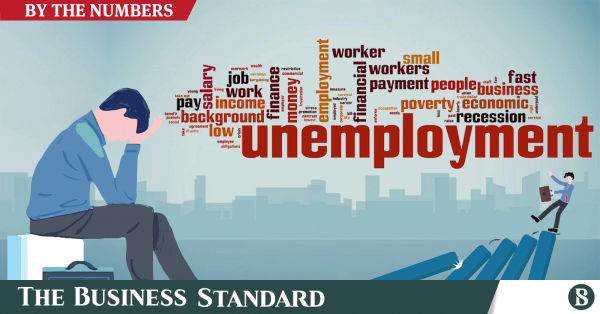
Competition for formal sector jobs in Bangladesh has increased by nearly 66% since before the Covid-19 pandemic, with the average number of applications per vacancy rising from 173 to 287 by 2025, according to a study by the Bangladesh Institute of Development Studies.
The findings were presented at a seminar in Dhaka yesterday by BIDS Research Director Prof Atonu Rabbani. The study analysed 547 weeks of data collected between June 2015 and December 2025 from Bdjobs, one of the country’s largest online job portals.
The research examined weekly job advertisements, vacancies, application volumes and labour market tightness, while assessing the effects of major economic shocks, including the Covid-19 pandemic and changes in Bangladesh Bank’s policy repo rate.

During the study period, Bdjobs recorded weekly averages of 1,154 job advertisements, 3,646 vacancies and nearly 6,97,000 applications.
Pandemic left lasting impact
According to the study, the nationwide lockdown imposed between March and June 2020 caused an unprecedented disruption to the labour market. Job advertisements fell by 70.2%, while vacancies declined by 75.2%.
Applications also dropped during the lockdown, but by a smaller margin of 59.1%, indicating that labour supply contracted far less than labour demand. As a result, the average number of applications per vacancy rose to 287.3, the highest level recorded during the study period.
The decline in vacancies was steeper than in the United States, where job openings fell by around 40%, and broadly comparable to the United Kingdom, where vacancies declined by between 60% and 70%.
Although recruitment gradually recovered after the pandemic, labour market conditions remained significantly tighter than expected.
Labour market tightness stood 13.9% above its expected level during the first week of the lockdown and peaked at 29.5% around three months later. It took approximately 41 weeks for the labour market to return to its normal trajectory.
Even between 2022 and 2025, labour market tightness remained about 21% above expected levels, suggesting that the effects of the pandemic persisted well beyond the public health emergency.
Limited impact of monetary policy
The study found that Bangladesh Bank’s policy repo rate had only a modest effect on hiring activity. Changes in the policy rate explained just 6% of the variation in job advertisements, indicating that broader economic shocks had a much greater influence on labour demand.
Speaking at the seminar, BIDS Director General Prof AK Enamul Haque said competition for available jobs had intensified as the ratio of applicants to vacancies increased, making it more difficult for job seekers to secure employment.
State Minister for Planning Zonayed Saki said the government had inherited a fragile economy and is working to strengthen it by boosting investment, production and employment.
About The Author