Prime Minister Tarique Rahman today (15 July) accused the previous “fascist and authoritarian” government of systematically weakening Bangladesh’s education and healthcare systems to serve the interests of a foreign country and vested groups, announcing plans to gradually raise public spending on both sectors to 5% of GDP over the next five years.
Delivering his closing speech at the second session of the 13th Jatiya Sangsad, the prime minister outlined the government’s priorities on education, healthcare, social protection, economic reforms, law and order, climate action and infrastructure.
He said controversial curricula would be phased out in favour of a modern, humane and contemporary education system, backed by better teacher training and improved learning materials. The current budget has allocated the highest-ever funding for education as part of that effort, he added.

On healthcare, Tarique alleged that the previous government had weakened the country’s medical system to benefit the healthcare industry of another country, describing the sector as “101% sick.”
To strengthen preventive healthcare, he announced plans to recruit 1,00,000 healthcare workers nationwide and launch five 200-bed children’s hospitals in five divisions by September.
Universal Card, farmers’ loan waiver
The prime minister announced the introduction of a Universal Card to bring all government welfare programmes – including family, farmer, sports, expatriate and religious leaders’ cards – under a single identity system.
He said government benefits are the state’s responsibility, not charity, and citizens would eventually be able to access all public services through one card.
He also said the government had fulfilled an election pledge by waiving agricultural loans of up to Tk10,000, including interest, benefiting about 13 lakh marginal farmers.
July Charter and democratic state
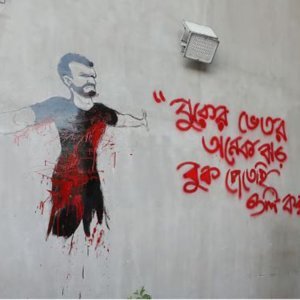
Paying tribute to those killed in the July mass uprising, Tarique reiterated the government’s commitment to implementing every provision of the July Charter, signed by political parties, and pledged to build a democratic welfare state free from discrimination, extremism and corruption through the collective efforts of parliament and the people.
Tarique said the government would not tolerate any form of extremism and called on the opposition to cooperate in tackling the threat.
The prime minister also reaffirmed the government’s commitment to professionalising law enforcement and said the recruitment of 10,000 new police constables was underway.
The government is working to transform Bangladesh from a debt-driven to an investment-led economy, he said, alleging that around $16 billion was siphoned out of the country annually during the previous government’s tenure.
He said the government aims to build an economy approaching $1 trillion by 2034 and create nine crore jobs in sectors such as information technology, the blue economy and ecotourism, alongside expanding skills training and career centres.
Climate, energy and infrastructure
To address climate change, the prime minister announced a programme to plant 25 crore tree saplings over the next five years. The initiative will create 10,000 nursery entrepreneurs and generate employment for around 2,50,000 young people, he said.
Tarique also alleged widespread corruption in the quick-rental power sector under the previous government, claiming at least Tk3 lakh crore had been siphoned abroad and more than Tk1.3 lakh crore paid in capacity charges.
He said fuel reserves had increased from less than 30 days when his government took office to more than 45 days, with a target of 90 days, and pledged to prioritise road and highway development.
Budget session ‘historic’
Describing the just-concluded budget session as a “historic moment”, Tarique said it marked the return of a parliament genuinely elected by the people after years of what he called fascist rule.
He said the House had passed a people-friendly budget after lively debates involving both treasury and opposition lawmakers and thanked MPs and citizens for making parliament vibrant and democratic.
The prime minister reiterated his pledge to build a democratic welfare state based on justice, equality and the rule of law, free from discrimination, corruption and extremism.
Liberation War martyrs list
Responding to a question in parliament, Tarique said the government had begun work on preparing a comprehensive and credible list of those martyred in the 1971 Liberation War.
He said the Ministry of Liberation War Affairs had prepared a work plan and started consultations with researchers and other stakeholders to compile an accurate list of Liberation War martyrs and genocide victims.
Dhaka road to be named after late Qatari emir
Responding to a proposal by Leader of the Opposition Dr Shafiqur Rahman, the prime minister said he had already instructed the relevant authorities to identify a suitable road in the capital to be named after the late Qatari Emir Sheikh Hamad bin Khalifa Al Thani, who died on 12 July at the age of 74.
The prime minister said the move was intended to honour both the late emir and the people of Qatar, noting the country’s longstanding support for Bangladesh.
“Qatar has supported Bangladesh in various ways throughout our development journey and continues to do so,” he said.
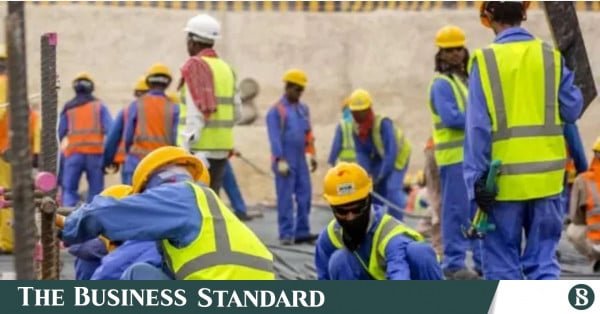
He also highlighted Qatar’s role in providing employment opportunities for hundreds of thousands of Bangladeshis, whose remittances make a significant contribution to the country’s economy.
PM Gold Cup for primary students
In response to another question, Tarique announced that the government would launch the Prime Minister Gold Cup football tournament for primary school students from next year, with plans to expand it to secondary schools later.
He also said the government would gradually develop 151 parks, playgrounds, children’s parks, Eidgah grounds and open spaces under the National Housing Authority, RAJUK and other agencies, while continuing eviction drives to free public recreational spaces from illegal occupation.
About The Author