Opposition objects to scrutiny process as committee recommends minority ethnic group representatives in NHRC and changes definition of enforced disappearance.
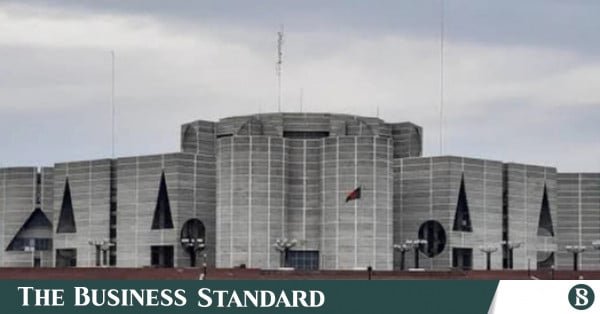
Jatiya Sangsad Bhaban. Photo: Collected
“>

Jatiya Sangsad Bhaban. Photo: Collected
Highlights:
- NHRC to have 1 chairperson and 4 commissioners
- At least one commissioner to be a woman and one from a minority ethnic or disadvantaged group
- Committee proposes changes to the definition of enforced disappearance
- Opposition alleges no involvement in the scrutiny process
- Jamaat MP calls the two-day deadline for scrutiny inadequate
Parliamentary standing committees have recommended several changes to the National Human Rights Commission Bill, 2026 and the Prevention and Remedy of Enforced Disappearance Bill, 2026, amid objections from opposition lawmakers over the scrutiny process.
The Parliamentary Standing Committee on the Ministry of Law, Justice and Parliamentary Affairs today (2 September) recommended that the National Human Rights Commission (NHRC) comprise one chairperson and four commissioners.

It also recommended that at least one of the commissioners be a woman and at least one represent a minority ethnic group or a disadvantaged group.
The committee further recommended including a journalist with experience in preparing reports on human rights in the search committee that will recommend candidates for appointment to the commission. The journalist would be nominated by the president of the National Press Club, according to the recommendation.
Committee Chairman Mohammad Naushad Zamir presented the report in parliament.
The law ministry’s parliamentary standing committee also recommended passing the Transfer of Property (Amendment) Bill, 2026 in an amended form after scrutiny.
Meanwhile, the Parliamentary Standing Committee on the Ministry of Home Affairs recommended changes to the definition of enforced disappearance in the Prevention and Remedy of Enforced Disappearance Bill, 2026.
Under the proposed revised definition, an enforced disappearance would occur when a government employee or member of a disciplined force, while performing their duties or with the authorisation, support or consent of a government authority or disciplined force, arrests, detains, abducts or otherwise deprives a person of their liberty and subsequently denies the deprivation of liberty or conceals the person’s whereabouts, condition or fate, thereby depriving them of legal protection.
Committee Chairman Zainul Abedin presented the report on the bill in parliament.
The bills were sent to the respective parliamentary standing committees for scrutiny after being introduced in parliament last Thursday (27 August).
Law, Justice and Parliamentary Affairs Minister Md Asaduzzaman introduced the National Human Rights Commission Bill and the Transfer of Property (Amendment) Bill, while Home Minister Salahuddin Ahmed introduced the Prevention and Remedy of Enforced Disappearance Bill.
Deputy Speaker Kayser Kamal had asked the committees to submit their reports within two working days.
However, Jamaat-e-Islami lawmaker Muhammad Nazibur Rahman alleged that opposition members were not involved in the subsequent discussions and scrutiny of the National Human Rights Commission and Prevention and Remedy of Enforced Disappearance bills.
He said the government had taken the initiative after repealing the National Human Rights Commission Ordinance, 2025 without consulting victims, relevant stakeholders or national and international human rights organisations.
Nazibur alleged that although the government had promised to enact stronger legislation after repealing the ordinance, the proposed bill was weaker and narrower than the previous framework.
He also claimed that the bill did not adequately reflect the Paris Principles, the standards of the Global Alliance of National Human Rights Institutions and relevant international instruments.
He criticised the two-working-day deadline for submitting the reports, saying meaningful consultation and independent scrutiny were not possible within such a short period.
Such a process risks turning parliamentary committees into “rubber stamps”, he said.
The Parliament Secretariat, however, said the Law Ministry’s standing committee had held detailed discussions on the two bills and, after scrutiny, recommended passing them with amendments.
About The Author