Highlights:
- 282 BGMEA, 120 BKMEA factories closed
- Global slowdown, conflicts and domestic instability blamed
- Rising energy, financing and production costs squeeze factories
- SMEs face declining interest from foreign buyers
- $17.5bn exports at risk after LDC graduation
- Govt targets new markets through 50 trade fairs in FY27
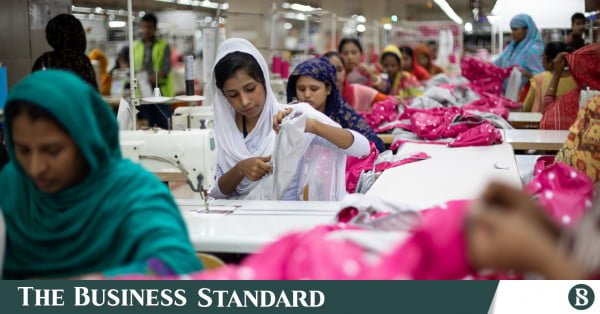
More than 400 garment factories have shut down in Bangladesh over the past three years due to a combination of global economic pressures and domestic challenges, Commerce Minister Khandakar Abdul Muktadir told parliament today (3 September).
Of the factories that closed between July 2023 and June 2026, 282 were members of the Bangladesh Garment Manufacturers and Exporters Association (BGMEA) and 120 belonged to the Bangladesh Knitwear Manufacturers and Exporters Association (BKMEA), he said.

The minister disclosed the figures in response to a question from Chuadanga-2 MP Md Ruhul Amin during the session chaired by Speaker Hafiz Uddin Ahmed.
He said the government is still working to make a complete list of the factories that have shut down, so the names of many others could not be presented in parliament.
Multiple factors behind closures
According to the commerce minister, the closures were driven by a combination of global and domestic factors, including the impact of the Covid-19 pandemic, the Russia-Ukraine war, the Israel-Palestine conflict in the Middle East, the US-Iran conflict, and the global economic downturn, which have put pressure on the garment business.
Domestic political instability, a liquidity crisis in the banking sector stemming from money laundering, free trade agreements between India and Vietnam and European markets, and declining interest among foreign buyers in small and medium-sized factories were also among the reasons, he said.
The minister said small and medium-sized factories have come under particular pressure as foreign buyers are reluctant to place orders with them because monitoring such factories is more difficult.
Earlier this year, BGMEA also said that around 400 garment factories had closed over the past three years due to rising business costs, order shortages, high energy costs, loan interest rates, and infrastructure constraints.
According to recent BGMEA data, many factories are unable to operate at full capacity because of gas supply shortages. At the same time, production costs have risen significantly over the past three years due to higher energy costs, lending rates and wages.
Govt support for the sector
Despite the factory closures, the government is providing various cash incentives and trade facilities to support exports, the commerce minister told parliament.
He said export-oriented domestic textile manufacturers are receiving a 1.5% alternative cash incentive instead of bonded warehouse and duty drawback facilities. Exporters to the Eurozone are also receiving an additional 0.5% special incentive.
Small and medium-sized enterprises in the knit, woven, and sweater segments are receiving an additional 3% incentive, while a special 0.3% cash incentive is also available for the garment sector, according to the minister.
Other policy support, including bonded warehouse facilities, back-to-back letters of credit, duty drawbacks, export processing zone facilities, tax holidays, and incentives for foreign investment, is also continuing, he added.
Efforts to protect markets after LDC graduation
Bangladesh could lose preferential market access in several developed countries after graduating from the least developed country (LDC) category, potentially affecting around $17.5 billion in exports, Muktadir said.
To address the challenge, he said, the government is pursuing free and preferential trade agreements with various countries and blocs.
He said Bangladesh has concluded an Economic Partnership Agreement (EPA) with Japan, while negotiations for a Comprehensive Economic Partnership Agreement (CEPA) with South Korea are underway.
The government is also pursuing EPA, CEPA, and/or free trade agreements with the European Union, the Regional Comprehensive Economic Partnership (RCEP), the United Arab Emirates, Singapore, Indonesia, and China, he said.
Focus on new export markets
The commerce minister said the government is also working to diversify Bangladesh’s export markets and reduce dependence on traditional markets in the United States and Europe.
The country is participating in trade fairs in Brazil, the Middle East, Japan, Canada, Australia, Africa, Central Asia, and Latin America to expand market access.
In the 2026-27 fiscal year, Bangladesh plans to participate in 50 international trade fairs in promising markets around the world. The initiatives aim to attract new buyers and markets while strengthening the branding of Bangladeshi garments, the minister said.
A 2% special cash incentive for exports of new products to new markets is also continuing. Bangladesh missions abroad have been tasked with stepping up efforts to identify new markets and strengthen economic diplomacy, he added.
The Export Promotion Bureau (EPB) also organised and participated in various sourcing fairs, including the Global Sourcing Expo, during FY2025-26 to help create new buyers and markets, the minister added.
About The Author