Shafiqur maintained that forming a parliamentary committee while bypassing the reform council contradicted the public mandate.
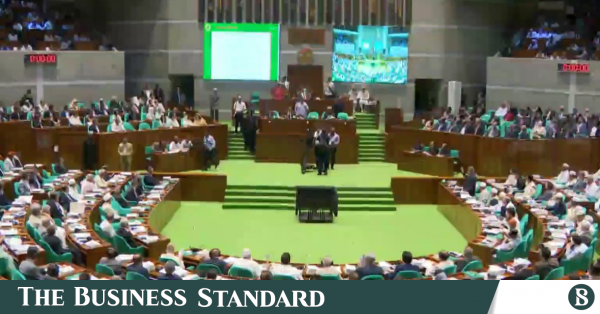
Inaugural session of the 13th National Parliament held on 12 March 2026. Photo: Screengrab
“>

Inaugural session of the 13th National Parliament held on 12 March 2026. Photo: Screengrab
Opposition lawmakers staged a walkout from Jatiya Sangsad today (13 July) in protest against the formation of a special parliamentary committee on constitutional amendments, arguing that the move bypasses the Constitution Reform Council established following the referendum.
The walkout came after a proposal to form the committee was placed in the House during a sitting chaired by Deputy Speaker Kayser Kamal.
Before leaving parliament, Opposition Leader Shafiqur Rahman said his party had made its position clear from the first parliamentary session, rejecting the proposal to form the committee.

Although Home Minister Salahuddin Ahmed had held several meetings with opposition leaders, they never agreed to nominate members to the committee, Shafiqur added.
Jamaat-e-Islami Ameer Shafiqur said all political parties had pledged before the referendum to implement its outcome if the “Yes” vote prevailed.
Opposition lawmakers were bound by two oaths: one as members of parliament and another as members of the Constitution Reform Council, both of which, he said, remain valid.
Shafiqur maintained that forming a parliamentary committee while bypassing the reform council contradicted the public mandate and warned that ignoring the verdict of nearly 70% of voters could undermine public confidence in democracy.
Declaring that his party would neither join the committee nor remain in the House while the proposal was considered, he led opposition lawmakers out of the chamber.
Responding after the walkout, Salahuddin dismissed the opposition’s position, saying the country’s priority after the mass uprising was to repeal the 15th Amendment.
He said there was no alternative to forming the parliamentary committee and amending the Constitution, warning that without legislative action the country would continue to operate under the existing constitutional framework regardless of any future court ruling.
Rejecting the opposition’s “dual oath” argument, Salahuddin said taking a second oath effectively invalidates the first.
He noted that the current parliament was elected under the existing constitution, the president convened parliament under the same constitutional provisions, and both the government and the opposition had been conducting parliamentary business in accordance with that framework.
About The Author