According to EC, a 6-member Nepali delegation met with Chief Election Commissioner A M M Nasir Uddin and other commissioners and senior EC officials on Wednesday.
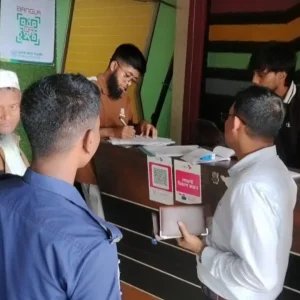
The postal ballot represents. Photo : TBS
“>

The postal ballot represents. Photo : TBS
For the first time in Bangladesh’s history, the Election Commission (EC) has brought expatriates and officials and employees engaged in election duties within the country under postal voting in the 13th National Parliamentary Election.
The technology-based ‘IT-Supported Postal Voting System’ has been fully developed in Bangladesh Successful implementation of this system has drawn the world’s attention. Now two South Asian countries Nepal and Sri Lanka are showing interest in adopting this technology and experience.
EC officials said if another country adopts this technology it will be easier to find sustainable solutions to various technical glitches and errors.

This will brighten the country’s image on the international stage as well as increase the acceptability of the technology.
Saleem Ahmad Khan, team leader of the EC’s ‘Out of Country Voting System and Implementation’ (OCV-SDI) project told BSS that the postal voting system is a unique innovation worldwide. This system entirely made in Bangladesh has great global importance.
The Nepalese delegation came on their own initiative and they are very positive about it. Sri Lanka also showed interest in this process during a visit of EC team in September last. It is a matter of pride for every Bangladeshi that a technology made in the country is being appreciated abroad, he added.
Saleem Ahmad Khan further said, Based on the experience gained from the national election and by-elections, we must move forward by solving the existing problems. This is a great asset of the Election Commission, which must be utilized more effectively in the future.
Dr. Rajib Subba, Election Commissioner of Nepal, who came to Bangladesh to gain experience on IT-supported postal voting, said, In the context of the developing world, this model of Bangladesh is extremely successful. Countries like Bangladesh and Nepal can go a far with the technology. We would feel honoured to receive technical support from Bangladesh.
Expressing Nepal’s plan to introduce postal voting for expatriates in its upcoming provincial elections, he said, a large number of citizens of Bangladesh contribute to the national economy through remittances while staying abroad. Nepal’s context is same. Therefore, to ensure voting for citizens staying outside the country, we are trying to deeply understand the Bangladesh Model.
He further mentioned that since Bangladesh has already tested this technology, Nepal can avoid mistakes and move forward quickly.
He emphasized on voter education to make Nepali workers employed in the Gulf region and various countries accustomed to using digital technology.
Regarding the main purpose of the visit, Dr. Rajib Subba said, the main goal of coming to Bangladesh is to directly see and learn about the technology-based postal voting process.
“This is our third round of discussions with the Bangladesh team. We want to introduce this system in one of the provincial elections within the next one and a half years,” he said.
According to EC, a 6-member Nepali delegation met with Chief Election Commissioner A M M Nasir Uddin and other commissioners and senior EC officials on Wednesday.
The Nepalese delegation gained firsthand experience on the operational and technical aspects of postal voting on Thursday.
The Nepali delegation was comprised of Election Commissioner Dr. Janaki Kumari Tuladhar, Secretary Krishna Prasad Kapri, Senior Computer Officer Anup Naupane, Deputy Attorney Kamala Kafle and UNDP representative Prabhat Kumar.
About The Author