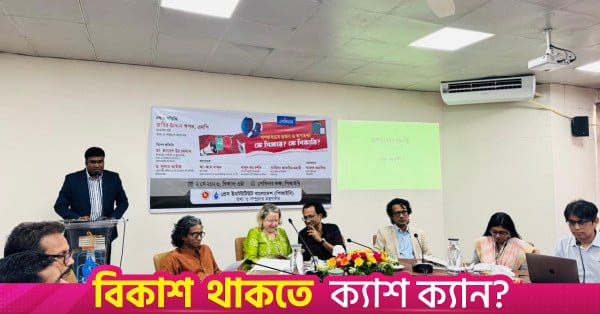
Speakers at a seminar in Dhaka today (2 May) warned that misinformation, rumours and digital manipulation are spreading at an “epidemic” level, weakening public trust in media and democratic institutions.
The seminar, titled “Rumours and Misinformation on Media: Who is the Prey? Who is the Hunter?”, was organised by the Press Institute Bangladesh (PIB) with participation from policymakers, journalists, fact-checkers and IT experts.
PIB Director General Faruk Wasif said social media algorithms are reinforcing user bias and deepening divisions, as users increasingly consume information aligned with their beliefs rather than verified facts. He said declining media literacy is worsening the crisis and eroding trust in mainstream media.

Chief guest Zahed Ur Rahman, adviser to the Prime Minister on Policy and Strategy, said the rise of “alternative truth” and confirmation bias is driving misinformation. He said action will be taken against deliberate falsehoods but stressed that enforcement must target crimes, not suppress dissent.
UNESCO Representative Susan Weiss said misinformation cannot be solved through regulation alone, as much of it originates outside national borders. She called for real-time fact-checking, journalist training on bias and stronger media literacy.
Professor Abdullah Al Mamun of Rajshahi University said misinformation is increasingly used as a political tool and warned about “rage-baiting” content designed to provoke anger. He also pointed to structural issues in media ownership and influence.
ULAB faculty member Nazia Afrin Monami cited the Reuters Institute Digital News Report 2025, noting that 58% of people globally struggle to distinguish true from false information online, while news avoidance has risen to 40%.
IT expert Mamun Ar Rashid said algorithmic amplification and coordinated manipulation are accelerating the spread of disinformation.
Speakers called for accountability mechanisms requiring correction or removal of proven false reports through independent verification. The seminar concluded with calls for coordinated action by government, media and civil society, including stronger monitoring systems, improved digital literacy and responsible journalism practices.
About The Author