The dredging initiative has been undertaken as sediment accumulation in different sections of the channel has reduced its depth.
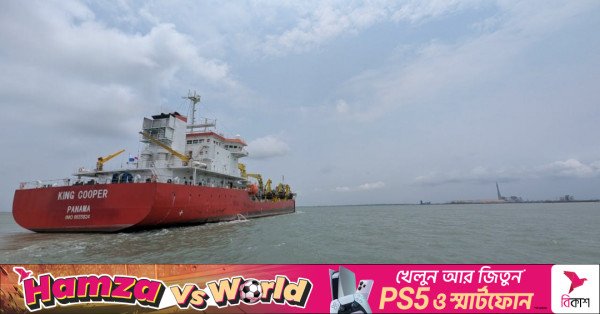
TSHD King Copper, a dredger owned by a Chinese company, is tasked with removing accumulated sediment from various parts of the channel to reinstate and maintain the required depth. Photo: Collected
“>

TSHD King Copper, a dredger owned by a Chinese company, is tasked with removing accumulated sediment from various parts of the channel to reinstate and maintain the required depth. Photo: Collected
The Chattogram Port Authority (CPA) has launched maintenance dredging operations in the Matarbari Deep Sea Port channel to restore navigability and ensure the safe and uninterrupted movement of vessels.
The dredging initiative has been undertaken as sediment accumulation in different sections of the channel has reduced its depth, making it necessary to maintain the designated draft required for maritime operations, the CPA said in a press release today (16 June).
Coal-carrying vessels are currently using the Matarbari channel on a regular basis, while LNG carriers are also expected to begin frequent operations in the near future.

“In this context, emergency dredging activities have been initiated to restore navigability and ensure the safe passage of commercial and energy-carrying vessels through the channel,” the port authority said.
According to the CPA, an assessment of the channel’s existing morphological conditions and sediment transport patterns identified the trailing suction hopper dredger (TSHD) as the most suitable and effective option for the maintenance work.
As part of the initiative, dredging operations have commenced using the TSHD King Copper, a dredger owned by a Chinese company. The vessel is removing accumulated sediment from various parts of the channel to reinstate and maintain the required depth.
The Matarbari Deep Sea Port is considered a strategically important infrastructure project for Bangladesh’s maritime trade, energy security, and economic growth.
Maintaining the channel’s designated depth will allow large commercial vessels, coal carriers, and LNG ships to navigate safely, strengthening the country’s energy supply chain and facilitating foreign trade activities, the CPA said.
The port authority said it would continue taking all necessary measures, in cooperation with relevant stakeholders, to preserve the navigability of the Matarbari channel and enhance the efficiency and capacity of the country’s seaport system.
The Matarbari Deep Sea Port, once fully operational, is expected to play a pivotal role in handling larger vessels that cannot currently access Bangladesh’s existing ports, improving the country’s connectivity with global shipping networks and supporting long-term economic development.
About The Author