Out of the 36 banks listed on the stock exchanges, 14 posted a surge in net profit year-on-year, five experienced profit declines, and six incurred massive losses.
Representational image. Photo: Collected
“>

Representational image. Photo: Collected
The listed banking sector posted a sharply divided performance in the first half (January-June) of 2026, as robust treasury returns buoyed strong performers while mounting non-performing loans and high deposit costs pushed several major lenders into deep losses.
Out of the 36 banks listed on the stock exchanges, 14 posted a surge in net profit year-on-year, five experienced profit declines, and six incurred massive losses.
Meanwhile, trading remains suspended for five banks that are undergoing merger processes with Sammilito Bank, while another five lenders have yet to release their financial statements.

Industry insiders attributed the profitability growth among top performers largely to lucrative investment income generated from government risk-free securities.
However, the broader sector continues to wrestle with a tough macroeconomic environment characterised by elevated interest rates, a sluggish economy, and muted private sector credit growth.
Top earners capitalise on yields and growth
BRAC Bank emerged as the top earner in H1 2026, logging a consolidated profit of Tk1,423 crore, reflecting a massive 57% year-on-year growth. Pubali Bank secured the second spot with Tk685 crore in profit (up 19%), followed by City Bank with Tk527 crore (up 75%), Dutch-Bangla Bank with Tk442 crore (up 319%), and Eastern Bank with Tk439 crore (up 25%).
Speaking to The Business Standard, BRAC Bank Managing Director and CEO Tareq Refat Ullah Khan said the bank currently manages a combined fund of nearly Tk1.70 lakh crore across deposits and assets.
“Our portfolio is expanding every year,” Khan said. “Over the past year, our deposits grew by nearly 25%, surpassing Tk95,000 crore, while assets expanded around 18% to cross Tk76,000 crore – achieving growth well above the market average.”
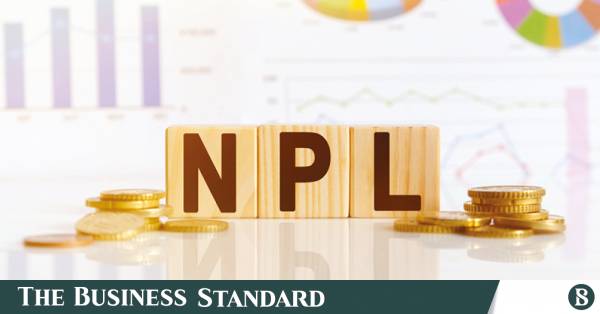
He added that operational efficiency improved significantly, trimming the bank’s cost-to-income ratio from 48% to 42%, while its non-performing loan (NPL) ratio declined to 2.03% from 2.27% over six months.
City Bank similarly attributed its sharp profit rise to strong investment yields alongside healthy growth in commission and fee income.
Other banks recording profit increases during the period include Jamuna Bank, SBAC Bank, NCC Bank, Uttara Bank, NRBC Bank, Southeast Bank, Midland Bank, United Commercial Bank, Shahjalal Islami Bank, and NRB Bank. Conversely, profits dropped at One Bank, Mutual Trust Bank, Standard Bank, Bank Asia, and Trust Bank.
Suspense income and bad loans squeeze bottom lines
On the flip side, six lenders reported severe consolidated net losses, led by National Bank with a loss of Tk2,286 crore. AB Bank followed with Tk1,936 crore in loss, IFIC Bank at Tk1,668 crore, Islami Bank at Tk1,316 crore, Rupali Bank at Tk640 crore, and Premier Bank.
National Bank explained in its disclosure that its deficit stemmed from an inability to recognise interest income on delinquent and rescheduled loans with grace periods, even as deposit interest obligations remained fixed.
Islami Bank Acting Managing Director Md Altaf Hossain noted that a large non-income-generating investment exposure to a major group hit earnings, as Shariah rules mandate holding unrealised yields in suspense accounts rather than recognising them as income. He added that future recoveries could significantly reverse the bank’s fortunes.
About The Author