In a written statement sent to The Business Standard this morning (21 May) following Unicef’s press briefing, Dr Sayedur said, “There was no specific discussion about the measles vaccine at Unicef’s press conference.”
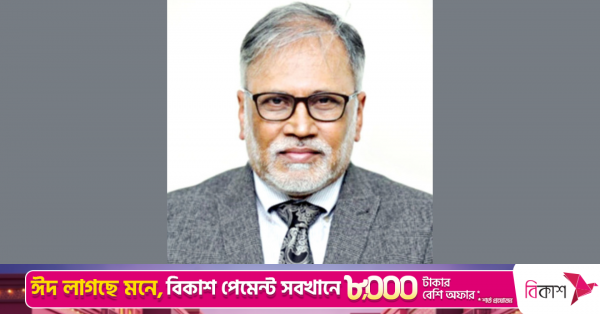
Professor Dr Md Sayedur Rahman. Photo: Collected
“>

Professor Dr Md Sayedur Rahman. Photo: Collected
Professor Dr Sayedur Rahman, special assistant to the interim government’s Ministry of Health, has said Unicef’s recent press conference did not include any “specific discussion” regarding a measles vaccine shortage and claimed there were no widespread reports of people being denied measles vaccines in 2025.
In a written statement sent to The Business Standard this morning (21 May) following Unicef’s press briefing, Dr Sayedur said, “There was no specific discussion about the measles vaccine at Unicef’s press conference.”
He added that, apart from “one or two isolated incidents”, no reports were received in 2025 of people being turned away due to a shortage of measles vaccines. “This is also reflected in the vaccine coverage until December,” he said.

Dr Sayedur further noted that decisions regarding special vaccination campaigns are taken by the Inter-Agency Coordination Committee (ICC), which includes representatives from both Unicef and the World Health Organization (WHO).
“In communications from Unicef, there was no mention of any ‘measles outbreak’,” he said, adding, “This is a preliminary response. A detailed statement will be provided later.”
The response came after Unicef alleged during a press conference yesterday that it had repeatedly warned Bangladesh’s interim government since 2024 about an impending measles vaccine shortage, but timely action was not taken due to changes in procurement procedures.
At the event titled “Press Conference on Measles Outbreak Situation and Ongoing Response Efforts”, held at Unicef Bangladesh’s JPG Conference Room in Dhaka, Unicef Bangladesh Representative Rana Flowers outlined the organisation’s repeated warnings to the government.

“From 2024 across 2025 into 2026 we sent letters and we had 10 different meetings. Signalling this was a problem and signalling that the order for the vaccines needed to be given. They could not,” Flowers said.
According to Unicef data, Bangladesh typically procures around 70 million vaccine doses annually. However, between August and November 2025, only 17.8 million routine Expanded Programme on Immunisation (EPI) vaccines were brought into the country through Unicef’s pre-financing mechanism.
“The vaccines we brought were through Unicef pre-financing, and the government reimbursed the cost in April 2026,” Unicef said.
Flowers said the delay was not caused by a lack of funding. “The funding was provided by the Ministry of Finance and was already in the budget,” she said, attributing the delay instead to procurement decisions, particularly attempts to shift towards open bidding.
“Open bidding takes at least a year, even in the most efficient cases. Vaccines are highly specialised products and require advance planning with manufacturers,” she added.
Flowers also defended Unicef’s procurement system, saying the agency sources WHO-approved vaccines directly from manufacturers and does not profit from vaccine procurement.
“We procure WHO-approved vaccines directly from manufacturers, ensuring safety and effectiveness. Because of our scale, we can secure better prices than individual countries,” she said.
She further said vaccine procurement requires long-term preparation involving manufacturing lead times, logistics, cold chain readiness, and nationwide distribution.
“This is not something that can be fixed overnight. It is a complex process that must be anticipated well in advance,” Flowers said.
During the press conference, journalists also asked about a reported comment attributed to Flowers in a 30 April report by Science Magazine, which quoted her as telling Health Adviser Nurjahan Begum: “For God’s sake … don’t do this.”
Responding to the issue, Unicef’s Chief of Communications and Advocacy Miguel Mateos Munoz said, “Regardless of the expression, which is meaningless, the point on the outages was raised by Unicef early last year, not on 10th February.”
Earlier, responding to queries from The Business Standard, Dr Sayedur Rahman said no official statement would be issued immediately.
“As the High Court has directed the formation of an investigation committee, we will submit all relevant documents to the committee. We have all the necessary documents,” he said.
About The Author