The Power Division yesterday published the draft strategy on its website and invited feedback from stakeholders. According to an official notification, relevant ministries, divisions and civil society representatives have until 6 July to submit their opinions
Photo: Courtesy
“>

Photo: Courtesy
Highlights:
- Government plans guarantees and clean energy fund for renewable investment
- Bangladesh targets 20% renewable electricity generation by 2030
- Country needs 10,000–11,000MW additional renewable capacity within five years
- Financing barriers previously slowed renewable energy growth and investment
- Rooftop solar becomes central with mandatory net metering proposals
- Grid stability measures include battery storage and transmission upgrades
In a bid to bridge a long-standing green investment gap, the government plans to introduce a sweeping financial framework under the upcoming National Renewable Energy Development Strategy (2026-2030). The draft strategy proposes a state-backed payment guarantee scheme and a dedicated clean energy fund designed to unlock private investment and accelerate the nation’s green transition.
The Power Division yesterday published the draft strategy on its website and invited feedback from stakeholders. According to an official notification, relevant ministries, divisions and civil society representatives have until 6 July to submit their opinions.

The strategy is scheduled to be finalised at a meeting to be held at 11am on 7 July at Bidyut Bhaban.
Infograph: TBS
“>

Infograph: TBS
Power Division officials stated that the proposed financial and policy measures aim to systematically dismantle the funding barriers that have historically stalled renewable energy expansion in Bangladesh. The roadmap aligns the country’s green energy targets with its commitments under the Paris Agreement, the Sustainable Development Goals (SDGs) and its Third Nationally Determined Contribution (NDC-3).
Navigating the 2030 targets
Bangladesh aims to generate 20% of its electricity from renewable sources by 2030, which will require an installed renewable capacity of 12,480 megawatts (MW). With the country currently generating around 2,000MW from solar power, an additional 10,000MW to 11,000MW must be brought online within the next five years.
As annual electricity demand climbs by roughly 6%, summer peak demand is projected to surge from 18,000MW to 24,000MW by 2030. To hit the 20% milestone, approximately 27,331 gigawatt-hours (GWh) of electricity must be generated from renewable sources out of an estimated total demand of 136,656GWh.
According to the projected generation plan, Bangladesh is expected to add 420MW of renewable energy capacity in 2026, 1,400MW in 2027, 2,390MW in 2028, 2,850MW in 2029 and 3,390MW in 2030, bringing the total new capacity to 10,450MW over the five-year period.
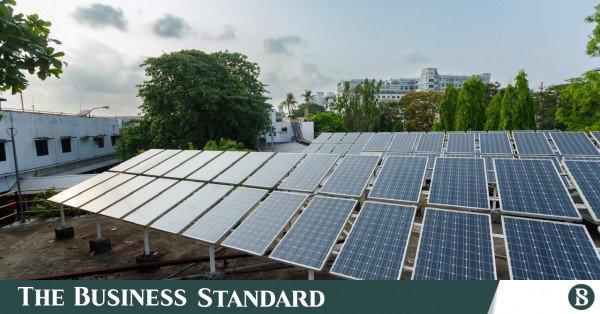
The government also aims to install 5,500MW of rooftop solar capacity, 4,500MW from land-based solar projects, 150MW from wind power, 200MW from waste-to-energy facilities and 100MW from other renewable sources.
Dismantling financial barriers
The draft strategy offers a candid critique of past initiatives, admitting that despite ambitious targets set in policies spanning from 2008 to 2025, progress fell short due to financing constraints, policy uncertainty, weak institutional coordination and a challenging investment climate.
To overcome these hurdles, the government is shifting from its traditional Implementation Agreement mechanism for independent power projects to a Government Payment Guarantee, offering robust payment security to jittery investors.
Key financing mechanisms outlined in the draft include:
- The Renewable Energy Development Fund: Supervised by the Economic Relations Division (ERD), this dedicated clean energy fund will mobilise capital from domestic and international financial institutions, development partners, climate funds and private investors to provide low-cost, long-term financing.
- Refinancing & dedicated facilities: The strategy proposes expanding Bangladesh Bank’s green refinancing programme for commercial banks, while the Bangladesh Energy Regulatory Commission (BERC) will introduce dedicated loan facilities for Power Division projects.
- Tax and duty cuts: Import duties and taxes on rooftop and distributed solar equipment could be slashed to as low as 1%. This will enable OPEX-based developers to supply electricity to commercial and industrial consumers at highly competitive rates.
- SME empowerment: Small and medium enterprises will benefit from standardised contracts, streamlined documentation, quicker approvals and enhanced lending support from Bangladesh Bank, IDCOL and commercial banks.
Rooftop solar takes centre stage
The draft places rooftop solar at the heart of its strategy. It outlines a framework to outfit ministries, government departments and public buildings with solar arrays funded via private investment, allowing developers to recover costs through electricity bills under net metering arrangements.
Furthermore, the strategy recommends making net metering mandatory for industrial units within Economic Zones (EZs) and Export Processing Zones (EPZs). It also advocates amending the Bangladesh National Building Code to make rooftop solar mandatory for 30% to 70% of the roof area on new residential, commercial and industrial buildings.
To streamline execution, a Rooftop Solar Calculator will be introduced to set benchmark investment costs, with equipment prices updated every six months alongside a uniform, generation-linked incentive for producers.
Land-based solar and grid stability
For large-scale, land-based projects, the government intends to deploy competitive bidding, the Merchant Power Policy (MPP) and public-private partnership (PPP) models. Crucially, Battery Energy Storage Systems (BESS) will be mandatory to safeguard grid stability.
In a significant regulatory easing, developers will no longer be required to submit a lender’s formal Letter of Commitment prior to project approval. A Preliminary Letter of Support or Comfort Letter will suffice, acknowledging that lenders cannot fully assess financial viability before tariffs are finalised.
Wind and irrigation alternatives
While acknowledging limited commercial viability for wind power, the draft notes that monsoonal wind patterns show promise, recommending future projects be concentrated in coastal and southern hilly regions.
Additionally, transitioning the nation’s 1.2 million diesel and 400,000 electric irrigation pumps to solar power could dramatically curb diesel imports, ease grid pressure and reduce government subsidies, while allowing farmers to sell surplus power back to the grid during the off-season.
To safely integrate this influx of variable renewable energy, the strategy recommends adopting Free Governor Mode of Operation (FGMO) and Automatic Generation Control (AGC) protocols across power plants, alongside hiring a technical consultancy firm to overhaul future transmission network planning.
About The Author