The factory once served as a major source of employment for more than a thousand workers, bringing economic vitality to the entire Kazirbag area.
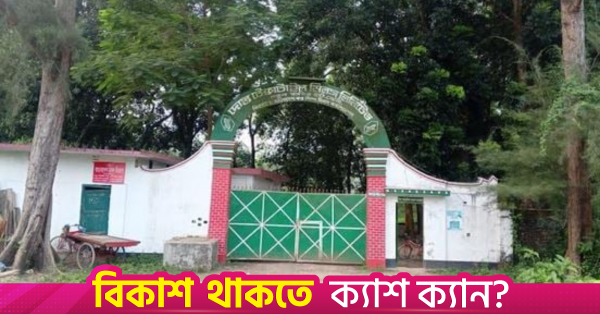
Dost Textile Mills in Feni. Photo:BSS
“>

Dost Textile Mills in Feni. Photo:BSS
The government has taken an initiative to reopen the historic Dost Textile Mills in Feni, which was shut down in 2011 after years of losses, with efforts underway to revive the mill or establish a modern and sustainable textile or industrial facility on its premises.
The Prime Minister’s Office, the Ministry of Textiles and Jute and other relevant authorities are pursuing various initiatives to explore the possibilities of restarting the mill at Ranirhat on the outskirts of Feni town.
According to relevant sources, industrialist Dost Mohammad established the mill in 1965 near Ranirhat in Kazirbag union of Feni Sadar upazila. The mill was nationalised in 1972 after the independence of Bangladesh.

The factory once served as a major source of employment for more than a thousand workers, bringing economic vitality to the entire Kazirbag area. Its yarn was exported abroad, making a significant contribution to the national economy.
Local sources said the mill remained profitable until 1989 but began incurring losses around 1990. After struggling to remain operational for nearly two decades, it was permanently shut down in 2011 by the then government.
Feni-2 lawmaker Professor Zainal Abedin VP told BSS that the mill’s machinery was later sold at auction for a nominal price during the previous government’s tenure. The vast premises gradually turned into an abandoned site and have now become a safe haven for drug users, he said.
The lawmaker said he sent a demi-official (DO) letter to the prime minister on 18 August, seeking the reopening of the mill or the establishment of a modern and sustainable textile or other industrial facility at the site.
Following the letter, the Prime Minister’s Office directed the secretary of the Ministry of Textiles and Jute to take necessary administrative measures in accordance with the applicable rules and submit a progress report on the steps taken.
Professor Zainal Abdin said Prime Minister Tarique Rahman had pledged to create employment opportunities for people before the last national election.
He expressed hope that renewed industrialisation at the site would create jobs for thousands of people.
District administration sources said the then Deputy Commissioner of Feni, Monira Haque, submitted a proposal to the Prime Minister in May to reopen the closed mill.
In the current context, the former deputy commissioner expressed the view that reviving the facility through a public-private partnership (PPP) or as a specialised industrial zone could help reduce unemployment in Feni and across the Chattogram Division.
She also stressed the need for high-level government intervention to meet global demand in the textile and apparel sectors and bring an under utilised industrial asset back into operation in the national interest.
The proposal was approved by the Prime Minister on June 23, and the concerned authorities were directed to take necessary steps for implementation and inform the Cabinet Division about the progress.
A visit to the mill premises on Tuesday revealed a stark contrast to its former industrial prominence. After passing through the main gate beside the Feni-Chhagalnaiya road at Ranirhat and moving further inside, little remained to suggest that the site once housed a vast industrial complex.
A security guard said the dilapidated building near the gate had served as the office of the chief executive officer.
Chief Executive Officer Bulbul Ahmed, who assumed responsibility for the facility on July 25, told BSS that his immediate priorities were to take charge of the vast property and ensure its maintenance.
He said efforts were underway to repair sections of the collapsed boundary walls by installing tin fencing.
Ahmed said the government’s higher authorities were pursuing various initiatives to revive industrial activity at the site. The proposed facility might not necessarily be a textile mill like the previous one; it could accommodate another type of industry, depending on the government’s decision.
He said the project could be implemented through a public-private partnership (PPP) or a government-to-government (G2G) arrangement rather than being financed entirely by the government.
Highlighting the site’s considerable potential for industrial development, Ahmed said reopening the facility would create extensive employment opportunities and restore economic activity in the area.
He added that senior government officials were regularly monitoring the situation and that he had been providing the information sought by the authorities.
About The Author