The government is currently working with NGOs and the private sector without any specific policy framework, says Finance Minister Amir Khosru Mahmud Chowdhury.
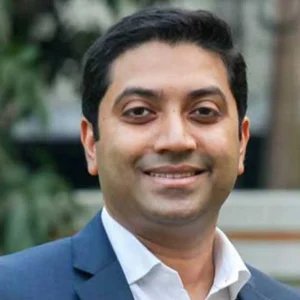
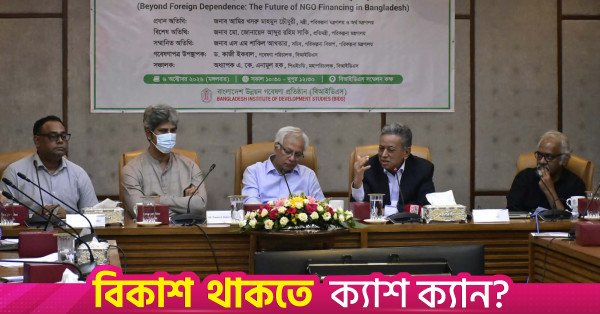
Finance Minister Amir Khosru Mahmud Chowdhury speaks at a seminar in Dhaka on 6 October on 2026. Photo: BIDS
“>

Finance Minister Amir Khosru Mahmud Chowdhury speaks at a seminar in Dhaka on 6 October on 2026. Photo: BIDS
The government plans to develop a partnership model involving NGOs and the private sector in implementing public programmes and delivering services to people, and institutionalise it through a formal government policy, Finance Minister Amir Khosru Mahmud Chowdhury said today (6 October).
He said the government is currently working with NGOs and the private sector without any specific policy framework, and efforts are now needed to bring these partnerships under an institutional structure and policy.
Speaking at the seminar “Beyond foreign dependence: the future of NGO financing in Bangladesh”, organised by the Bangladesh Institute of Development Studies (BIDS) in Dhaka, he added, “We are working without a policy. We started through the creative economy. Now we have to work on how to institutionalise this.”

The minister said it is difficult for the government alone to ensure services and implement various programmes in remote parts of the country.
Therefore, transparent partnerships involving government institutions, NGOs and the private sector are necessary, he said.
“Not just NGOs; we have to build partnerships involving NGOs, the government and the private sector – everyone. We are already working this way in the creative economy,” he said.
Selecting the best-performing partner
Khosru said there should be specific criteria for selecting partners to implement government projects and programmes.
He said each project has its own characteristics or attributes, and partner organisations should be selected based on which institution can deliver the work most effectively and at the lowest possible cost.
He also stressed transparency and accountability in selecting partners for government work.
“The government’s efficiency, we know what it is. But transparency and accountability, these have to be kept in our consideration,” he said.
Four criteria for project approval
The finance minister said the government is already following four criteria when evaluating projects: value for money, return on investment, employment generation or creation of new initiatives, and environmental considerations.
“Any project has to fulfil these four criteria – value for money, return on investment, employment or creation of new initiatives, and environmental considerations,” he said.
Projects that fail to meet these criteria are not being approved, he added.
“If we cannot fulfil these four criteria, we are not accepting any project at all. We have already sent back many projects,” the finance minister said.
Creative economy as partnership model
The minister cited the creative economy as an example of government-private sector-NGO partnership.
He said artists, startups, the private sector and NGOs are already working together in the sector, while the government is seeking to develop creative economy initiatives based on the views and participation of all stakeholders.
He said a similar partnership could also be used to take Bangladeshi products to international markets.
Citing Shital Pati mats as an example, he said a mat that sells for Tk700-800 in the domestic market could potentially be sold internationally for Tk2,000 or more through better design, quality improvements and other support.
Such initiatives would require design support, other facilities and market linkages, he said.
Follow-up meeting
The finance minister said the existing partnerships between the government, NGOs and the private sector need to be brought under a specific model and policy framework.
“We are already in a partnership. But we have to institutionalise it. We have to finalise its modality and institutionalise the policy,” he said.
He also called for a follow-up meeting so that discussions on the issue do not remain limited to the seminar.
He suggested setting a specific timeline and discussing at the next meeting how the proposed policy framework could be institutionalised within government policy.
“We try to set a timeline for every decision we take. There should be a timeline for this issue as well,” he said.
Foreign funding cuts put NGOs under pressure
A BIDS study presented at the seminar said declining foreign aid worldwide has put pressure on NGO financing in Bangladesh.
Small and medium-sized NGOs that depend heavily on foreign grants are particularly vulnerable, it said.
Against this backdrop, speakers at the seminar stressed the need to increase NGO participation in government procurement, social services and various development activities.
About The Author