Highlights:
- Govt open to compromise over ‘note of dissent’
- Salahuddin again urges opposition to join talks
- No final decision on caretaker government structure
- Govt backs 10-year maximum tenure for PM
- Committee plans consultations with wider stakeholders
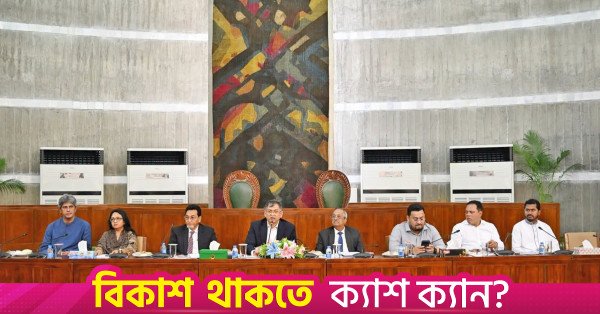
The government is open to compromise over the “note of dissent” or differences of opinion on issues in the proposed constitutional amendments if the opposition joins discussions, Home Minister and Chairman of the Special Committee on Constitutional Amendment Salahuddin Ahmed said today (29 September).
“Discussion on the issues where they have differences of opinion is possible on the basis of consensus. But for that, they have to come to the discussions,” he told reporters at parliament’s media centre after the special committee’s fourth meeting.

Salahuddin again urged opposition parties to nominate members to the committee and participate in the constitutional amendment process.
“Our doors for discussion are open. We urge the opposition through you [the media] to nominate members to the constitutional amendment committee and join the discussions,” he said.
He said the committee had held discussions with newspaper editors, television and online media editors, media personalities and journalists over the past two days, receiving various proposals on constitutional reform.
The participants suggested measures to strengthen democracy, including the formation of the caretaker government, strengthening constitutional institutions and judicial decentralisation and independence, he said.
Some also questioned the need for a bicameral parliament and the proposal to limit a prime minister’s tenure to two terms.
On the 10-year limit for a prime minister, Salahuddin said the government had not changed its position on the proposal.
“Some have said that limiting the prime minister’s tenure to 10 years is undemocratic and contrary to the democratic rights of the people,” he said.
“But our party’s position was that no individual should remain prime minister for more than 10 years. This proposal was made to prevent the establishment of authoritarianism.”
He said any alternative proposal from the opposition or other parties could be discussed in parliament.
On the caretaker government, the minister said no final decision had been made on its structure or framework and that further discussion was needed before parliament considers the issue.
Regarding a bicameral parliament, Salahuddin said some participants had questioned its necessity because Bangladesh is a unitary state. However, he said the committee would proceed in line with the consensus reached on the issue in the July National Charter, while the final decision would be taken by parliament.
The minister said the committee would gradually hold discussions with constitutional experts, lawyers, judges, academics, social forces involved in the July uprising, families of those killed in the uprising and families of people who were allegedly subjected to enforced disappearance over the past 17 years.
It will also hold a meeting with the National Consensus Commission, led by Dr Ali Riaz, toward the end of the process.
The committee will prepare a report based on the views gathered from different stakeholders and place it before parliament. The government hopes the constitutional amendments can then be brought through a bill passed by parliament.
The committee has set December as its target for completing discussions.
About The Author