“Poor and lower-middle-income families will suffer disproportionately because most of their income is spent on daily necessities,” says the economist.
Fahmida Khatun. Sketch: TBS
“>

Fahmida Khatun. Sketch: TBS
The latest fuel price hike will increase transportation, agriculture, and industrial costs, putting further pressure on inflation and disproportionately affecting poor and lower-middle-income households, according to Dr Fahmida Khatun, distinguished fellow at the Centre for Policy Dialogue (CPD).
“The latest price increase seems to be another adjustment to a continuing external energy-price shock. Nevertheless, increasing all major petroleum prices by the same absolute amount at once is a substantial policy intervention, especially when inflation and household financial pressure are already high,” she told The Business Standard last night (20 September) in her immediate reaction.
“The increase will have wide-ranging consequences. Individuals will face higher expenses for transportation. Even households that do not purchase fuel directly will be affected as transportation costs raise the prices of food and other essentials.

“Poor and lower-middle-income families will suffer disproportionately because most of their income is spent on daily necessities,” she added.
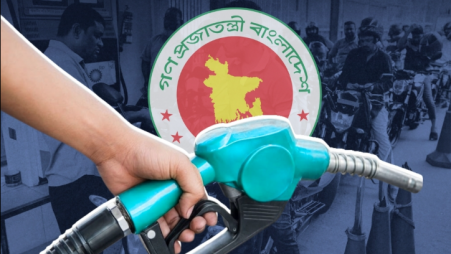
The government last night increased the retail prices of diesel, octane, petrol, and kerosene by Tk20 per litre. The revised rates took effect today (21 September).
With the new price adjustment, this is the second time the BNP government has hiked fuel prices after assuming power in February this year. The last price hike was back in April.
The per-litre prices of diesel, octane, petrol, and kerosene have been raised to Tk135, Tk165, Tk160, and Tk155, respectively.
Fahmida continued, “Diesel-dependent agriculture will face higher irrigation, mechanisation and transportation costs. This could potentially raise food prices, but reduce farmers’ returns.”
Around 70% of the country’s irrigation pumps are operated using diesel. A research paper published by researchers from Bangladesh Agricultural University (BAU) and the Bangladesh Rice Research Institute (BRRI) found that irrigation is one of the major components of the total input or production costs for Boro rice, accounting for 20-25% of the total expenditure.
Fahmida also said, “Industries will incur higher logistics and generator costs, which will weaken profitability and export competitiveness. Small businesses will be especially vulnerable.
“At the macroeconomic level, the increase may intensify inflation, reduce household consumption and weaken growth.”
Since the government had no other option but to increase energy prices, it should monitor how this increased price is imposed on the common people by market players, the economist stressed.
“The government should publish the price calculation transparently, prevent excessive fare increases and market manipulation. The government should also provide targeted support to low-income households, small farmers and public transport users,” she added.
About The Author