Stakeholders also urge whistleblower protection and stronger safeguards against workplace harassment through amendments to the Bangladesh Labour Rules.
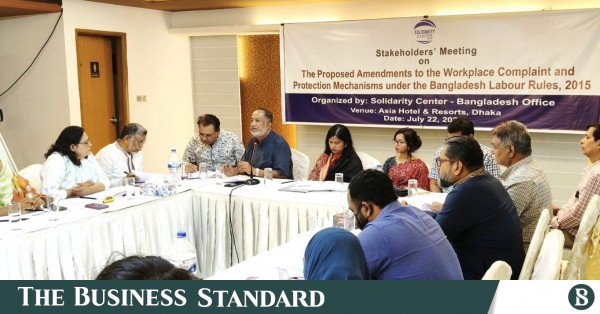
Labour rights experts and stakeholders attend a discussion on proposed amendments to the Bangladesh Labour Rules, 2015, organised by the Solidarity Center at a hotel in Dhaka today. Photo: Courtesy
“>

Labour rights experts and stakeholders attend a discussion on proposed amendments to the Bangladesh Labour Rules, 2015, organised by the Solidarity Center at a hotel in Dhaka today. Photo: Courtesy
Labour rights experts and workers’ representatives have called for amendments to the Bangladesh Labour Rules to strengthen workplace complaint mechanisms and ensure the effective implementation of legal protections against workplace discrimination, violence and harassment.
The proposals were discussed at a stakeholders’ meeting on proposed amendments to the Bangladesh Labour Rules, 2015, organised by the Solidarity Center at a Dhaka hotel yesterday (22 July).
Presenting the keynote paper, AKM Nasim, country programme director of the Solidarity Center, said the Labour Rules should provide clear and unambiguous procedures to effectively implement the rights guaranteed under the Bangladesh Labour Act.

He said the current definition of violence and harassment under the proposed rules remains unclear because it refers broadly to “any unacceptable conduct in the workplace”, creating ambiguity in their application.
The keynote paper reviewed the legal framework governing the newly proposed Complaint Resolution Committee (CRC) and recommended amendments to strengthen its independence, procedural fairness and overall effectiveness.
Speakers also called for stronger measures to prevent sexual harassment in workplaces and recommended incorporating whistleblower protection into the rules to safeguard workers who report labour rights violations.
Jamil Ansar, senior programme officer at the International Labour Organization (ILO) Dhaka Office, said the proposed amendments fell short of international standards.
“ILO Convention 190 requires an independent complaints mechanism. However, the proposed amendments to the Labour Rules do not provide adequate guidance in this regard,” he said.
Nazma Akter, founder and executive director of the Awaj Foundation, said workers’ rights would be better protected through collective action than by limiting discussions to conference halls.
“Workers’ rights will not be secured through seminars in hotels. Protesting in front of the National Press Club, even if it means surviving on bread and bananas, would be far more effective,” she said.
About The Author