Highlights:
- CPD assesses 31 key economic indicators
- Lack of political courage, capacity evident within govt, CPD says
- Political appointments to institutions concerning
Bangladesh’s economic recovery will be delayed; claims that the economy will turn around within a year are exaggerated, said Debapriya Bhattacharya, distinguished fellow at the Centre for Policy Dialogue (CPD).

The recovery process has not gained as much momentum over the past six months as it should have, largely because of a lack of political courage and capacity on the part of the government, he added.
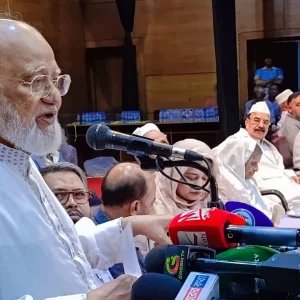
Debapriya made the remarks at a programme organised by the CPD yesterday afternoon to review the economic performance of the current government during its first six months.
At the review, held at the CPD’s office in Dhanmondi, Dhaka, the think tank analysed 362 measures taken by the government over the past six months across nine key sectors. The programme highlighted which measures the CPD considered reassuring and which caused concern.
“I want to give them [govt] an ‘A’ grade, but the circumstances are dragging them towards a ‘B’.”
Debapriya Bhattacharya, distinguished fellow, CPD
According to the CPD, the country witnessed a mixed picture in terms of the economy and good governance over the past six months. Overall, the balance has tilted more towards discomfort than relief. Of 31 key economic indicators assessed by the CPD, 19 deteriorated, while only 12 improved.
Assessing the government’s overall performance, he said, “I want to give them an A grade, but the circumstances are dragging them towards a B.” This means good initiatives are being undermined by weak capacity and a lack of coordination, he added.
Referring to a recently published survey showing that the prime minister is more popular than the government, Debapriya said, “The biggest challenge now is whether he can use that popularity to demonstrate political courage, put his party on the right track and manage the bureaucracy properly.”
Good governance, justice, public administration
The CPD said several initiatives were reassuring, including scrapping duty-free cars and government plot facilities for MPs; austerity measures, particularly the prime minister depositing 10% of his salary into the treasury; reducing ministers’ protocol; suspending government vehicle purchases; cutting food expenses; and introducing an AI-based traffic management system in Dhaka.
On the other hand, political appointments to universities, state institutions and courts based on political identity have raised concerns about institutional neutrality. The continuation of extortion and land grabbing at the local level, mob killings, violence against women and children, and the lack of effective measures to control attacks on indigenous people and minorities have also caused concern.
Debapriya Bhattacharya said political appointments are highly unacceptable.
Public financial management
The CPD identified raising the tax-free income threshold, scrapping the opportunity to legalise undisclosed money (black money), providing a 5% tax rebate on payments of up to Tk25,000, and simplifying online e-return filing as positive initiatives.
On the other hand, the CPD expressed concern over the lack of initiatives to review public-finance expenditures related to government subsidies and tax expenditures, as well as the absence of specific measures to assess sovereign debt risks.
Industry and trade
The CPD considered the expansion of bonded warehouse facilities beyond the readymade garment sector; initiatives to privatise loss-making state-owned enterprises; the signing of 21 agreements, including studies on a Comprehensive Economic Partnership Agreement (CEPA) with South Korea and a joint Free Trade Agreement (FTA) study with China; and the creation of a “Startup Fund” for young and women entrepreneurs as reassuring measures.
At the same time, the closure of 95 factories in the industrial areas of Gazipur, Savar and Narayanganj between January and August, resulting in the loss of 61,881 jobs, and the shutdown of four of the country’s five fertiliser factories – with only the Ghorashal-Palash plant operating – have created serious concerns.
Banking and financial sector
The merger of five troubled Islamic banks under the “United Islamic Bank” and the appointment of administrators to weak non-bank financial institutions as part of implementing the Bank Resolution Act 2026 were identified as positive initiatives.
However, Debapriya expressed concern over the sudden removal and replacement of the Bangladesh Bank governor and questions surrounding conflicts of interest and the central bank’s independence; retaining the Financial Institutions Division under the finance ministry; and the liquidity crisis and rush to withdraw deposits triggered by controversy surrounding the appointment of a chairman at Islami Bank Bangladesh PLC.
Energy and transport
The CPD considers the introduction of a fully women-operated “Pink Bus Service” to ensure safe transportation for women, keeping electricity prices unchanged for low-income residential consumers, offering 25% fare discounts on the metro rail and trains for elderly and disabled people, and inviting international tenders for offshore gas exploration as reassuring initiatives.
However, the CPD described the continuing severe gas shortage affecting the textile, steel, paper and ceramics industries due to technical problems at the Maheshkhali LNG terminal and supply constraints, as well as the lack of visible steps to utilise Bhola’s gas, as concerning.
Agriculture and rural non-farm sector
The CPD said waiving agricultural loans and interest of up to Tk10,000 and allowing banks to write off loans were reassuring measures.
However, the shutdown of fertiliser factories due to the gas shortage and increased dependence on imports, failure to make fertiliser available at government-set prices, and allegations of hoarding and illegal sales are creating concern, according to the organisation.
Education
The CPD described the declaration of free education for female students up to the undergraduate level, retaining the lottery system for primary-school admissions from 2027, directly transferring overdue benefits to MPO-listed teachers through EFT, and plans to distribute free clothing and shoes to students as positive measures.
The absence of a separate education reform commission, controversy over holding HSC examinations in Chattogram despite flooding, and the failure to begin full implementation of the PEDP-5 programme were identified as concerns.
Health
The CPD considers the withdrawal or reduction of VAT and duties on dialysis filters, heart stents, pacemakers, eye lenses and raw materials for cancer treatment to be reassuring measures.
However, it expressed concern over shutting down the 5th Health Programme without an alternative arrangement, weaknesses in the measles vaccination programme despite an ongoing outbreak, and the failure to formulate a new policy for determining medicine prices.
Social welfare and social protection
Since taking office, the government has distributed 20,832 Farmers’ Cards, 70,861 Family Cards and 300 Sports Cards across the country. These are positive initiatives.
However, there have been widespread local-level complaints of political influence and a lack of transparency in selecting Family Card beneficiaries, which is concerning.
Recovery scorecard
The CPD reviewed 31 indicators across six major sectors of the economy. According to the organisation, 19 of the 31 indicators deteriorated, while 12 improved.
The CPD said there had been improvements in non-NBR tax collection, ADP implementation and net deficit financing over the six-month period.
Meanwhile, NBR revenue, total tax collection, bank borrowing and net foreign assistance deteriorated.
According to the CPD, per-capita external debt stood at $55,129.9 at the end of March, up from $48,166 in March 2025. During the period, headline inflation fell to 8.3%, food inflation to 7.2%, while the wage index increased.
The situation deteriorated in terms of broad money supply and excess liquidity in banks.
Export growth stood at 3.5%, while imports grew by 18.1% and the opening of letters of credit for intermediate goods increased. Foreign-exchange reserves rose to $32.3 billion.
However, remittance growth fell to 11.8%. Overseas employment declined, the taka depreciated, the trade deficit increased to $10.4 billion and the current-account deficit widened.
The CPD said there had been no improvement in any indicator of industrial production. Progress in overall industrial production and the manufacturing sector was zero.
Regarding investment, the organisation said that although imports of capital machinery had grown, it was unclear whether this represented an actual increase in investment. Net foreign direct investment had fallen to $594 million by the end of June. The opening of letters of credit for capital machinery declined, while private-sector credit growth fell to 4.5%.
The CPD said that although there had been progress in the mineral production index in the energy and power sector, this was having no impact on the economy. Rather, declining power generation and lower industrial gas consumption were contributing to the crisis.
What needs to be done
Against this complex economic backdrop, the CPD has recommended five urgent measures for the government.
The organisation said the government should formulate a “core budget”, whether or not it publishes it. A concise and realistic core budget based on actual data should be prepared for the period from October 2026 to June 2027.
There could be a revenue shortfall of around Tk1.3-1.4 lakh crore in the next fiscal year. Spending priorities should therefore be determined with this shortfall in mind.
A comprehensive reform package is also needed, it said. Specific reforms should be outlined for energy security, restructuring the banking sector, splitting the NBR into two entities, rationalising the ADP and the work of the Pay Commission.
As an urgent measure, the government should accelerate the programme to drill 150 gas wells inside the country instead of relying on expensive LNG imports.
The organisation proposed that by September 2026, the finance minister should present a roadmap to parliament outlining plans for banking-sector restructuring, a new pay scale, power-sector reforms and the broader economic situation and reform agenda.
The CPD said the government must move away from political influence and entrenched interest groups in banking, energy and contract-awarding processes and strengthen institutional capacity and good governance. “Simply changing people cannot provide a lasting solution.”
About The Author