Experts have said a specific implementation roadmap is essential to ensure effective use of the proposed budget for the health sector, warning that a significant portion of allocated funds risks remaining unspent without stronger planning and execution.
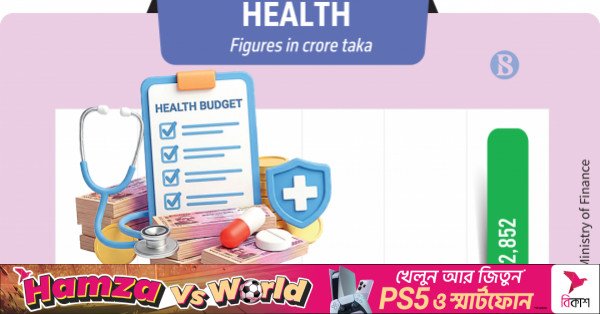
The proposed allocation of Tk69,409 crore – around 7.4% of the budget and 1% of GDP – for the health and family welfare sector is a major step forward, they said at a post-budget civil society reflection on the health budget at CIRDAP Auditorium in Dhaka yesterday.
However, they warned that without a clear roadmap, a significant share of the funds risks remaining unspent. They urged detailed planning to ensure effective budget execution.

The event was jointly organised by Bangladesh Health Watch and the ARK Foundation. It featured experts in the health sector and government officials.
In a presentation, Professor Rumana Huque, economics professor at University of Dhaka, said Bangladesh faces rising demographic pressure, noting that the elderly population will increase significantly within a decade, while health-related inflation is also rising.
Citing recent World Bank findings, she said out-of-pocket expenditure in Bangladesh remains around 79%, making increased public allocation a positive development.
Prof Rumana said large budgets alone are not enough without improvements in spending quality, human resources, institutional reform, transparency and governance.
She added that monthly monitoring of allocations and expenditure could improve performance, alongside stronger citizen engagement through oversight committees.
She further noted that Tk23,000 crore of the Tk35,000 crore development budget has been kept as block allocation. She warned that large block allocations often slow implementation due to limited guidance and weak planning.
Public health expert Dr Mushtaq Hossain said hospitals under the Bangladesh Medical University typically do not return funds, as they both spend allocations and generate income. He argued that hospitals should be made more autonomous to improve utilisation.
He also said primary healthcare allocations lack clear specification, raising concerns that funds may be diverted to other urgent areas if not properly defined.
Syed Abdul Hamid, health economics Professor at the University of Dhaka, said large block allocations could become a major challenge if not used properly. He added that project selection and approval must be completed within the first three months of the fiscal year.
WaterAid Regional Director Khairul Islam said while training institutions exist for public administration, similar capacity-building structures are lacking in the health sector. He called for the establishment of a dedicated health academy to develop professional skills.
Speaking as special guest, MP Fazley Huda Babul said public health spending must reach intended beneficiaries through transparent and accountable systems.
MA Muhit, state minister for health, said the budget reflects public expectations and is the result of over two years of planning, research and expert consultation.
He said key election pledges, including strengthened primary healthcare, a national ambulance service and expanded pharmacy dispensing services, are reflected in the plan.
“However, implementation is the biggest challenge,” he said, adding that 20-30% of the health budget is returned unspent each year.
He added that citizens at the grassroots level continue to face four major problems: hospital middlemen, shortages of doctors and staff, lack of free medicines, and unnecessary tests.
He said the government’s approach must focus on resolving these issues within five years, ensuring patients can access care without harassment, receive essential medicines, and obtain necessary tests in public hospitals.
About The Author