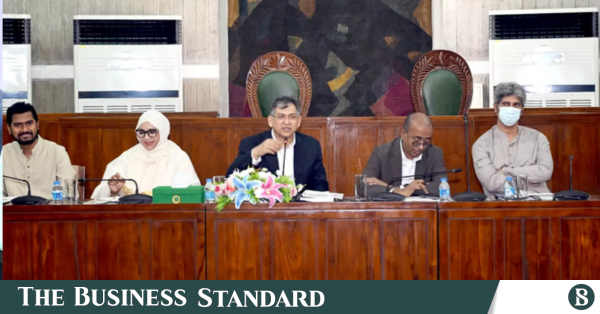
The caretaker government system will be restored to the Constitution with safeguards preventing any future government or parliament from easily abolishing it, Home Minister and chairman of the Special Committee on Constitutional Amendments Salahuddin Ahmed said.
Any future move to remove the system would require a referendum, he said, briefing journalists yesterday at the Parliament Media Centre after the committee’s sixth meeting at the Cabinet Room of Jatiya Sangsad Bhaban. The committee also held discussions with families of those killed and injured during the July mass uprising.
Salahuddin said constitutional provisions amended or added would require a referendum before taking effect, which he termed a constitutional referendum, unlike earlier referendums held under ordinary law. Changes to the preamble, fundamental principles of state policy and other fundamental provisions would also require a referendum.

“Article 456 will include the caretaker government; we will incorporate it,” he said. “If we introduce the caretaker government system through the Constitution, there must be a major provision requiring future governments to go back to the people even if they want to change it.”
On the referendum provision removed from Article 142, Salahuddin said the amendment that removed it was later declared unconstitutional by the High Court. He said the provision would be restored based on the court’s judgment and would have to be followed once restored.
“My position is that there is a constitutional process. There is a doctrine called the doctrine of eclipse. When the eclipse moves away, the moon becomes visible again,” he said.
However, no decision has been made on how the caretaker government would be formed, who would serve in it or what process would be followed. The matter will be discussed in Parliament.
The committee is gathering views from different sections and professions before consulting lawyers, judges, Supreme Court lawyers, legal experts and academics. Multiple options will be considered.
A proposal to make the president head of the caretaker government was not accepted. The process remains open to alternative proposals from opposition parties and experts, with the committee seeking a politically acceptable formation process.
At yesterday’s meeting, 63 people, including families of those killed in the July uprising and representatives of various organisations, took part. Participants demanded constitutional recognition of the July mass uprising, protection for those killed and injured, and incorporation of relevant provisions of the July Declaration into the Constitution.
Salahuddin said the government is committed to speeding up investigations, prosecution and framing of charges, while requests were made to monitor Penal Code cases in other courts to ensure quicker disposal.
“We are committed to implementing the July National Charter exactly as it was signed, including the notes of dissent,” he said. However, he said implementing only the Charter could leave other proposed constitutional reforms out, so the committee would consider wider views before submitting its report for a constitutional amendment bill to Parliament.
About The Author