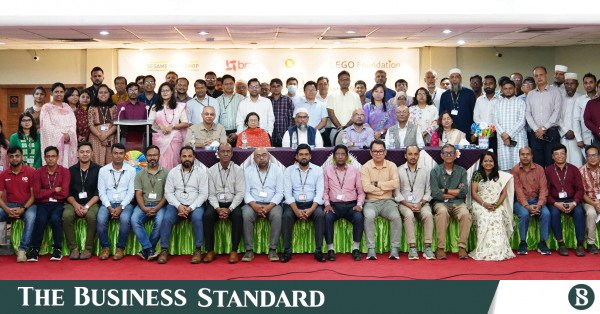
The workshop, titled “Building Futures Through Play: Stakeholder Engagement for Early Childhood Development”, was held at a hotel in Cox’s Bazar. Photo: Courtesy
“>

The workshop, titled “Building Futures Through Play: Stakeholder Engagement for Early Childhood Development”, was held at a hotel in Cox’s Bazar. Photo: Courtesy
Speakers at a BRAC workshop in Cox’s Bazar today (22 April) urged prioritising play-based learning to boost children’s creativity and cognitive development, stressing greater focus on Rohingya children’s health, safety and social values.
The workshop, titled “Building Futures Through Play: Stakeholder Engagement for Early Childhood Development”, was held at a hotel in Cox’s Bazar. It was organised by BRAC’s Humanitarian Crisis Management Programme (HCMP), with support from Denmark-based LEGO Foundation, in partnership with US-based Sesame Workshop.
Mohammed Mizanur Rahman, refugee relief and repatriation commissioner, attended as chief guest. He termed play-based learning an innovative approach and said effective implementation is as important as intent. He urged government stakeholders to engage actively in Early Childhood Development (ECD) programmes.
Dr Shayla Islam, associate director of BRAC’s Health Programme, delivered the welcome address, while Rokshana Jahan, programme manager of the ECD sector under HCMP, moderated the session.

Key recommendations included increasing attendance at learning centres in Rohingya camps, strengthening child health and protection in camps and host communities, prioritising Myanmar-language instruction, enhancing coordination for child protection, engaging caregivers in the “Play to Learn” approach, and improving education quality.
Dr SM Hasanuzzaman, programme coordinator of health, nutrition and ECD under BRAC HCMP, presented on stakeholder engagement. Sayed Mahmud Sunny of BRAC IED shared lessons from Phase 1 of the initiative.
Additional RRRC Abu Saleh Mohammad Obaidullah, camp officials Suraya Akter Swety and Md Arafatul Alam, BRAC’s Rezaul Karim, and JNUS executive director Sheuly Sharma also spoke.
Participants included officials, NGO representatives and over 90 guests. Speakers said play-based learning, now used in Bangladesh, Uganda and Tanzania, can improve cognitive development by 30–85%, according to Annual Assessment 2024.
About The Author