Bangladesh Bank Governor Mostaqur Rahman said that on 17 February, the day the BNP took charge, the government’s borrowing from the central bank through ways and means advances and overdraft stood at Tk17,590 crore. By 22 April, that figure had dropped to Tk11,103 crore.
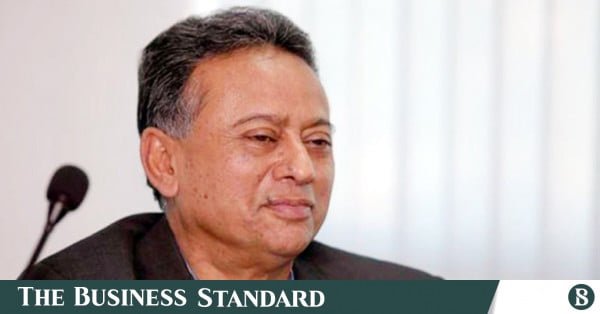
Finance and Planning Minister Amir Khosru Mahmud Chowdhury. Photo: Collected
“>

Finance and Planning Minister Amir Khosru Mahmud Chowdhury. Photo: Collected
The BNP-led government has repaid loans left behind by the interim administration instead of resorting to printing money after assuming office, Finance Minister Amir Khosru Mahmud Chowdhury said today (25 April).
He made the remarks during a pre-budget discussion with the Economic Reporters Forum (ERF), organised by the finance ministry.
At the meeting, Bangladesh Bank Governor Mostaqur Rahman said that on 17 February, the day the BNP took charge, the government’s borrowing from the central bank through ways and means advances and overdraft stood at Tk17,590 crore. By 22 April, that figure had dropped to Tk11,103 crore.

However, according to media reports, on 23 April, Ashikur Rahman, chief economist of the Policy Research Institute (PRI), claimed that the government had borrowed Tk20,000 crore from Bangladesh Bank in March, describing it as high-powered money that could fuel inflation.
Rejecting the claim, the governor said the report was incorrect. “Our country rating has declined, raising borrowing costs for both the government and the private sector. Amid this, a report claimed Bangladesh Bank printed Tk20,000 crore in March to lend to the government, which is not accurate,” he said.
Bangladesh Bank Deputy Governor Habibur Rahman added that the central bank had not purchased any government treasury bills or bonds over the past two years. He said borrowing through ways and means and overdraft stood at Tk27,601 crore in March, but had more than halved by 22 April.
He also clarified that Bangladesh Bank functions as the government’s banker, where revenues are regularly deposited and expenditures made as needed. “There is no issue of printing money to lend or destroying printed money — the key question is whether currency in circulation is increasing,” he said.
About The Author