Regional peers India and Pakistan miss slots on the list
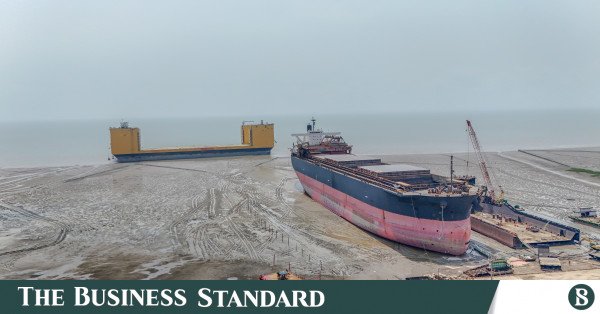
Bangladesh has earned second place in the world for environmentally friendly ship recycling, as 17 yards in Sitakunda, Chattogram, were added to the International Maritime Organization’s official list under the Hong Kong Convention, surpassing regional rivals India and Pakistan. Photo: Mohammad Minhaj Uddin/TBS
“>

Bangladesh has earned second place in the world for environmentally friendly ship recycling, as 17 yards in Sitakunda, Chattogram, were added to the International Maritime Organization’s official list under the Hong Kong Convention, surpassing regional rivals India and Pakistan. Photo: Mohammad Minhaj Uddin/TBS
Highlights:
- Bangladesh ranks second globally for compliant ship recycling yards
- IMO approved 17 Bangladeshi recycling facilities under Hong Kong Convention
- All approved yards operate in Sitakunda, Chattogram shipbreaking industrial belt
- Yard owners invested Tk2,000 crore upgrading environmental safety infrastructure
- Bangladesh dismantles 150–200 ships annually, supporting steel industry jobs
- Ship imports declined sharply despite rapid growth in compliant recycling yard
Bangladesh has become the world’s second-largest nation for compliant ship recycling following the inclusion of 17 domestic yards in the International Maritime Organisation’s official global list under the Hong Kong Convention.
The recognition marks a major milestone in the country’s transformation from one of the world’s most criticised shipbreaking destinations into a leading hub for environmentally compliant recycling after years of investment in environmental safeguards, worker safety and modern recycling infrastructure.

According to the IMO list, Turkey ranks first globally with 18 authorised facilities, while Bangladesh follows in second position with 17 yards. Japan and Norway each have seven facilities, Denmark has five, Spain has two, and Germany and Belgium each have one. No facilities from regional peers India or Pakistan were included in the list.
Sitakunda emerges as green recycling hub
According to an IMO document published on 15 January 2026, all 17 approved facilities are located in the Sitakunda industrial belt of Chattogram, the country’s primary shipbreaking hub, and have received formal authorisation from the Bangladesh Ship Recycling Board with validity until 29 October 2030.
The authorised yards are PHP Ship Breaking & Recycling Industries Ltd, Kabir Steel Ltd, SN Corporation Unit-1, SN Corporation Unit-2, SN Corporation Unit-3, KR Ship Recycling Yard, Arab Ship Breaking & Recycling Ltd, HM Shipping Lines Ltd, Ferdous Steel Ship Recycling Industries, NB Steel, MAK Corporation, KR Steel Ltd, Jamuna Ship Breakers, Janata Steel Limited, Taher & Company Ltd, Bob Recyclers, and Asadi Steel Enterprise.
Shafiul Alam Talukder, director general of the Bangladesh Ship Recycling Board, said Bangladesh was among the first countries to submit a list of convention-compliant yards to the IMO.
“We issued DASR certificates to compliant yards under the Hong Kong Convention and sent the list to the IMO in November last year,” he told The Business Standard.
He said Bangladesh currently has 30 green ship recycling yards, including four facilities operating under conditional DASR approval.
“We will update the compliant yard list next June. Bangladesh has a strong chance of moving to the top position globally,” he added.
Yard owners invest Tk2,000 crore in upgrades
The Hong Kong Convention officially came into force on 26 June 2025, introducing mandatory international standards for safe and environmentally sound ship recycling practices.
Industry insiders said Bangladesh’s inclusion in the IMO list, prepared for the first time, reflects years of investment in environmental compliance, occupational safety and modern recycling systems.
Shipbreaking yard owners have invested heavily in impermeable flooring systems, hazardous waste treatment facilities, worker protection measures and environmental monitoring technologies to align operations with international standards.
Zahirul Islam Rinku, former vice-president of the Bangladesh Ship Breakers and Recyclers Association and managing director of PHP Ship Breaking & Recycling Industries, said local yard owners had invested more than Tk2,000 crore over the past two years to modernise facilities and install advanced equipment.
“Now we have some of the best environmentally friendly ship recycling facilities and technologies in the world,” he said.
“We have been leading the global market for over a decade, and we are confident of strengthening that position as more green yards are set to become operational this year.”
He also called for stronger policy support to help the industry remain competitive amid rising compliance costs.
Bangladesh’s ship recycling sector dismantles around 150 to 200 vessels annually and generates turnover of up to Tk30,000 crore. The industry supplies a substantial share of raw materials to the domestic steel sector and supports thousands of direct and indirect jobs.
Vessel imports fall sharply
Despite progress in environmental compliance, ship imports for recycling have fallen sharply in recent years.
Industry data show that only 84 ships, weighing around 7,16,155 tonnes, were imported for recycling in 2025, marking one of the sector’s weakest performances in nearly two decades.
Between the mid-2000s and late 2010s, Bangladesh regularly imported between 150 and 200 scrap vessels annually, with yearly import volumes often exceeding 20 lakh tonnes.
The industry reached a historic peak in 2021, when 280 ships were dismantled, generating around 27.3 lakh gross tonnes amid post-pandemic shipping disruptions and elevated global freight rates.
Imports later declined to around 11.4 lakh tonnes in 2022 and dropped further to just over 10 lakh tonnes in 2023, the lowest annual volume in more than a decade. In 2024, imports slipped below 10 lakh tonnes again.
Sector insiders attributed the slowdown to the global economic downturn, weaker freight markets and the rising costs associated with green transformation and environmental compliance upgrades.
Still, the number of internationally compliant yards in Bangladesh has risen rapidly. Only four local yards held green certification in 2024, but the number increased sharply following the enforcement of the Hong Kong Convention.
Industry leaders believe the IMO recognition will strengthen Bangladesh’s standing in the global ship recycling market and attract higher-value vessels from owners seeking environmentally compliant recycling destinations.
About The Author