PM invites global investors to partner in Bangladesh’s economic transformation.
Illustration: Ashrafun Naher Ananna/TBS Creative
“>

Illustration: Ashrafun Naher Ananna/TBS Creative
Bangladesh must increase annual foreign direct investment nearly sevenfold to $15 billion by 2030 if it wants to sustain economic growth, finance its massive infrastructure needs and remain competitive after graduating from the least developed country category, the Foreign Investors’ Chamber of Commerce and Industry (Ficci) said today (23 July).
Launching its report, “FDI for a New Bangladesh: Roadmap for a $15 Billion Vision”, the chamber warned that while Bangladesh possesses many of the fundamentals investors seek, chronic policy uncertainty, bureaucratic delays, weak infrastructure and a fragile financial sector continue to deter fresh foreign investment.
Infographics: TBS
“>

Infographics: TBS
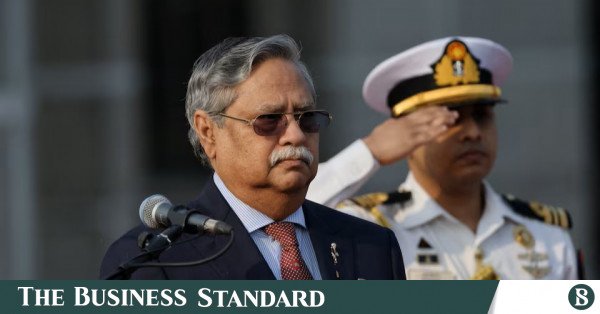
The report was unveiled at the “Ficci FDI Conference 2026: Driving Foreign Investment for Jobs and Prosperity in Bangladesh” at the Bangladesh-China Friendship Conference Centre in Dhaka, attended by Prime Minister Tarique Rahman.
At the programme, the prime minister called upon global investors to become long-term partners in Bangladesh’s economic transformation, saying his government is committed to building a $1 trillion economy by 2034 through investment-friendly reforms and private sector-led growth.

In its report, Ficci said stronger FDI is essential not only for achieving the government’s economic ambitions but also for financing Bangladesh’s estimated $7 billion to $10 billion in annual infrastructure requirements and shifting growth from debt-led expansion to productivity-driven private investment.
Despite being one of South Asia’s fastest-growing economies over the past decade, Bangladesh attracts among the lowest levels of foreign investment in the region. The country’s FDI-to-GDP ratio stands at just 0.29% to 0.36%, the lowest among five regional peers and only a fraction of Vietnam’s 4.23%, the report said.
The report also cautioned that the recent rebound in FDI masks a worrying trend: much of the increase has come from reinvested earnings by existing foreign companies rather than fresh equity investment from new investors, suggesting that current investors are expanding cautiously while new entrants remain hesitant.
“Bangladesh has the potential to attract $15 billion in annual FDI through policy reforms and effective implementation,” said Masrur Reaz, chairman of Policy Exchange Bangladesh, while presenting the report. He described the Ficci study as a practical roadmap for unlocking that potential.
Ficci President Rupali Haque Chowdhury said Bangladesh is entering a new stage of economic development in which attracting quality foreign investment will be vital for sustaining growth, creating higher-value jobs and improving global competitiveness.
“The report aims to support evidence-based policymaking and help improve the country’s investment climate,” she said.
Trade openness matters
The report identifies trade liberalisation as one of the strongest drivers of foreign investment, estimating that every 1% increase in the trade-to-GDP ratio could lift FDI inflows by around 3.7%.
It also argues that reducing logistics costs through better transport infrastructure, ports and supply chains would strengthen export competitiveness and make Bangladesh more attractive to global manufacturers.
However, attracting more investment alone will not be enough.
The report says that every $1 million in greenfield FDI creates only 1.3 jobs in Bangladesh, compared with 6.2 jobs in India, 4.4 in Cambodia and 4.1 in Vietnam. This indicates that foreign investment remains concentrated in capital-intensive sectors such as power rather than labour-intensive manufacturing, technology and higher value-added industries.
Nine structural barriers
Ficci says Bangladesh’s weak FDI performance stems from nine structural constraints that have steadily eroded investor confidence.
Policy uncertainty remains one of the biggest obstacles. While official approval procedures are supposed to take around 76 days, investors often wait between six months and a year to receive final clearances.
Institutional fragmentation is another major challenge. Foreign investors currently have to deal with 23 government agencies and nearly 150 separate services, increasing compliance costs and delays.
Infrastructure bottlenecks continue to weigh on investment decisions. The report points to electricity shortages, industrial land constraints and slow land-title transfers in special economic zones.
Logistics remain another weak spot. Cargo dwell time at Chattogram Port averages eight to 10 days, compared with only three to four days in Vietnam, increasing exporters’ costs and reducing competitiveness.
The report also flags serious weaknesses in the financial sector, including a 32.26% non-performing loan ratio, low banking sector capital adequacy, a complex tax administration, high effective tax burdens despite relatively moderate statutory tax rates, severe skills shortages and Bangladesh’s poor performance in global competitiveness and logistics rankings.
It adds that the growing share of reinvested earnings relative to new equity investment suggests foreign companies are hedging their risks rather than making long-term commitments.
Reform roadmap
To reverse the trend, Ficci proposed a phased reform agenda spanning immediate, medium- and long-term actions.
Among the immediate priorities are introducing a 30-day Bida registration process, a four-day approval window for priority investments and a “deemed approval” mechanism under which applications would automatically be approved if government agencies fail to respond within a specified period.
The chamber also recommends certifying land inside economic zones before marketing it to investors, digitising and consolidating foreign exchange regulations, allowing market-based currency hedging without case-by-case Bangladesh Bank approval, and creating a unified digital single window linking Bida, the NBR, Customs, BSTI and the Bangladesh Food Safety Authority.
The report also recommends requiring 12 months’ advance notice before introducing regulations affecting investors and establishing an independent Investment Ombudsman reporting directly to the Prime Minister’s Office to resolve investor grievances quickly.
Medium-term reforms include strengthening Bida’s institutional capacity, simplifying investment incentives, modernising tax administration, addressing the banking sector’s bad loan problem and developing a more skilled workforce.
Over the longer term, Ficci recommends deeper trade integration through free trade agreements, a new national investment law, a five-year FDI strategy, stronger governance of economic zones and a high-level National FDI Coordination Council to oversee implementation.
The report also urges the government to improve Bangladesh’s international investment branding and raise its standing in global business and logistics rankings closely monitored by multinational investors.
It concludes that Bangladesh’s greatest challenge is not a lack of investment opportunities but a lack of investment competitiveness.
Predictable policies, stronger institutions, modern infrastructure and efficient logistics, it says, could help the country attract $15 billion in annual FDI, create better-quality jobs, diversify exports and sustain growth in the post-LDC era.
PM invites global investors
Speaking at the conference, Prime Minister Tarique Rahman invited local and foreign investors to expand their businesses in Bangladesh, pledging stronger legal protection, simpler regulations and a more business-friendly environment.
“Whether you are a local entrepreneur or a foreign investor, when you invest in Bangladesh, our government will invest in you through our time, support and policies. That is a commitment we will keep,” he said.
Addressing foreign investors, business leaders, diplomats and development partners, he said Bangladesh’s future depends not only on attracting investment but also on building lasting partnerships.
“I invite every business leader in this room to become part of that future. Together, we can build an economy that is stronger, equitable, and inclusive. I welcome all of you to invest and flourish in Bangladesh.
“Let us grow together, create jobs, and shape Bangladesh. Let us become partners in building a prosperous and globally connected Bangladesh,” Tarique said.
The prime minister said the government was committed to building a rules-based, globally connected and private sector-driven economy, adding that Bangladesh’s strengths – including its large and growing domestic market, young workforce, strategic location and an elected government with strong public support – position the country for sustained prosperity.
About The Author