The nuclear map is nevertheless expanding. According to the World Nuclear Association, about 35 countries are considering, planning or starting nuclear power programmes, and a further 20 or so countries have at some point expressed an interest in doing so.
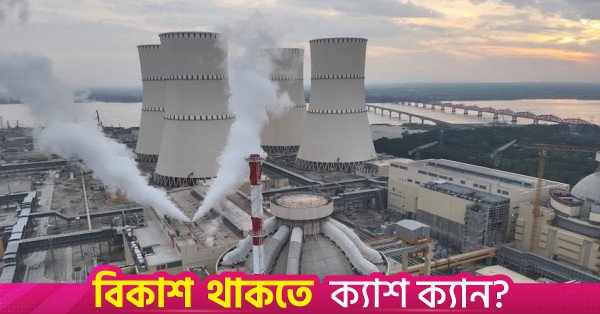
Global nuclear energy is undergoing a historic renaissance to meet surging 24/7 power demands, ensure grid security and achieve net-zero targets. File Photo: TBS
“>

Global nuclear energy is undergoing a historic renaissance to meet surging 24/7 power demands, ensure grid security and achieve net-zero targets. File Photo: TBS
Bangladesh is set to join the global nuclear-power community with the first unit of the Rooppur Nuclear Power Plant now moving into commissioning. The Russian-built VVER-1200 reactor is designed to produce 1,200MW of gross capacity, while the two-unit plant will eventually have 2,400MW.
Read: Bangladesh officially enters global nuclear energy community
Where does Bangladesh rank? It does not yet have a meaningful ranking among nuclear-power producers because Rooppur has only just entered commissioning and has not established a record of commercial electricity generation. Once operational, Bangladesh will join the group of 31 countries that currently operate nuclear power reactors.
The latest IAEA (International Atomic Energy Agency) statistics list 417 reactors operating in those 31 countries, with total net capacity of about 380GW, according to pris-stats.iaea.org.

The leading nuclear-power countries are very different in scale. The United States has more than 90 operating reactors, France more than 50, China more than 50, Russia more than 30, South Korea more than 25 and India more than 20, according to the IAEA’s reactor database. Bangladesh will begin with two reactors.
The nuclear map is nevertheless expanding. According to the World Nuclear Association, about 35 countries are considering, planning or starting nuclear power programmes, and a further 20 or so countries have at some point expressed an interest in doing so.
The World Nuclear Association currently counts about 80 reactors under construction and another 120 planned worldwide.
Is nuclear power expensive?
Yes — but the answer depends on which cost is being discussed. Nuclear power requires exceptionally high upfront investment. The IEA says nuclear projects are difficult to finance because of their scale, capital intensity, long construction periods and technical complexity. Delays and cost overruns can substantially increase financing costs.
Rooppur’s original contract with Russia was worth $12.65 billion, including the first few years’ nuclear fuel, with Russia financing 90% through a state loan. Bangladesh was responsible for the remaining 10%.
But the project’s cost has since increased. In January 2026, the government approved an additional Tk255.92 billion, taking the project’s approved cost from about Tk1.14 trillion to Tk1.39 trillion. The increase is being financed through additional project loans.
Nuclear projects require sophisticated safety systems, specialised buildings and equipment, emergency-response arrangements, trained personnel, security systems, regulatory institutions, radioactive-waste management and, eventually, decommissioning. The World Nuclear Association says these costs should be included when assessing the lifetime cost of nuclear electricity.
Some safety expenditure is visible separately in Bangladesh. For example, the physical-protection system for Rooppur was contracted at about $287.5 million, and TBS reported that this was outside the main project expenditure.
Safety, therefore, is not simply an additional “cost” that can be minimised. It is a fundamental part of a nuclear programme. The World Bank says a credible nuclear programme requires a strong legal and regulatory framework, an independent regulator, skilled personnel, emergency preparedness, long-term waste-management arrangements and robust safety and security systems.
The IAEA’s 2025 safety review of Rooppur found good practices, including simulator-based staff training, but also recommended improvements in fire safety, operational supervision and equipment preservation before operation.
The economic attraction of nuclear power comes later: once the plant is built, fuel and other variable operating costs are relatively low and stable. Thus, nuclear is essentially a trade-off between very high upfront capital and financing costs and potentially decades of relatively stable, large-scale electricity generation.
For Bangladesh, the real test therefore begins after the inauguration: whether Rooppur can operate safely, reliably and at high utilisation for decades, while the country manages its debt obligations, nuclear regulation, waste, decommissioning and the substantial institutional infrastructure that a nuclear-power programme requires.
About The Author