The proposal calls for greater investment in digital skills, wider access to affordable technology and more open frameworks for digital public goods.
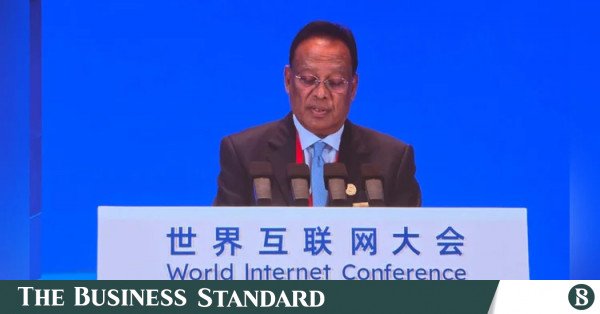
Posts, Telecommunications and Information Technology Minister Faqir Mahbub Anam delivered his keynote address as a special guest at the opening ceremony of the prestigious World Internet Conference 2026 in China. Photo: PID
“>

Posts, Telecommunications and Information Technology Minister Faqir Mahbub Anam delivered his keynote address as a special guest at the opening ceremony of the prestigious World Internet Conference 2026 in China. Photo: PID
Bangladesh has called for a more inclusive global digital order, with Posts, Telecommunications and Information Technology and Science and Technology Minister Faqir Mahbub Anam proposing a three-point framework to strengthen cyber governance, narrow the digital divide and expand access to technology at the World Internet Conference 2026 in China.
Speaking as a special guest at the opening session of the conference at the Xi’an International Convention Center today (22 July), the minister urged greater international cooperation to build “a community with a shared future in cyberspace”.
His proposal centred on three priorities: investing in digital skills and knowledge transfer, promoting affordable technology and connectivity, and treating digital public goods as a shared global resource through more open intellectual property and data frameworks.

The minister said Bangladesh’s digital transformation has been driven by its young population, noting that nearly 65% of the country’s 180 million people are of working age. He said the government is using this demographic advantage to build a technology-driven, knowledge-based economy.
Highlighting recent progress, he said more than 90% of the population now has access to mobile connectivity, while mobile financial services have expanded banking access to marginal farmers and small entrepreneurs.
Government services are also being delivered through digital platforms, including the National Portal and the d-Nothi electronic file management system, while the digitalisation of land records and healthcare services has saved citizens millions of working hours.
The minister said Bangladesh is investing in artificial intelligence, fintech and advanced data centre infrastructure, alongside technology-based solutions such as machine learning-driven flood forecasting and drone-assisted precision agriculture.
Describing Bangladesh as a strategic gateway between South and Southeast Asia, he said the Digital Silk Road is strengthening the country’s integration with China’s technological ecosystem and Asean’s manufacturing networks.
Addressing emerging cyber threats, the minister said cyber governance must be transparent, multipolar and based on international law to tackle cybercrime, disinformation and data colonialism.
The two-day conference, held on 21-22 July, brought together around 800 participants from 52 countries and regions to discuss artificial intelligence, digital trade, Silk Road e-commerce, smart healthcare, cultural heritage preservation and global digital cooperation.
About The Author