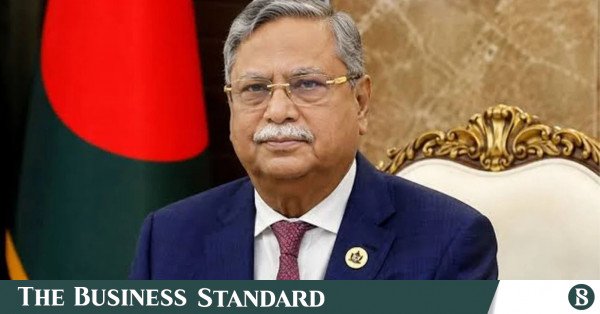
The prime minister says Bangladesh has repeatedly overcome structural challenges in agriculture, garments, remittances and digital services.
As countries across Asia race to strengthen their positions in global chip supply chains, industry leaders say Bangladesh’s semiconductor ambitions have reached a decisive stage where implementation, rather than policy announcements, will determine success.
“>

As countries across Asia race to strengthen their positions in global chip supply chains, industry leaders say Bangladesh’s semiconductor ambitions have reached a decisive stage where implementation, rather than policy announcements, will determine success.
Highlights:
- PM says semiconductors could become Bangladesh’s next major export after RMG
- Government to offer tax incentives and investment-friendly policies
- High-tech parks to be modernised; biotechnology park planned
- PM cites skills, funding and infrastructure gaps as key challenges
Prime Minister Tarique Rahman today (25 July) said Bangladesh’s semiconductor industry has the potential to become the country’s next major export sector after the readymade garment (RMG) industry, as the government begins implementing a roadmap to build a globally competitive chip ecosystem.
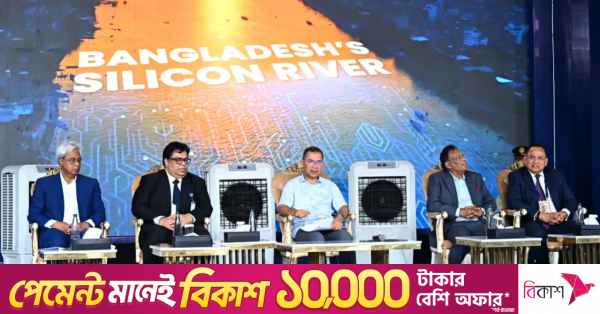
Speaking at the inauguration of the two-day Biotechnology, Electronics, AI and Robotics (BEAR) Summit 2026 at the Novo Theatre in Dhaka, he said Bangladesh has repeatedly overcome structural challenges in agriculture, garments, remittances and digital services, expressing confidence that semiconductors could emerge as the country’s next economic growth engine.

“I firmly believe that after the garment industry, the semiconductor industry can become another promising economic destination for Bangladesh,” the prime minister added.
To realise that ambition, he said the government has already started creating a business-friendly environment for the sector through investment-friendly policies, tax incentives, bonded warehouse facilities and specialised infrastructure.
He said existing high-tech parks will be modernised, while a dedicated biotechnology park is also being planned to strengthen the country’s technology ecosystem.
Highlighting efforts to promote innovation, the prime minister said startup grants have already been distributed to encourage entrepreneurs to build technology-based businesses.
Referring to recent semiconductor roadshows in Malaysia, South Korea and the United States, Tarique commended Bangladeshi industry stakeholders for presenting the country’s semiconductor potential to global companies, investors and technology partners.
Acknowledging the sector’s existing challenges, including shortages of skilled manpower, limited laboratory facilities, financing constraints and intense international competition, he said the government will provide all possible support to help the industry realise its potential.
The prime minister also called on ministries, government agencies, universities, industry leaders, expatriate professionals and development partners to work together to build a robust semiconductor ecosystem in Bangladesh.
Expressing hope for the outcome of the summit, he said the two-day event will foster new partnerships, research collaborations, investment opportunities and innovative ideas, helping accelerate the country’s technology sector.
About The Author