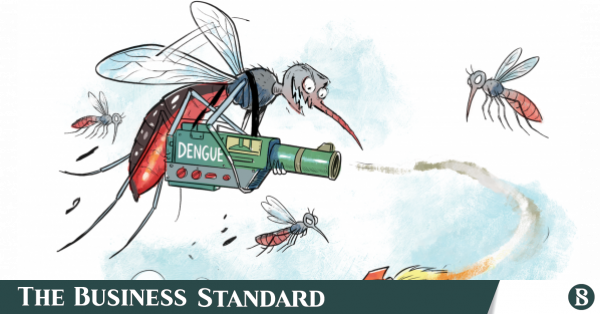
Bangladesh has entered October with dengue cases rising sharply after its deadliest month of the year, with experts warning that favourable weather conditions could increase transmission. At least 245 people have died and 79,620 dengue patients have been hospitalised since January 2026, while September alone accounted for 148 deaths, according to health ministry data cited by Reuters.
With dengue becoming a recurring nationwide public-health problem, could vaccination become another tool for Bangladesh?
A dengue vaccine can help prevent the disease, but it is not a complete solution on its own. The World Health Organization recommends Qdenga (TAK-003), a live-attenuated dengue vaccine developed by Takeda, for children aged 6–16 in settings with high dengue transmission intensity. It requires two doses, given three months apart.

But WHO does not regard vaccination as a replacement for mosquito control. It recommends vaccination as part of an integrated dengue-control strategy, alongside surveillance, vector control, community engagement and proper clinical management.
Qdenga has also been WHO-prequalified since 2024. WHO says prequalification means the vaccine has been assessed against its standards for quality, safety and efficacy and is suitable for the recommended target population. Prequalification, however, is not the same as WHO itself granting a marketing licence; regulatory approval remains the responsibility of national authorities.
How serious is dengue in Bangladesh?
Bangladesh’s reported dengue fatality burden has been substantial. WHO recorded 101,166 dengue cases and 412 deaths in Bangladesh by week 50 of 2025, equivalent to about 0.41 deaths per 100 reported cases. However, Bangladesh’s surveillance system reports mainly hospitalised dengue cases, meaning this figure should not be treated as a conventional population-wide case-fatality rate.
For comparison, Indonesia reported a dengue case-fatality rate of about 0.4% in 2025, according to its health ministry. Brazil reported a 0.12% fatality rate among confirmed dengue cases in 2025, according to PAHO data. The figures are not perfectly comparable because countries use different surveillance and case definitions, but they indicate that Bangladesh’s reported dengue deaths are significant even compared with other major dengue-endemic countries.
The wider global burden is also rising. WHO says more than 14.6 million dengue cases and 12,000 deaths were reported worldwide in 2024, the highest annual burden recorded.
Which countries use the vaccine?
Qdenga has been authorised in more than 40 countries, including Argentina, Brazil, Indonesia and Thailand, according to the US Centers for Disease Control and Prevention.
Indonesia was among the first dengue-endemic countries to approve Qdenga. Brazil began a public vaccination programme for children aged 10–14 in priority municipalities in February 2024. WHO has closely monitored the Brazilian programme, including reports of hypersensitivity and anaphylaxis, while Brazil has continued to recommend the vaccine.
How much does it cost?
The price varies by country and procurement arrangement. PAHO’s 2025 indicative price for Takeda’s quadrivalent dengue vaccine was $19.10 per dose. Qdenga requires two doses, putting the indicative vaccine cost at about $38.20 per person, before delivery and administration costs.
Why is Bangladesh not using it?
Bangladesh has not introduced Qdenga into a national dengue vaccination programme. The main issue is not that the vaccine lacks regulatory recognition. Rather, WHO’s recommendation is targeted, not for blanket vaccination of entire populations.
WHO recommends routine use in children aged 6–16 only in settings with high transmission intensity and where dengue represents a significant public-health problem. It has also identified remaining evidence gaps, particularly concerning some outcomes in people who have never previously been infected with dengue.
What should Bangladesh do?
The worsening outbreak does not automatically mean Bangladesh should launch a nationwide vaccination campaign. But it does strengthen the case for a formal assessment of Qdenga.
Bangladesh could examine its own dengue surveillance data to identify high-transmission districts and age groups, conduct a cost-effectiveness assessment and consider a targeted or pilot vaccination programme if the evidence supports it.
Public-health experts have also stressed that vaccination cannot replace mosquito control. Medical entomologist Kabirul Bashar told Reuters that fogging alone would not be sufficient and that mosquito breeding sites need to be eliminated. WHO Bangladesh has similarly called for a whole-of-government and whole-of-society approach to dengue prevention.
About The Author