Fixing deep-rooted problems in power sector requires 5-7 years, he says
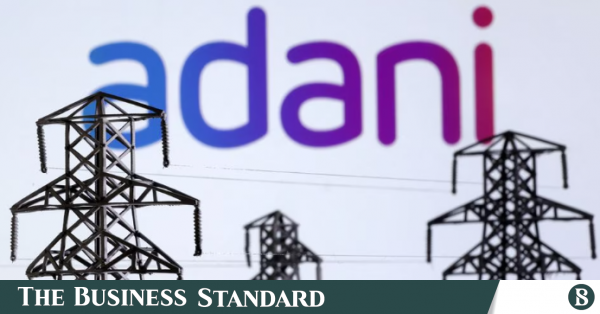
Electric power transmission pylon miniatures and Adani Green Energy logo are seen in this illustration taken, on 9 December 2022. Photo: Reuters
“>

Electric power transmission pylon miniatures and Adani Green Energy logo are seen in this illustration taken, on 9 December 2022. Photo: Reuters
The National Review Committee (NRC) has found evidence of corruption in the Adani power deal process, Power, Energy and Mineral Resources Adviser Muhammad Fouzul Kabir Khan has said.
However, he declined to disclose the specific nature of the irregularities.
Speaking to journalists after a stakeholders’ meeting on the draft Energy and Power Sector Master Plan 2026 (EPSMP 2026) at Bidyut Bhaban in the capital, the adviser said legal counsel had recommended initiating legal action against Adani Power Limited based on the NRC’s findings.

“Based on the evidence uncovered by the NRC, the legal counsel advised the government to take legal action against Adani,” Fouzul said.
“But this decision has been left for the next government.”
He added that the Adani deal involved a foreign entity, making any immediate action politically and diplomatically sensitive.
“If the government takes action now, some may claim it is a witch hunt,” he said.
He added, “Now that the NRC has proof of corruption, the next government will take action based on these findings.”
‘Next govt to carry forward masterplan’
Officials from various power and energy sector agencies attended the meeting on EPSMP 2026, which is being prepared as a guiding document for the country’s future energy planning.
Regarding the draft EPSMP 2026 master plan, Fouzul said the government’s objective is to provide a roadmap for the next government outlining the future power and energy scenario and action plans.
“There are some deficiencies in the master plan, and the next government will continue discussions with stakeholders to address them,” he added.
When asked about his achievements during his tenure as adviser, Fouzul said time constraints limited the scope for reform.
“We inherited a corrupt regime in the past. The time we had was not enough to transform the power and energy sector,” he said, adding that fixing deep-rooted structural problems would require five to seven years.
“In my time, I didn’t improve anything significantly, but I ensured continuity so that no new problems arose in the sector,” he said. “If we had more time, some improvements could have been made, but these are time-consuming matters.”
The EPSMP is being projected as Bangladesh’s key long-term planning document that outlines electricity generation, fuel mix, infrastructure development and investment priorities which many stakeholders objected to since the draft was leaked to the press.
One of the major criticisms of the draft EPSMP 2026 is overestimating power demand, encouraging costly capacity expansion, and increasing reliance on imported fossil fuels like the previous one.
The Adani power agreement was signed in 2017 between the Bangladesh Power Development Board and India’s Adani Power Limited for electricity supply from a coal-fired power plant in Godda, Jharkhand.
The deal has long been criticised by energy experts and civil society groups for its high tariff, fuel pricing mechanism, lack of competitive bidding and alleged governance lapses.
The NRC was formed by the interim government to review the contracts signed under the “Speedy Increase of Power and Energy Supply (Special Provisions) Act, 2010”, during the Awami League regime.
About The Author